WP's Michael Thng rebuts PM Wong, says real political contestation & scrutiny keep Singapore globally competitive
Workers' Party member Michael Thng has challenged Prime Minister Lawrence Wong's argument linking Singapore's external competitiveness with PAP leadership, saying stronger internal political contestation and parliamentary scrutiny are essential for the country to succeed globally.
- Michael Thng said Singapore needs stronger internal political competition to remain globally competitive.
- Thng agreed that Singapore's greatest challenges are external but disputed Lawrence Wong's political conclusion.
- Wong urged young Singaporeans to join the PAP, saying diverse views strengthen the party's long-term governance.

SINGAPORE: Workers' Party member Michael Thng has publicly challenged Prime Minister Lawrence Wong's argument that Singapore should focus more on external competition than domestic political contestation, contending instead that stronger internal competition is necessary for the country to remain internationally competitive.
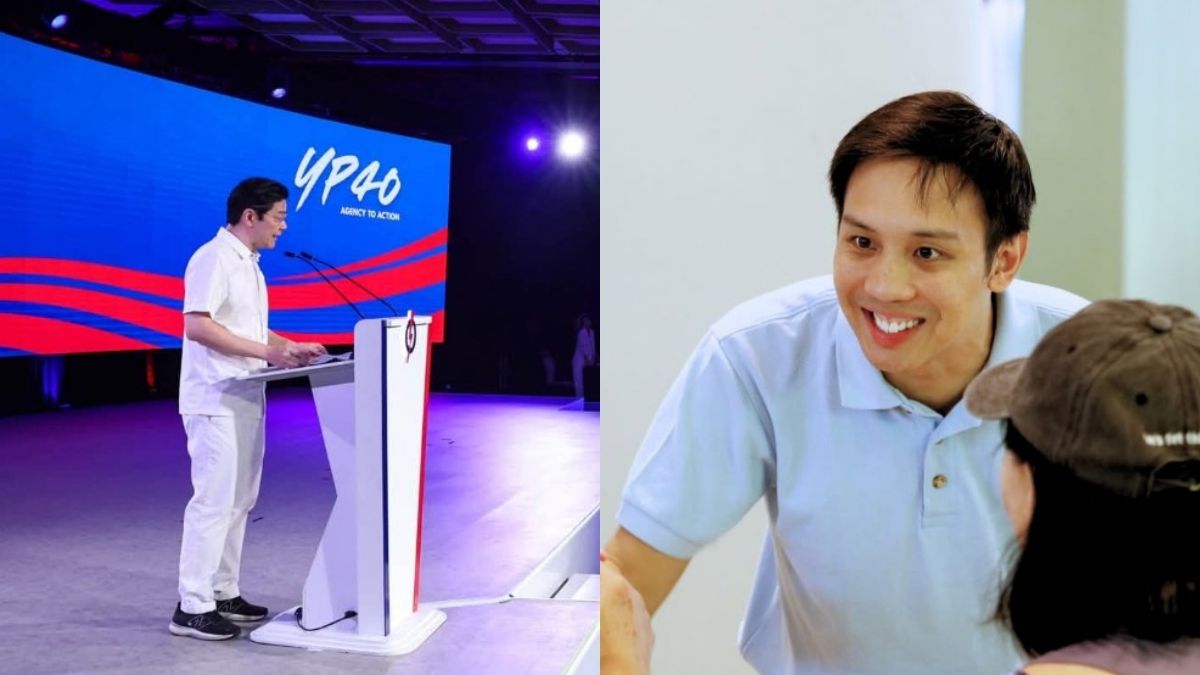
In a Facebook post published on 5 July 2026, Thng, who contested Tampines GRC for the Workers' Party during the 2025 General Election, responded to Wong's keynote address delivered a day earlier at the Young PAP 40 Festival.
While expressing agreement with parts of Wong's speech, Thng argued that the Prime Minister's broader framing was flawed because it sought to justify continued People's Action Party (PAP) dominance despite acknowledging Singapore's increasingly challenging external environment.
Thng agrees on external challenges
Thng said Wong was correct in describing Singapore's most significant challenges as external rather than domestic.
"There has been wall-to-wall coverage about PM Wong's speech at Young PAP's 40th anniversary," Thng wrote.
"He is right that Singapore's real contest is external – the global environment is only getting more challenging and continuing to find Singapore's place within it will only get more important."
He added that domestic policymaking would become increasingly important as Singapore responds to developments including artificial intelligence, geopolitical bipolarity and global trade uncertainties.
Thng also endorsed Wong's call for greater diversity of views within the PAP.
"He is also right that the governing party needs people who think differently, not people who simply agree with each other. No argument from me," Thng wrote.
He added that he would welcome more individuals with differing opinions joining the ruling party and said he hoped dissent within the PAP would be given genuine influence rather than merely being tolerated.
Disagreement over political competition
Despite agreeing with Wong on several broad themes, Thng said the PM Wong erred by using those arguments to advocate continued PAP dominance.
"The logic on offer is roughly this: because the competition that matters is out there, we should spend less energy competing with each other in here," Thng wrote.
He argued that international competitiveness is strengthened, not weakened, by robust domestic competition.
Drawing comparisons with sports and business, Thng said national teams improve through highly competitive domestic leagues rather than eliminating local competition before international tournaments.
Similarly, he argued that companies do not become globally successful by operating under protected monopolies at home.
Instead, he said, competition promotes discipline, innovation and resilience, while a lack of competition leads to stagnation.
"This is why I think PM Wong's framing gets the causality backwards," Thng wrote.
"It is precisely because Singapore is the underdog externally that we need real contestation internally – a Parliament where policy is genuinely tested before it is implemented, and innovated when needed, not simply rubberstamped; and an opposition with the standing and the numbers to make every policy earn its passage through scrutiny."
Call for stronger parliamentary scrutiny
Thng also reiterated arguments he previously made during a General Election roundtable discussion in 2025.
Quoting his earlier remarks, he said: "It is more important than ever to build a system that will get policies right, because in this context there is far less margin for error, and to get it right we need more perspectives, we need more voices to ensure blind spots are not missed, mistakes are not made."
"If we accept that none of us have a monopoly on good ideas, then maybe none of us should have a monopoly in Parliament."
Thng concluded that Singapore should not expect to remain competitive internationally by encouraging citizens to unite behind a single political party.
"So yes... if you're compelled to serve Singapore through the PAP, please do it, and please do it well," he wrote.
"But it is irresponsible to think we can have a competitive country by asking everyone to build just one party."
He added that Singapore requires "a real, structural competition of ideas across our political system" because "a party, like a muscle, atrophies without resistance".
PAP doesn't want everyone to think the same way, says PM Wong
Thng's comments came after Wong addressed more than 1,200 youth activists at the Young PAP 40 Festival on 4 July 2026.
Speaking as PAP secretary-general, Wong said the ruling party did not expect all members to think alike and instead welcomed people with differing viewpoints.
"This diversity is essential for the PAP to keep renewing itself and to continue governing well for the longer term," Wong said.
He added that the party welcomed individuals with "different experiences, perspectives and ideas" to help address Singapore's future challenges.
Wong said what united PAP members should not be agreement on every issue but a shared commitment to building a better Singapore.
"There will always be a place in the PAP for you," he told supporters.
Rejecting the notion that members must agree with every party position, Wong said: "You do not have to agree with us on every single issue. In fact, it's the opposite."
He encouraged young Singaporeans with ideas and a desire to improve the country to join the PAP.
Singapore as the underdog
During his speech, Wong acknowledged that some young Singaporeans might naturally support political underdogs instead of an established governing party.
However, he argued that Singapore itself remains the true underdog internationally.
"We are competing against countries with much larger populations, bigger markets, and far greater resources," Wong said.
"There is no autopilot for Singapore's success."
He said Singapore could not rely solely on past achievements and stressed that every generation must contribute fresh ideas, renewed energy and a stronger sense of responsibility.
While acknowledging that Singaporeans could also contribute through non-governmental organisations and community groups, Wong said effective governance ultimately depends on committed political leadership and individuals willing to step forward rather than remain on the sidelines.
He also urged young Singaporeans to reject cynicism, noting that previous generations had helped build modern Singapore despite initially feeling unprepared for leadership.
He encouraged youths to "choose to lead, and choose to take action" as Singapore navigates an increasingly uncertain global environment.