Sylvia Lim calls for transparency in selection process for Attorney-General
Workers' Party MP Sylvia Lim has questioned the lack of public disclosure regarding the reappointment of Attorney-General Lucien Wong for a fourth term, citing his age and the need for clarity on candidate shortlisting to maintain public trust in the legal system.
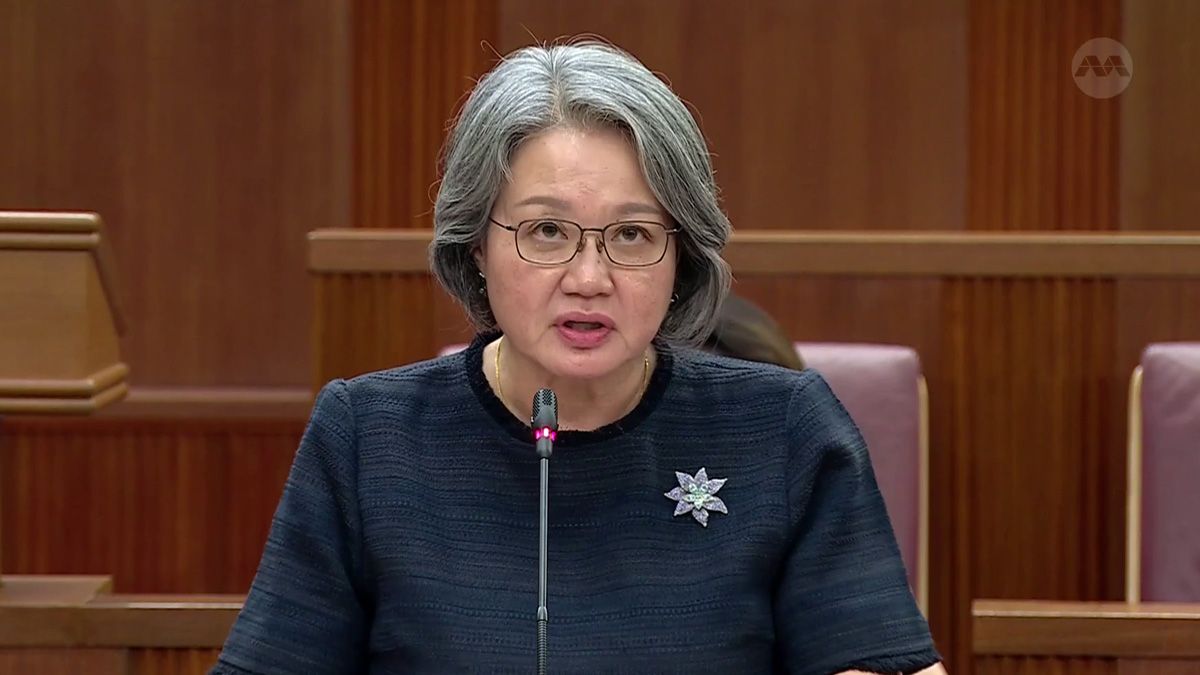
- MP Sylvia Lim argued that the Prime Minister should be more forthcoming about the selection and shortlisting process for the Attorney-General.
- Concerns were raised regarding the reappointment of Lucien Wong for a fourth term, as he will be 75 years old by the end of his tenure in 2029.
- Lim emphasised that the Attorney-General holds unfettered prosecutorial discretion and the public has an interest in knowing how such a critical post is filled.

Aljunied GRC Member of Parliament Sylvia Lim has called on the government to provide greater clarity and transparency regarding the selection and reappointment process for the Attorney-General (AG).
Speaking during the Committee of Supply debate for the Ministry of Law on 27 February 2026, Ms Lim argued that the Prime Minister should be more forthcoming about the deliberations involving such a high constitutional office.
The Workers' Party (WP) chair noted that in October 2025, the Attorney-General's Chambers (AGC) announced that the President had reappointed Mr Lucien Wong for a fourth term of three years.
This extension ensures Mr Wong remains in the post until January 2029. According to Ms Lim, the information disclosed to the public regarding this significant decision was notably limited.
Ms Lim highlighted the unique and sensitive nature of the AG role under the Constitution.
As the public prosecutor, the AG possesses direct discretion to institute, conduct, or discontinue any criminal proceedings. This power includes the ability to treat co-accused individuals differently or to issue warnings instead of prosecution.
Unlike judges who must deliver pronouncements in open court, Ms Lim observed that the AG is not required to explain decisions publicly. Furthermore, these prosecutorial decisions are not subject to appeal and are practically unfettered unless proven to be irrational or made in bad faith.
According to Ms Lim, while the AG must act unencumbered by political pressure, the office must also remain consistent with public values. She argued that the selection process is critical to ensuring the AG acts in the public interest and maintains trust in the legal system.
The current constitutional requirements for the appointment are described by Ms Lim as thin. Article 35 of the Constitution stipulates that the Prime Minister must consult the Chief Justice and the incumbent AG before making a recommendation to the President. However, there is no requirement for public disclosure regarding these consultations.
Ms Lim raised specific concerns regarding the seniority of the current incumbent. Mr Wong, who has served since 2017, will be 75 years old by the end of his current term. This far exceeds the typical retirement threshold of 60 years previously observed by predecessors such as Mr V.K. Rajah.
Despite Mr Wong’s distinguished career in private practice, Ms Lim questioned whether the Prime Minister had shortlisted other qualified candidates before recommending the reappointment. She noted that there appear to be many qualified persons within the legal community capable of assuming the role.
The MP further suggested that it would be instructive for the public to know what specific experience each new AG brings to the post. The role requires a balance of expertise, acting both as the government's chief legal adviser and as the public prosecutor with precedence in any court.
Ms Lim concluded by inviting the Prime Minister to provide more clarity on the selection process for the future. She maintained that addressing these issues publicly would promote greater confidence in the independence and robustness of the Singaporean legal framework.
Controversy since 2017 appointment
Mr Wong’s appointment as AG in 2017 was met with criticism. Despite a long and distinguished career in corporate law, he had never argued a case in court.
Critics argued that courtroom experience is essential for the role, which demands both prosecutorial expertise and the ability to command authority in legal proceedings.
Further scrutiny emerged due to Mr Wong’s prior relationship with Senior Minister Lee Hsien Loong, who was then serving as Singapore’s Prime Minister. Mr Lee had held the position since 2004 before stepping down in 2024.
Mr Wong had previously acted as Lee’s personal lawyer during a widely publicised family dispute over the late Lee Kuan Yew’s residence at 38 Oxley Road.
This connection led to allegations of a conflict of interest, given that the attorney-general must advise the government and prosecute on the state’s behalf.
Opposition figures and commentators raised concerns about the appearance of partiality.
In a New York Times interview, academic Li Shengwu, a relative of the Lee family, accused the government of using legal institutions to suppress dissent. He cited Mr Wong’s appointment as evidence of compromised independence.