Advocacy group raises concerns over quality and nutrition of catered meals for migrant workers in Singapore
Videos released by Migrant Workers Singapore feature migrant labourers describing poor-quality catered meals, including oily dishes, suspected spoiled food and hygiene concerns. The advocacy group’s posts have sparked debate online and renewed attention to food standards for migrant workers.
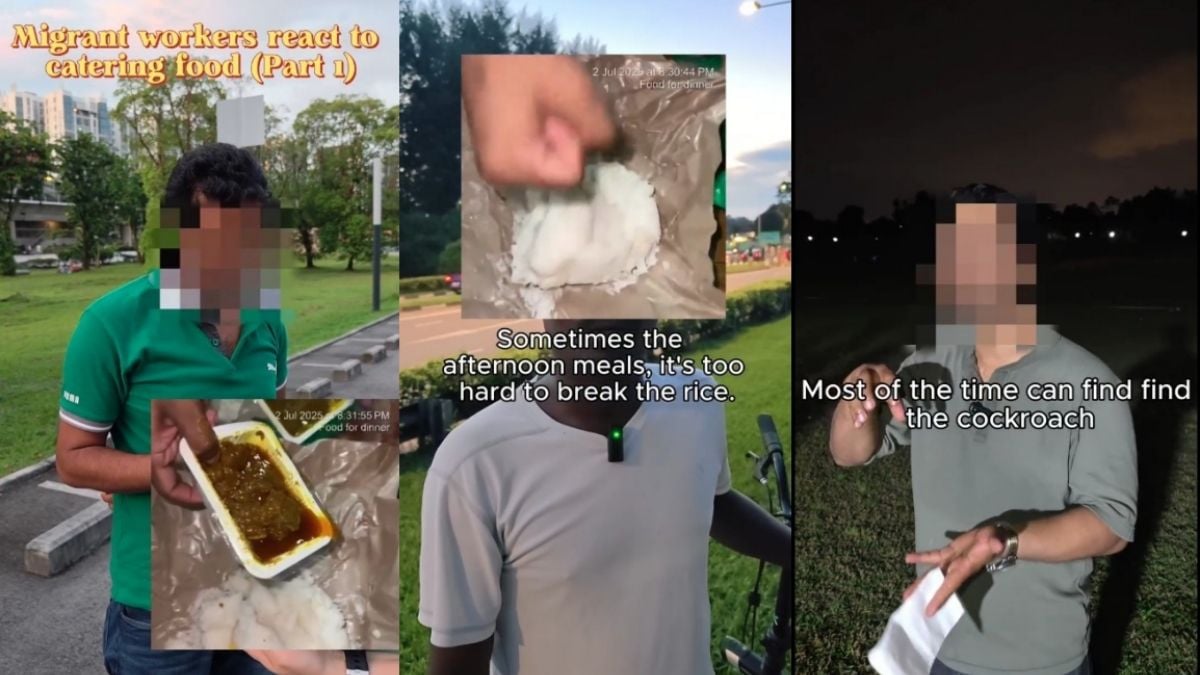
- Migrant Workers Singapore videos feature workers alleging poor food quality, hygiene issues and excessive oil in catered meals.
- Workers claim meals affect health and energy needed for physically demanding jobs.
- Online reactions and past parliamentary questions highlight ongoing scrutiny of migrant worker food standards.

Advocacy group Migrant Workers Singapore (MWS) has raised concerns over the standard and nutritional value of catered meals provided to migrant workers in Singapore.
The concerns surfaced through two recent videos posted by the group, in which migrant workers shared their experiences with catered meals supplied to them at worksites and dormitories.
Several workers interviewed in the videos described dissatisfaction with the quality and preparation of the meals, raising issues ranging from excessive oil content to suspected hygiene problems.
One worker, whose identity was withheld, said the food provided by caterers was “no good”, adding that it had worsened his gastric condition.
He claimed the meals often consisted largely of curry powder and oil, with little meat provided. According to him, dishes containing mutton, beef or chicken were typically only served during dinner.
Workers say poor meals affect their health and work
The worker explained that physical strength was essential for the type of labour he performed, which involved demanding construction tasks.
“If the body is good, I can work hard with no problem,” he said in the video.
“But if the body is not good, how can I work? It becomes very hard.”
He added that cooking independently was not always feasible, as many migrant workers only returned from work late in the evening, sometimes around 8pm or 9pm.
Another worker interviewed in the video alleged that he had occasionally found cockroaches in the catered meals.
He also criticised the quality of fish and vegetables, saying that the ingredients often appeared poorly prepared or in unsatisfactory condition.
Allegations of recurring hygiene and quality issues
The worker said that complaints about food quality had been raised previously, but improvements were often temporary.
“When we inform them, after one or two days everything is okay,” he said. “But after that, the same problem happens again.”
He criticised what he described as a lack of concern for workers’ welfare.
Another migrant worker, speaking in Bengali, alleged that catered meals intended for Bengali workers in Singapore were often of particularly poor quality.
He said that as many migrant workers perform physically demanding labour, inadequate meals could undermine their physical strength rather than sustain it.
The worker urged caterers and employers to improve the standard of food provided to migrant workers.
Reports of oily dishes and digestive problems
In the second video released by MWS, another migrant worker described meals that were frequently heavy in oil.
He claimed that workers who regularly consumed such food sometimes experienced stomach pain, digestive discomfort or other health issues.
“Some people always eat the catering food and then get stomach pain,” he said. “Sometimes cholesterol, sometimes feeling not good.”
Another worker claimed that some meals were not cooked properly before being served, suggesting that dishes were occasionally delivered partially uncooked.
He said this sometimes led to digestive problems after meals.
Complaints about stale bread, rice and ingredients
Several workers interviewed also criticised the quality of staple foods provided during breakfast and lunch.
One worker said the roti served in the morning appeared to have been prepared the previous day and left in the heat, causing it to become moist and unappetising.
Another worker said that prata served during breakfast was often very hard, sometimes accompanied by halwa that had spoiled or daal that was poorly prepared.
Workers also described problems with lunch meals, particularly rice, fish and vegetables.
One interviewee said that rice served during afternoon meals was sometimes so hard that it was difficult to break apart, jokingly questioning whether “rubber” had been used.
The same worker alleged that vegetables appeared poorly washed and fish dishes were unusually tough, leading him to suspect that ingredients had been stored for extended periods before cooking.
He also criticised dinner dishes for containing what he described as excessive amounts of oil, which he believed could harm workers’ health.
Online reactions highlight wider welfare concerns
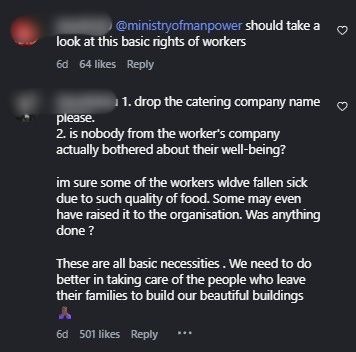
The videos prompted discussion among users on Instagram, where some commenters argued that providing hygienic and nutritious food should be considered a basic right for workers.
Several netizens said it was troubling to see such complaints repeated over time.
Some commenters suggested that employers and catering companies should be held accountable for ensuring adequate food standards.
Others urged Singapore’s Ministry of Manpower to examine the issue more closely to safeguard workers’ welfare.
One comment alleged that some construction companies might be allocating extremely low budgets for catered meals, sometimes between S$1.50 and S$2 per meal.
According to the comment, such pricing would make it difficult for caterers to provide balanced and nutritious meals.
The comment claimed to have previously declined a contract offering S$1.20 per meal, stating that it would be impossible to produce acceptable food at that cost.
Another user remarked that complaints about migrant worker catering had been circulating for decades, questioning why stronger action had not been taken.
The commenter added that workers labouring under the sun deserved proper meals suitable for human consumption, noting that workers often paid for the food themselves.


Issue previously raised in Parliament
Concerns about catered food for migrant workers have also been raised in Singapore’s Parliament.
During a parliamentary sitting in October 2024, then-Nee Soon GRC Member of Parliament Louis Ng Kok Kwang questioned the inspection regime for caterers supplying food to migrant workers.
In response, then-Senior Minister of State for Sustainability and the Environment Koh Poh Koon stated that the Singapore Food Agency conducts inspections on all licensed food caterers to ensure compliance with food safety requirements.
According to the ministry, approximately 3,600 inspections of licensed food caterers were conducted between January 2023 and September 2024.
During the parliamentary exchange, Ng raised concerns about the rule requiring catered food to be consumed within four hours of preparation.
He noted that many migrant workers start work early in the morning and may not receive their meals until several hours later, potentially exceeding the recommended time frame.
Koh responded that the issue often involved logistical coordination between companies and caterers rather than food preparation standards alone.
He explained that employers needed to communicate clearly with caterers regarding the timing of meal delivery so that food could be consumed promptly.
Koh added that if specific cases of inadequate arrangements were reported, authorities could facilitate discussions between employers and caterers to improve coordination.
He also suggested that non-governmental organisations or worker groups could raise particular cases with the relevant authorities for targeted action.