Air India posts US$2.4 billion annual loss, seeks bailout from Tata and Singapore Airlines
Air India has recorded a wider-than-expected loss of over 220 billion rupees (US$2.4 billion) for the fiscal year ended 31 March 2026. Tata Group and Singapore Airlines are in talks to inject fresh capital into the struggling carrier.

- Air India's fiscal year 2026 loss exceeded US$2.4 billion, surpassing an internal estimate of US$1.6 billion.
- Tata Group and Singapore Airlines are in talks to inject fresh capital, though the amount may fall short of needs.
- A fatal crash, airspace closures, Middle East conflict and CEO departure compound the airline's break-even failure.

Air India has recorded a wider-than-expected annual loss of more than 220 billion rupees (US$2.4 billion) for the fiscal year ended 31 March 2026, according to a Bloomberg News report citing people familiar with the matter who requested anonymity as the information is private.
The figure substantially exceeds an internal company estimate of US$1.6 billion that Bloomberg News had reported in January 2026. It represents the airline's most severe financial shortfall since its privatisation by the Tata Group in 2022, according to the report.
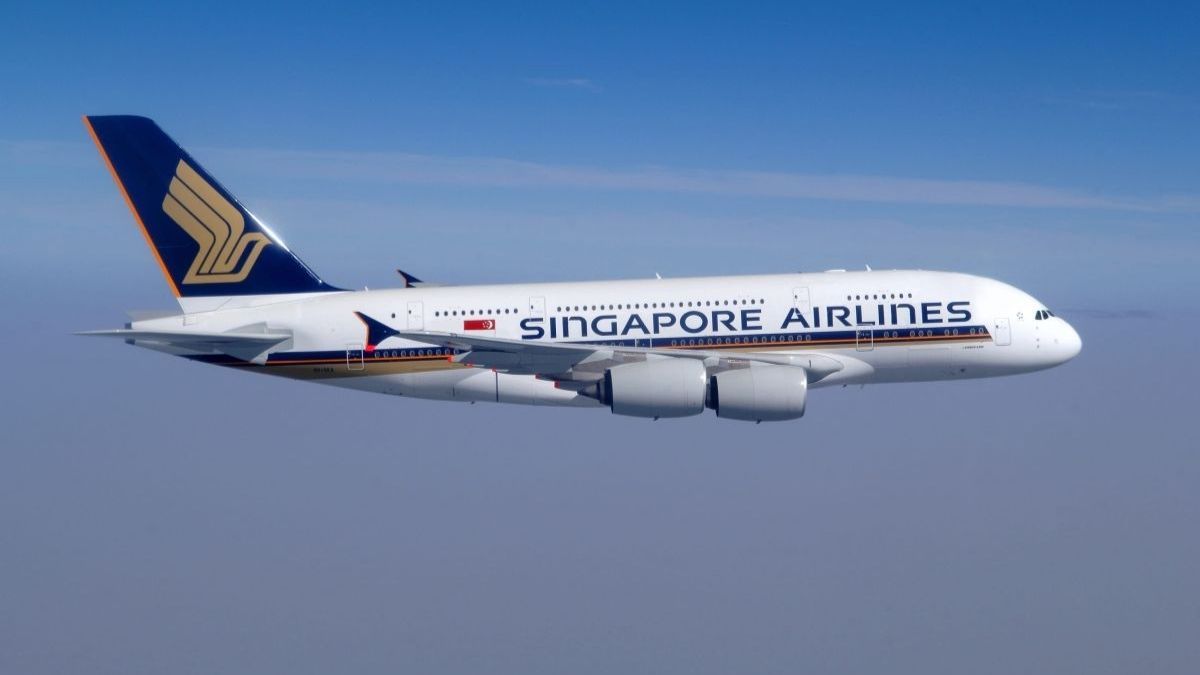
Controlling shareholder Tata Group and Singapore Airlines Ltd (SIA) — which holds a 25.1% stake in Air India — are in talks to provide a capital injection, Bloomberg News reported, citing the same people. The size of any infusion remains under discussion and may fall short of the carrier's full requirements, meaning Air India may need to pursue additional financing options, the report said.
Representatives for Tata Group and Air India did not respond to Bloomberg News' requests for comment. SIA declined to comment.
Cascade of crises
The fiscal year began on an encouraging note, with Air India posting operating profits in the opening weeks of April 2025. That trajectory rapidly reversed as a series of external shocks struck the carrier in quick succession.
In May 2025, Pakistan closed its airspace to Indian airlines following a brief military conflict, forcing carriers onto longer and more expensive routing to North America and Europe. The closure substantially raised fuel costs and compelled the airline to suspend certain long-haul routes.
On 13 June 2025, a Boeing Co. 787 Dreamliner operated by Air India crashed near Ahmedabad, Gujarat, killing more than 240 people. The disaster prompted the airline to reduce both international and domestic services, compounding an already deteriorating revenue picture.
Air India has also been among the foreign carriers most affected by the ongoing conflict in the Middle East. The region accounts for approximately 16% of the airline's total capacity, much of which has been grounded as hostilities have continued.
Flights to Europe and North America have been diverted to longer routes at a time when jet fuel prices have surged, raising operating costs across the network.
Additional pressure came from United States President Donald Trump's punitive tariffs on Indian goods and a tightening of approvals for foreign worker visas, which the people said had a direct impact on passenger volumes and the carrier's bottom line. The combined effect of these disruptions prevented Air India from achieving its stated target of operational break-even for the fiscal year.
Safety record under scrutiny
Alongside its financial difficulties, Air India is facing intensifying scrutiny over its technical reliability. A company document submitted to the Indian government in February 2026, reviewed by Reuters, showed that technical incidents — including engine oil and fuel leaks — reached their highest recorded rate in at least 14 months in January 2026.
The airline recorded 1.09 technical incidents per 1,000 flights in January, quadrupling from a rate of 0.26 per 1,000 flights in December 2024. Air India operated more than 17,500 flights in January and recorded 23 technical incidents on its international and domestic services, at least 21 of which were formally investigated by the carrier.
The incidents included engine stall warnings, issues with flight control and hydraulic systems, and five instances of fuel or engine oil leaks across both its Airbus and Boeing aircraft. One Dubai-Mumbai flight was found on arrival to have an engine with low oil quantity. A Delhi-Dubai flight on 12 January was forced to return after takeoff due to an absence of water in the lavatory and galley systems.
Operational incidents — including rejected takeoffs, flight at restricted altitude and departure with incorrect settings — stood at 0.29 per 1,000 flights in January, more than double the December 2024 level, according to the document.
India's civil aviation ministry separately told lawmakers this month that 82.5% of the 166 Air India aircraft it had analysed since January 2025 had recurring technical defects. The comparable figure for market leader IndiGo was 36.5%. The ministry provided no further breakdown.
The safety picture has attracted international scrutiny. Britain's Civil Aviation Authority asked Air India to explain why a Boeing Dreamliner that had been grounded on arrival in India for safety checks subsequently departed London with a possibly faulty fuel switch, according to a Reuters report this month. Air India replied that it had reminded pilots of the requirement to follow proper procedures and had replaced the throttle control module on the aircraft as a precautionary measure.
In December 2025, Air India had already acknowledged internally that there was a need for urgent improvements in process discipline, communication and compliance culture. In its February document, the carrier stated that systemic improvements were being introduced across flight operations, training, engineering quality and procedural oversight.
In a statement to Reuters, the airline said it had undertaken a comprehensive programme to strengthen technical reliability and had increased its critical spares inventory by over 30% to improve aircraft availability and reduce operational disruptions. It also said it had made significant capital investments in engineering infrastructure and tooling.
Specific remedial measures described in the document include a periodic inspection programme for its Airbus A320 fleet, replacement of steering-system hydraulic hoses across its Boeing 777s, and a periodic air-conditioning leak-check programme. India's civil aviation ministry did not respond to Reuters' queries.
Fleet and revamp challenges
Air India operates a fleet of 191 aircraft and has placed orders for more than 500 additional planes. The carrier's revamp effort, however, has been hampered by supply chain delays that have held back cabin retrofit programmes, a problem Chief Executive Officer Campbell Wilson has raised repeatedly.
Wilson last week announced his intention to step down later in 2026, without naming a successor or a specific date. His planned departure adds a further layer of instability to an airline navigating acute operational and reputational pressures.
Air India was also ranked worst for safety issues in the aviation regulator's most recent annual audit. Bloomberg News reported in February 2026 that stemming the airline's losses had been identified as one of the conditions for approving a third term for Tata Group Chairman Natarajan Chandrasekaran.
Singapore Airlines' exposure
SIA acquired its 25.1% stake in Air India through the merger of its Indian affiliate Vistara with Air India in November 2024. Air India's worsening financial performance has since weighed on SIA's own earnings.
The two carriers have been building a deeper commercial relationship. In January 2026, they signed a commercial cooperation framework agreement in Mumbai, with the aim of expanding their partnership through definitive joint business agreements subject to regulatory approvals.
The agreement was signed by Wilson and SIA Chief Executive Officer Goh Choon Phong. The airlines currently codeshare on 61 points across 20 countries and territories, following a partnership expansion in October 2024.
Both carriers said the agreement was designed to improve Singapore-India connectivity, enhance route options, align flight schedules and extend benefits across Air India's Maharaja Club and SIA's KrisFlyer frequent flyer programmes.
Air India's record losses and mounting safety concerns now cast uncertainty over the pace of that commercial expansion. Both shareholders face the immediate question of how much capital to commit to an airline that has yet to demonstrate a credible path to operational profitability.