Singapore's Chan Chun Sing meets Thai PM Anutin to discuss bilateral ties and Land Bridge
Singapore has expressed interest in Thailand's Land Bridge project as talks between the two countries span defence, energy, aviation, and food security, following a high-level meeting in Bangkok on 27 April 2026.
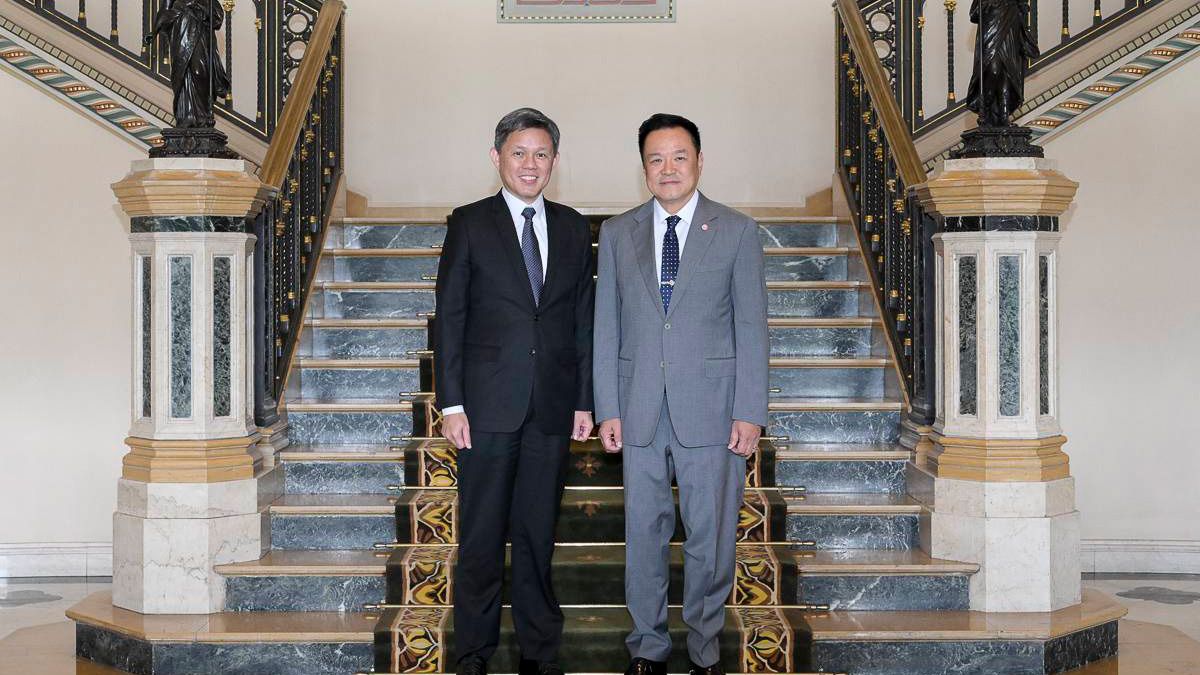

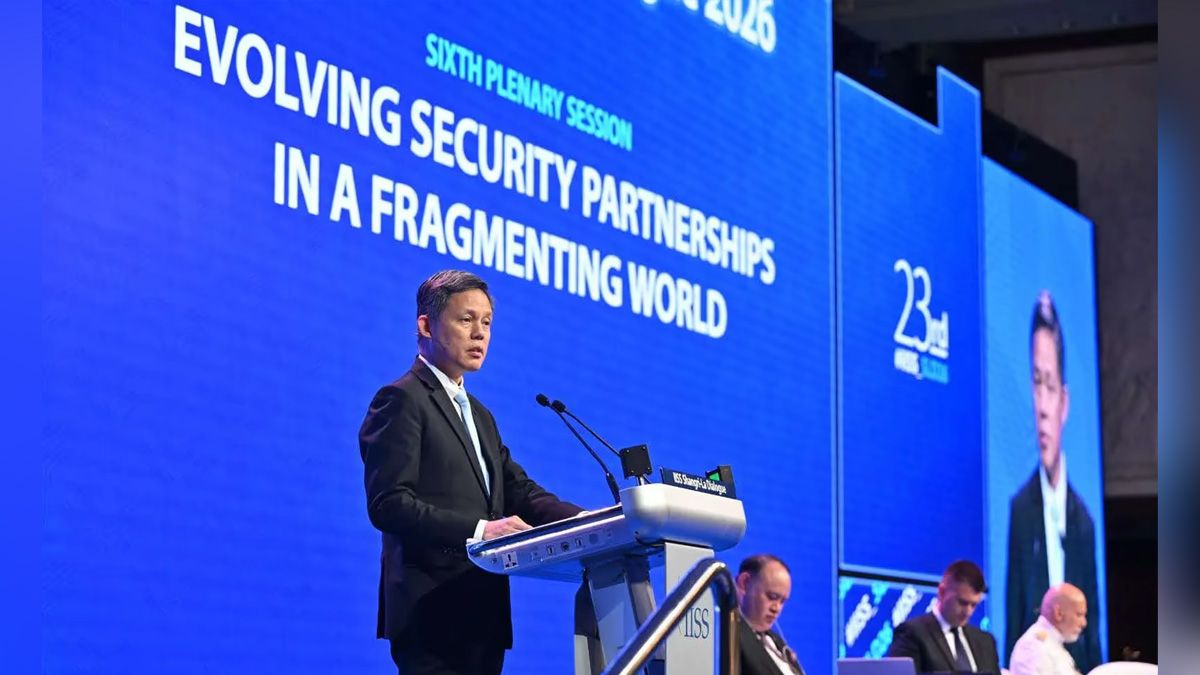
Singapore's Coordinating Minister for Public Services and Defence Minister Chan Chun Sing paid a courtesy call on Thai Prime Minister and Interior Minister Anutin Charnvirakul on 27 April 2026 at the Ivory Room, Thai Khu Fah Building, Government House, Bangkok.
Government Spokesperson Rachada Dhnadirek disclosed the broad agenda of the meeting, which spanned defence cooperation, energy security, aviation maintenance, food security, and Thailand's Land Bridge project.
Singapore expresses interest in Land Bridge, stops short of commitment
On the Land Bridge project, Rachada said Singapore had expressed interest but had not yet committed to any specific role. She said Singapore recognised the project's potential and the opportunities it could create for Thailand and the wider region if it proceeds.
The project, which aims to link ports on the Andaman Sea and the Gulf of Thailand, has been promoted by the Thai government as a means to reduce reliance on congested maritime routes and strengthen Thailand's position as a regional logistics hub.
Rachada rejected criticism from opposition politicians that the government was advancing the project without sufficient economic justification. She insisted that any proposal submitted to the cabinet would be supported by comprehensive feasibility and environmental studies.
She said the project would rely primarily on private investment under a public-private partnership model, adding that there was no question of presenting a blank proposal to cabinet.
Defence cooperation and joint exercises reaffirmed
Both sides expressed satisfaction with the long-standing bilateral defence relationship. Prime Minister Anutin reaffirmed Thailand's continuity of joint exercises and its support in providing training areas for the Singapore Armed Forces (SAF).
Chan expressed appreciation for Thailand's continued hosting of SAF training activities, describing it as playing an important role in enhancing Singapore's defence capabilities.
Annual exercises such as Cobra Gold were cited as a reflection of the depth of the bilateral defence relationship. Both parties agreed that challenges could be turned into opportunities for building trust and deepening ties.
Energy and aviation cooperation on the agenda
The two sides exchanged approaches to domestic energy management and agreed on expanding bilateral cooperation in the energy sector, covering fuel management, energy trade, and regional power grid interconnection.
Thailand and Singapore also agreed to outline plans for greater use of renewable and alternative energy, with the aim of strengthening regional energy security and reducing energy loss through more efficient resource management.
On aviation, both sides identified opportunities to expand cooperation in the aircraft maintenance, repair, and overhaul (MRO) sector. Singapore's strengths in technology and standards were noted as complementary to Thailand's advantages in geographic location and human resources.
Officials said these complementary factors could support the development of a regional MRO hub. Cooperation was also discussed in the maintenance of ships and military equipment, with joint investment and public-private partnerships identified as potential avenues for growth.
Food security and strategic alignment
Both governments acknowledged opportunities to expand cooperation in food security. Thailand, as a major food producer, was identified as well-positioned to support countries with strong energy resources but food supply challenges.
Chan conveyed good wishes from Singapore Prime Minister Lawrence Wong to Anutin and expressed hope for an official visit to Singapore at a mutually convenient time. He also conveyed condolences on the passing of Her Majesty Queen Sirikit, The Queen Mother.
Anutin took the occasion to thank Lawrence Wong for a congratulatory phone call made upon his assumption of the Thai premiership, during which further cooperation at both bilateral and regional levels was discussed.
Land Bridge faces environmental and parliamentary scrutiny
Despite the diplomatic expressions of interest, Thailand's Land Bridge project continues to attract significant scrutiny at home.
Bangkok Post reported that Senator Norasate Prachyakorn announced plans in Parliament to seek a review of the project, citing its estimated cost of around one trillion baht and potential environmental consequences.
He questioned whether key environmental and health impact assessments (EHIA) had been adequately completed, warning that accelerated approval could undermine due process.
Marine scientist Thon Thamrongnawasawat raised concerns about significant discrepancies in data on seabed organisms in Ranong province, one of the two proposed port sites. Official studies estimate roughly 1.5 billion organisms would be affected by the project, while independent research suggests the figure could exceed 50 billion.
Thon said the discrepancy raised serious questions about the scale of ecological damage and the level of compensation that would be required, and called for further independent review of the assessments.
Natural Resources and Environment Minister Suchart Chomklin said he would convene relevant agencies to review the contested EHIA findings, following pressure from civil society and academic groups.
Southern engagement planned amid local concerns
The government acknowledged local concerns in southern provinces where the Land Bridge infrastructure would be constructed. Deputy Prime Minister and Transport Minister Phiphat Ratchakitprakarn is scheduled to visit the southern region next month to gather public feedback.
Officials stressed, however, that no formal public hearings have yet been held. Rachada said the government remained committed to public engagement throughout the process.
Supporters of the project argue it would allow Thailand to develop a trading hub model for marine fuel supply, leveraging the country's existing refining capacity and strategic geographic position between two major sea lanes.