Wong warns of prolonged crisis even after Strait of Hormuz reopens, pledges no worker left behind
Prime Minister Lawrence Wong used Singapore's May Day Rally to warn of a protracted economic crisis stemming from the Strait of Hormuz closure, while pledging that every worker would be supported through AI-driven disruption.
- Wong warns the Strait of Hormuz crisis will persist beyond reopening, with supplies and growth under strain.
- A S$1 billion support package has been rolled out, with further relief promised if conditions deteriorate.
- AI will reshape entire industries, but Singapore pledges no worker will be left behind amid the transition.

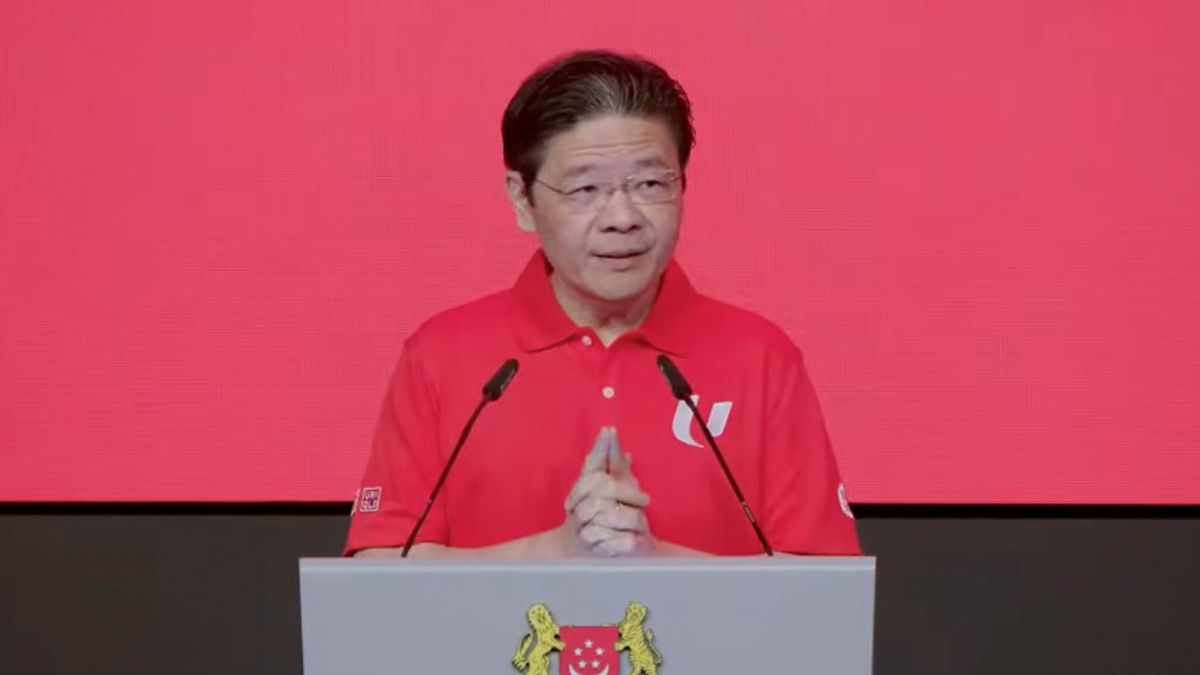
SINGAPORE — Prime Minister Lawrence Wong warned on 1 May 2025 that the global crisis triggered by the closure of the Strait of Hormuz would not end soon, even after shipping lanes reopen, and called on Singaporeans to brace for a difficult period ahead.
Speaking to more than 1,600 union leaders and tripartite partners at the May Day Rally in Downtown East, Wong said the situation could take months to stabilise, with economic pressures "likely to intensify" and the effects already being felt directly by Singaporeans.
Iran has closed the Strait of Hormuz and the United States has imposed blockades on Iranian ports, leaving a tense stand-off with no clear resolution. Although active fighting has paused, tensions remain elevated.
The Strait has been closed for more than two months, with the fallout extending beyond higher prices to tightening supplies across multiple sectors.
"Here in Asia, we are especially affected because of our high dependence on energy and other critical supplies from the Gulf. Some countries in our region are already facing fuel shortages," Wong said.
He described the situation as a storm "more severe" than anything Singapore has encountered in recent years.
Reopening alone will not restore normalcy
Even when the Strait eventually reopens, a swift return to normal conditions cannot be assumed, Wong cautioned. He cited damaged energy infrastructure, uncleared mines in shipping lanes, and the time needed to rebuild confidence for safe passage as compounding factors.
Supply disruptions could persist or worsen, with Singapore facing slower growth and higher inflation this year. "All this will put real pressure on businesses, workers and households," he said.
Despite the severity of the outlook, Wong said Singapore had not entered the crisis from a position of weakness. "Singapore is better prepared and in a much stronger position today," he told the gathering.
He pointed to strategic investments made over decades, including the reclamation of land, the development of Jurong Island and its refining and petrochemical industries, and the creation of underground oil reserves in the Jurong Rock Caverns.
"We made the hard choices early — managing our finances prudently and building up our reserves. At the same time, we invested to strengthen our energy resilience," he said.
Singapore is today a key node in global energy flows, with leading energy companies refining, storing and trading oil in the city-state. Its connections to diverse supply networks allow operators to draw on alternative sources when one route is disrupted.
S$1 billion package deployed
The government has rolled out a S$1 billion support package in response to the crisis. Measures include higher Cost-of-Living special payments for Singaporeans, cash relief for platform workers, an increased corporate income tax rebate, and an expanded Energy Efficiency Grant extended to all sectors through 31 March 2028.
Addressing what he acknowledged many workers would be wondering, Wong noted that CDC vouchers originally scheduled for January next year had been brought forward, and directly anticipated the question of whether further support would still be available later.
"Because in times like this, Singaporeans can count on one thing: your government will act. We will do so decisively, and we will stand with you, with every Singaporean, every step of the way," he said, confirming that additional measures remain available should conditions deteriorate.
AI to reshape industries, but workers will be protected
The second major theme of Wong's address was the accelerating impact of artificial intelligence on Singapore's economy and workforce.
Wong acknowledged the "massive" scale of disruption ahead, noting that where entire teams were once required for certain workflows, a single person equipped with AI agents can now accomplish the same outcome.
"These go far beyond simple chatbots. They don't just answer your questions. They can plan and execute complex tasks from start to finish, all on their own," he said. "AI will not just improve productivity. It will disrupt and reshape entire industries."
He was frank about the limits of what the government could guarantee. "I cannot promise that there will be no disruption. Jobs will change. Some will disappear. And the pace of change will be faster than anything we have seen before."
But he paired that admission with a clear commitment: "As our economy transforms, we will create new and better jobs. We may not be able to protect every job. But we will protect every worker. Because in Singapore, every worker matters."
Anxiety is real, Wong acknowledges
Wong acknowledged directly that many Singaporeans feel unsettled by AI. "They ask: will it replace jobs? Will it be harder to keep up? Will the next generation still have good opportunities? These concerns are real," he said.
Drawing on his own experience entering the workforce in the mid-1990s, he recalled how tools such as spreadsheet software had initially displaced data entry roles but ultimately created greater demand for workers who could apply those tools to generate value.
"AI is far more powerful than spreadsheets. So the impact on our workplaces will be much greater," he said, while arguing that the pattern of displacement followed by new opportunity would repeat itself at a larger scale.
New institutional architecture for the transition
To manage the shift, authorities plan to merge Workforce Singapore and SkillsFuture Singapore into a single new entity. Wong said the government would also scale up company training committees as part of a sector-by-sector approach to the AI transition.
He pointed to the new Tripartite Jobs Council, announced on Thursday and initiated by the National Trades Union Congress, which will bring together tripartite partners to support workers and businesses navigating AI-driven change.
In his Budget speech earlier this year, Wong announced that Singaporeans who enrol in selected AI training courses would receive six months of free access to premium AI tools.
"The government will provide the tools, the pathways, and the support. But we also need Singaporeans to step forward. Do not let anxiety or uncertainty hold you back from learning and using AI," he said. "AI is here to stay. So, embrace it, learn it, use it and master it."
Emotional close
Wong closed his address on a personal note, becoming visibly emotional as he read aloud the words of Nishar Keshvani, a Singaporean describing the experience of returning home on a Singapore Armed Forces repatriation flight.
He paused to compose himself before continuing.
"Whether it is an energy crisis, or the AI revolution, we will look after our own. No Singaporean will be left behind," he said. "Our solidarity is our greatest strength. It carried us through every storm of the past. It gives us confidence today. And it will carry all of us forward — into the future we are building together."