Tan See Leng rejects WP ideas to tackle AI-driven inequality, says plans risk undermining empowerment
Manpower Minister Tan See Leng rejected Workers’ Party proposals on AI redistribution, arguing they risk treating Singaporeans as passive recipients rather than active participants in economic transformation.

- Tan See Leng rejected WP proposals, arguing they frame workers as passive in AI transition.
- WP MPs defended measures as ensuring fair distribution of AI-driven economic gains.
- Government emphasised skills, job redesign and tripartite cooperation over redistribution policies.

SINGAPORE: Manpower Minister Tan See Leng has rejected a slate of proposals from Workers’ Party MPs aimed at addressing inequality and job disruption caused by artificial intelligence, arguing that such measures risk undermining worker agency.
Speaking in Parliament on 6 May 2026, Tan said suggestions including a national AI equity fund, retraining tax credits and redundancy insurance were based on a premise he could not accept.
“I cannot hold on, and I will not hold on to such a premise,” he said, adding that the proposals “are not empowerment”.
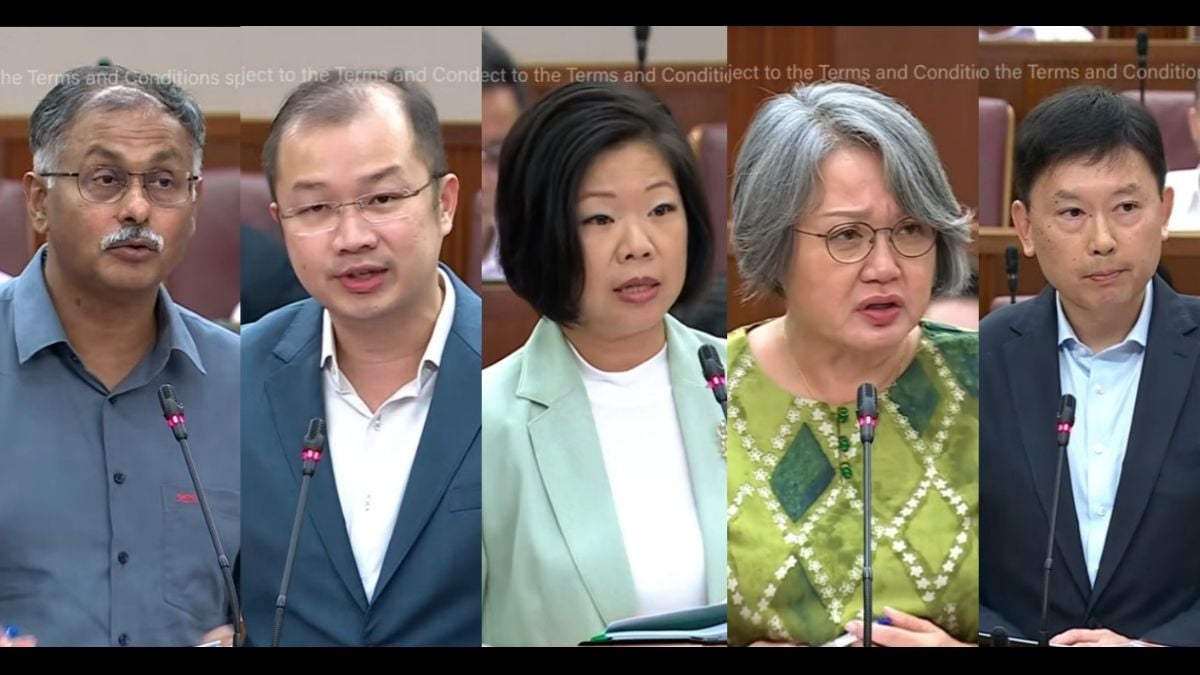
The exchange came during a debate on a motion titled ‘An Artificial Intelligence with No Jobless Growth’, introduced by National Trades Union Congress secretary-general Ng Chee Meng and debated by more than 20 MPs over two days.
WP MPs proposed AI equity fund, retraining tax credits, redundancy insurance, and AI gains audit
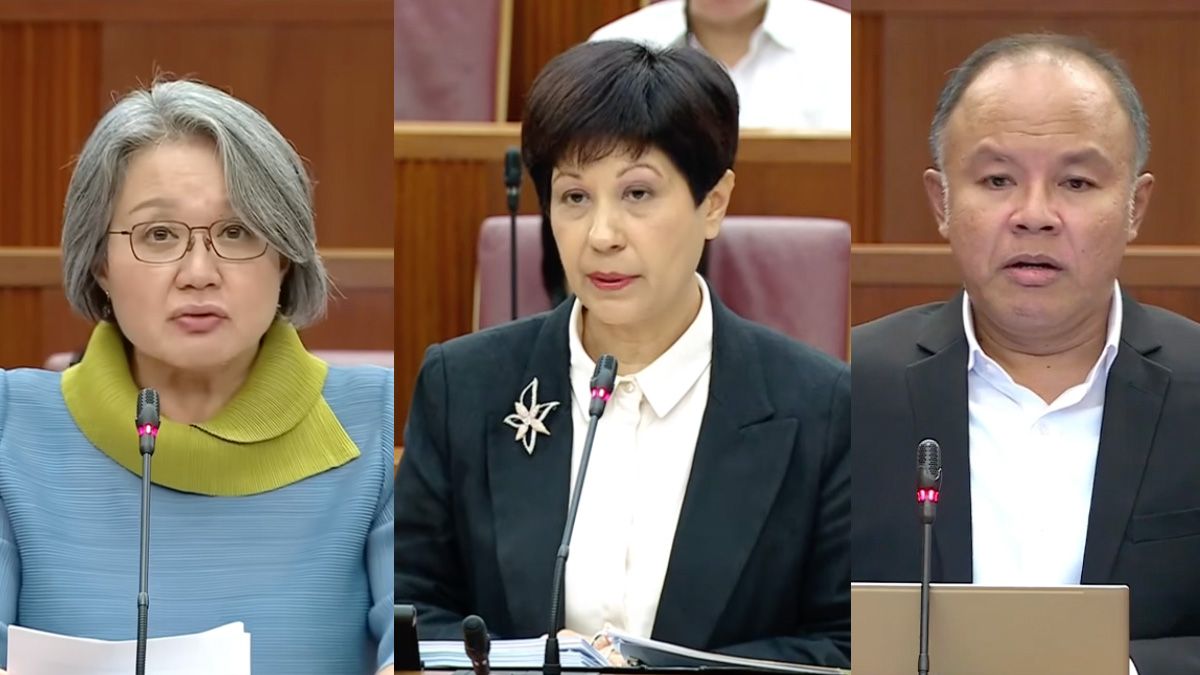
Workers’ Party MP Gerald Giam had proposed a National AI Equity Fund designed to help Singaporeans adapt to AI-driven economic shifts while preventing widening inequality.
The proposal comprises two pillars. The first is a social dividend paid to every adult Singaporean citizen.
The second is a “Mastery Fund” to support employer-led AI training and wage support.
Giam suggested financing the fund through a two-percentage-point increase in corporate tax rates for firms with annual profits above S$100 million, alongside allocating a larger share of investment returns to the Budget.
He argued that such a framework would ensure Singaporeans benefit directly from AI-driven productivity gains while strengthening economic security during the transition.
Separately, Non-Constituency MP Andre Low questioned whether existing policies could ensure an AI transition that does not leave workers behind.
Low pointed to what he described as a disconnect between the government’s stated goal of “augmentation” and a policy framework that still permits automation and job displacement.
He proposed three measures: a retraining tax credit to incentivise firms to retain workers, a redundancy insurance scheme to replace current support mechanisms, and an annual AI gains audit.
Low said stronger policy tools were needed to ensure productivity gains from AI are shared fairly with workers.
Minister accuses WP MPs' remarks of ‘passive passenger’ framing
In response, Tan said both MPs’ proposals appeared to assume that Singaporeans would be “essentially passive passengers in the AI transition”.
He cited the idea of universal payouts funded by companies benefiting from AI, as well as redundancy insurance payments for displaced workers, as examples of this framing.
Redistribution alone would be insufficient if workers were excluded from the economy, Tan said.
He added that Singapore’s longstanding approach has been to invest in people rather than compensate them after disruption occurs.
“Our tradition has always been to invest in people, not to compensate them for circumstances,” he said.
WP MPs dispute characterisation
Both Low and Giam challenged Tan’s interpretation of their proposals during the debate.
Low called on the minister to clarify his reading of their arguments.
“I would urge the minister to clarify how he has managed to read that basis into our speeches,” he said.
Giam similarly rejected the notion that his proposal was about compensation for failure.
He said the AI equity fund was intended to provide security that enables success, rather than passive support.
Giam also pressed the government on its longer-term approach, asking how it intends to move from discretionary spending to a “structural sharing of AI wealth”.
He said such a shift would be necessary to protect the economic agency of workers in the face of technological disruption.
Focus on income growth and participation
Tan responded that the government’s approach centres on improving real incomes rather than redistributive mechanisms.
He emphasised that Singapore would actively shape its economic transformation rather than leaving outcomes to chance.
“Singaporeans will never be helpless passengers to an AI-driven future, but Singaporeans will be our fellow co-pilots as our AI journey takes flight,” he said.
He added that the country would move forward through collaboration between government, employers and unions.
“We will move forward in the Singapore way, with government, employers and the unions working together to ensure that our AI transformation creates good jobs,” he said.
Mixed evidence on AI’s impact on jobs
Tan acknowledged that artificial intelligence is already affecting employment patterns, although current data does not indicate widespread displacement.
According to a Ministry of Manpower poll conducted earlier in 2026, 6.2 per cent of firms reported reducing headcount due to AI adoption.
A further 8.5 per cent said they had reduced hiring activity.
However, Tan cautioned that the impact of AI on jobs is expected to grow as adoption scales up across sectors.
Singapore must therefore prepare for more significant changes in the labour market, he said.
The government’s goal is to enable businesses to deploy AI in ways that enhance workers’ roles rather than replace them.
This includes making work more meaningful and ensuring that productivity gains are shared between employers and employees.
Tripartite approach to managing disruption
Tan highlighted Singapore’s track record in navigating past economic disruptions, including the Asian financial crisis, SARS and the COVID-19 pandemic.
He attributed resilience during those periods to cooperation between workers, businesses and the government.
“In many countries, AI becomes a tug of war – workers on one end, business on the other,” he said.
“Singapore does not have to go down that road.”
He acknowledged concerns that AI could erode skills or displace workers, but said the technology would also create new opportunities.
These include flexible work arrangements and “fractional work” models involving small teams or independent professionals.
A tripartite work group on senior employment will explore how to scale such models, he added.
Expanding support for workers and jobseekers
Tan said the government is reviewing proposals to expand support schemes for workers affected by job loss.
This includes studying a suggestion to raise the income ceiling of the SkillsFuture Jobseeker Support Scheme.
The scheme currently provides up to S$6,000 in temporary financial relief and job search support, with a salary cap of S$5,000.
Adjustments could extend assistance to higher-income individuals facing displacement.
Addressing inequality and uneven AI adoption
Tan stressed that fairness and shared opportunity in AI-driven growth would not occur automatically.
AI adoption remains uneven across sectors, worker groups and firm sizes, he said.
“Without deliberate effort, the gains from AI could flow to some while others are left behind,” he warned.
To address this, the newly formed Tripartite Jobs Council will focus on vulnerable groups, including students and young workers entering the labour market.
Educational institutions are also updating curricula to keep pace with AI developments and offering alumni access to selected courses at discounted rates.
SkillsFuture work-study programmes will continue to combine classroom learning with on-the-job training.
Strengthening workforce readiness
The formation of the Skills and Workforce Development Agency aims to streamline support for both workers and employers.
Tan said the agency will introduce diagnostic tools to help individuals assess their “AI readiness” and identify relevant training pathways.
Participants in selected SkillsFuture AI courses will receive six months of free access to premium AI tools.
In parallel, the Infocomm and Media Development Authority will expand its TechSkills Accelerator programme.
The initiative will focus on developing “AI bilingual” professionals in fields such as accountancy, law and human resources.
Business support and job redesign
On the employer side, Tan reiterated support through the S$400 million Enterprise Workforce Transformation Package announced in Budget 2025.
The package provides funding for job redesign and workforce training.
Small and medium enterprises can receive up to 70 per cent support for job redesign costs, capped at S$150,000.
Companies receiving these grants are required to demonstrate workforce outcomes such as wage growth and employee retention.
Tan also expressed support for expanding the company training committee initiative to a tripartite level.
The programme encourages collaboration between employers and unions to improve career progression and wages through structured training.
Retrenchment notification reforms under discussion
Tan addressed proposals to require earlier notification of retrenchments.
Currently, firms with at least 10 employees must notify authorities within five working days after informing affected workers.
He noted that mandating advance notification could create challenges and potentially discourage efforts to preserve jobs.
However, tripartite partners are discussing possible changes as part of an ongoing Employment Act review.
Tan said the government aims to enable notification before or by the last day of work where possible, to facilitate quicker support for displaced workers.
Dr Tan reassured workers, graduates and businesses that they will be supported and not left behind in the AI transition.