Fadli Fawzi calls for free off-peak public transport to better support seniors and persons with disabilities
Workers' Party MP Fadli Fawzi has renewed calls for free off-peak public transport for seniors and persons with disabilities, saying Singapore's world-class transport infrastructure should directly improve residents' lives. He also urged wider deployment of autonomous buses, including night services.
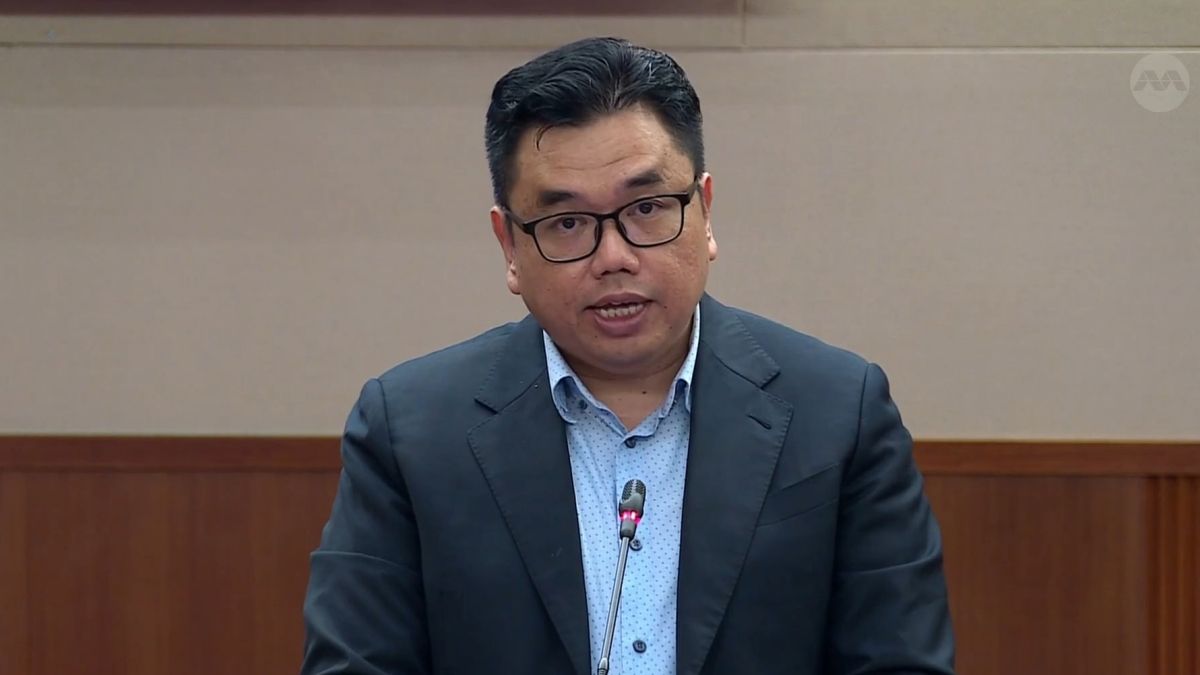
- Fadli Fawzi urged free off-peak public transport for seniors and persons with disabilities.
- He proposed autonomous buses for overnight services to address manpower shortages.
- The Government said autonomous bus trials are under way but wider deployment depends on technological maturity.

SINGAPORE: Workers' Party MP Fadli Fawzi renewed his call for free off-peak public transport for seniors and persons with disabilities, arguing that Singapore's world-class transport infrastructure should directly improve the daily lives of residents rather than serve only economic objectives.
Speaking in Parliament on 7 July 2026 during a debate on a motion to reinforce Singapore's position as a global transport hub, he also proposed expanding the use of autonomous buses, including overnight services operating along MRT corridors.
Fadli said Singapore's transport and infrastructure investments should be measured not only by their contribution to economic growth, but also by how they improve everyday life.
Infrastructure should benefit ordinary Singaporeans
"Should our world-class infrastructure merely facilitate the movement of capital, goods and talent across borders, or should it also improve and enhance the everyday lives of Singaporeans?" he asked.
He said infrastructure should "not merely facilitate Singaporeans getting good jobs, but also tangibly improve the lived experiences of our people".
Using Changi Airport as an example, Fadli said it demonstrates how infrastructure can simultaneously generate economic value while remaining accessible to the public through attractions, dining and recreational spaces enjoyed by residents, even if they are not travelling.
He contrasted this with infrastructure that many Singaporeans cannot directly use, noting that about two-thirds of resident households do not own cars.
While expressways improve logistics and trade, he said they provide limited direct benefits to non-car owners, making projects such as the North-South Corridor's dedicated bus lanes and cycling paths a positive example of more inclusive planning.
"We must ensure that Singaporeans do not feel alienated from the world-class infrastructure which underpins our hub status," he said.
Renewed push for free off-peak travel
Fadli reiterated the Workers' Party's proposal to make public transport free during off-peak hours for seniors and persons with disabilities.
He cited London's Freedom Pass, which allows eligible older residents and people with disabilities to travel free across the Transport for London network, subject to weekday morning peak-hour restrictions for older pass holders.
Referring to a 2014 study on the scheme, Fadli said researchers found that free bus travel provided opportunities for meaningful social interaction, fostered a sense of belonging and helped reduce loneliness among older residents.
"It makes senior citizens feel like they belong and have a place in society," he said.
Fadli argued that public transport should be viewed primarily as a public service rather than a profit centre, particularly as Singapore becomes a super-aged society.
He acknowledged that former Workers' Party MP Associate Professor Jamus Lim had raised a similar proposal during the 14th Parliament, but said the Government had previously rejected it over concerns about the financial cost.
Fadli maintained that the wider social benefits, including companionship, community participation and inclusion, should also be considered when assessing the proposal.
Autonomous buses for overnight services
Turning to transport technology, Fadli said autonomous vehicles could help address persistent manpower shortages in the public transport sector.
He noted that fewer than one-third of bus captains are Singaporeans and that recruitment and retention remain major constraints on expanding the bus network.
With autonomous bus trials already taking place in Punggol and further pilots planned in Marina Bay and one-north from the second half of 2026, Fadli said the Land Transport Authority should consider using self-driving buses to operate overnight services.
He proposed deploying autonomous buses along MRT corridors while rail lines are closed each night for maintenance, creating a more comprehensive late-night transport network.
Unlike previous NightRider and Nite Owl services, which mainly operated one-way from the city before being discontinued after the COVID-19 pandemic, Fadli said a network mirroring MRT routes would benefit shift workers, airport employees, travellers and others requiring affordable transport outside normal operating hours.
"Affordable late-night mobility should be part of a vibrant world city like Singapore," he said.
Fadli added that autonomous buses could eventually support school transport, particularly as operators continue to face driver shortages and rising operating costs.
He stressed that automation should complement, rather than replace, bus drivers.
"Bus driving should be seen as a profession Singaporeans should be proud to enter," he said, adding that operators must continue receiving competitive wages, career progression and good working conditions.
Government says trials are under way
Responding to the debate, Senior Minister of State for Transport Sun Xueling said the MOT was already expanding autonomous vehicle trials to public buses.
She said the Government would begin piloting autonomous buses on two public bus services but cautioned against expecting rapid expansion, as autonomous bus technology remains less mature than autonomous cars.
Sun also noted that existing autonomous buses currently carry fewer passengers than conventional buses.
She said public bus services must accommodate diverse commuter needs, including elderly passengers, parents with children in strollers and persons with disabilities, meaning operational requirements would need to be carefully addressed before wider deployment.
Nevertheless, Sun said the Government agreed there were suitable use cases for autonomous buses, including night bus services, and would consider broader implementation as the technology becomes more mature.