MOE raises school bus operator support to 20% amid sustained fuel cost pressures
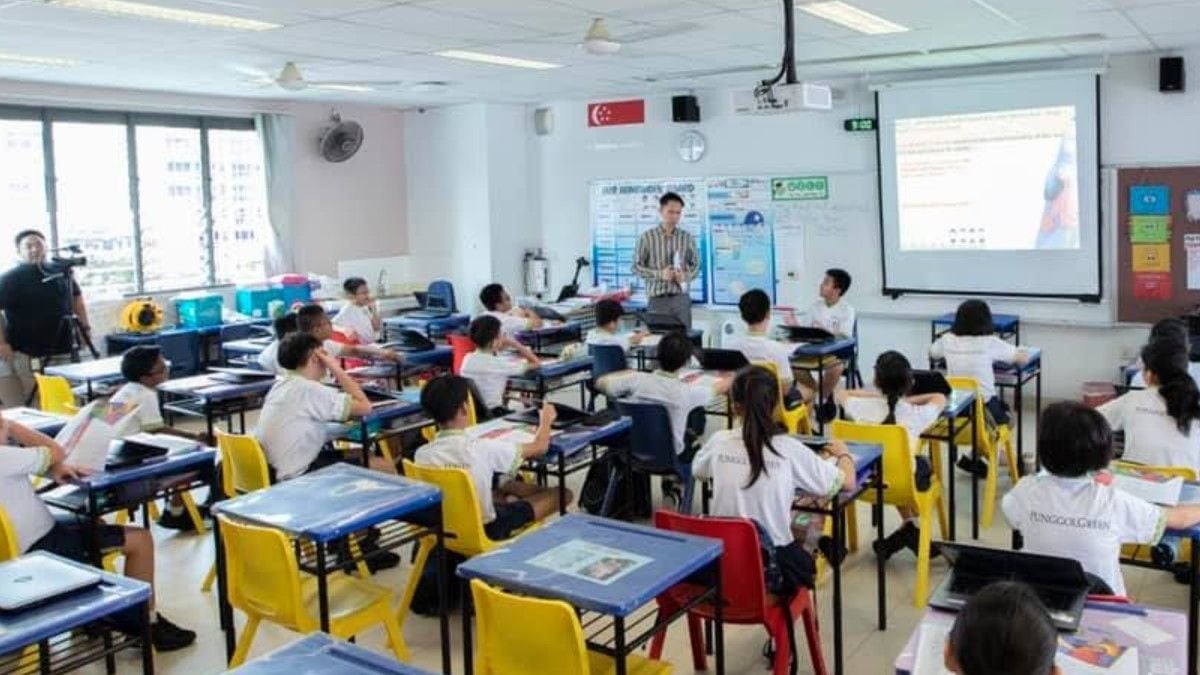
Singapore's Ministry of Education has increased temporary financial support for regular school bus operators from 13% to 20% of fare revenue for May and June, with a capped fuel surcharge mechanism set to take effect from July if fuel prices remain elevated.

- MOE raises operator support from 13% to 20% of school bus fare revenue for May and June.
- A time-bound, MOE-capped fuel surcharge may apply from July if fuel prices stay elevated.
- Students on financial assistance schemes will be shielded from any resulting fare increases.

Singapore's Ministry of Education (MOE) announced on 15 May 2026 that it will increase temporary financial support for operators of regular school bus services, raising the subsidy from 13% to 20% of transport fare revenue for May and June.
The move comes as fuel prices remain elevated in the wake of the continuing Middle East conflict, which has pushed up operating costs across the transport sector.
MOE said the enhanced support "will help transport operators continue operating without disruption."
The announcement follows a parliamentary response on 5 May 2026 delivered by Education Minister Desmond Lee, who addressed questions from Members of Parliament (MPs) Joan Pereira and Abdul Muhaimin Abdul Malik on the sustainability of school bus services amid the ongoing crisis.
Surcharge mechanism from July
Should fuel prices remain high beyond June, MOE said operators of regular bus services for primary school and Special Education (SPED) students will, from July, be permitted to implement a "time-bound" fuel surcharge.
MOE said it will set a maximum surcharge cap that operators may apply, and that fares may be raised up to that ceiling.
The ministry indicated it will notify operators of the cap in June, allowing parents to be informed of any revised fares before the start of the post-holiday school term.
MOE added that it will continue to monitor fuel prices and adjust or remove the surcharge ceiling in line with market movements, signalling that the mechanism is intended to be temporary and responsive rather than structural.
Ad hoc services and the 42-contract benchmark
MP Abdul Muhaimin had raised the specific concern that the earlier 13% support did not extend to ad hoc bus services used for off-site school activities, and asked whether MOE had assessed the risk of operators withdrawing from schools due to unviable margins.
Minister Lee confirmed that ad hoc providers fall outside the regular support framework, but said MOE had advised schools to work with operators on reasonable rate adjustments. As of 28 April 2026, schools had facilitated temporary rate increases for 42 bus contracts, with additional cases still under consideration.
Lee also encouraged other procurers of transport services to adopt a similar approach, "so that the burden is shared fairly."
MOE had previously advised schools in April to "reasonably consider" requests from contracted operators to raise fares for off-site activities, noting that keeping such services viable was important to avoid school programmes and student learning being "adversely affected."
No MOE takeover of bus operations
MP Joan Pereira had asked whether MOE would consider assuming direct management of school bus operations, with existing companies retained as contractors. Minister Lee ruled this out.
He said the current model — in which schools select operators through competitive bidding — gives schools direct oversight over service quality and affordability, while allowing operators flexibility to customise their services.
Lee said MOE would nonetheless intervene where necessary to ensure continuity, including by helping schools put in place replacement arrangements or novate existing contracts. He said the ministry would "continue working closely with schools and operators to ensure the sustainability of both regular and ad hoc bus services."
Financial assistance protections
MOE confirmed that students on the MOE Financial Assistance Scheme (FAS) will not bear higher fares. Additional school bus subsidies will be provided to cover any increase in their monthly charges.
Students requiring further support who do not qualify for MOE FAS may approach their schools for school-based assistance.
SPED students will continue to receive financial assistance to defray school bus fares if they are eligible for the Ministry of Social and Family Development's Enabling Transport subsidy, administered by SG Enable. Those who do not qualify or require additional help may also approach their schools directly.
Broader sector context
The fuel cost pressures affecting school bus operators are part of a wider strain on the transport sector linked to the Middle East conflict.
Acting Minister for Transport Jeffrey Siow said in parliament last month that the government would temporarily co-fund cost increases for certain essential bus services to cushion the impact on Singaporeans.
Essential bus service operators have broadly welcomed the government co-funding measures but have, according to earlier reports, called for longer-term structural relief — including a waiver of road taxes — to address the underlying viability pressures on the sector.