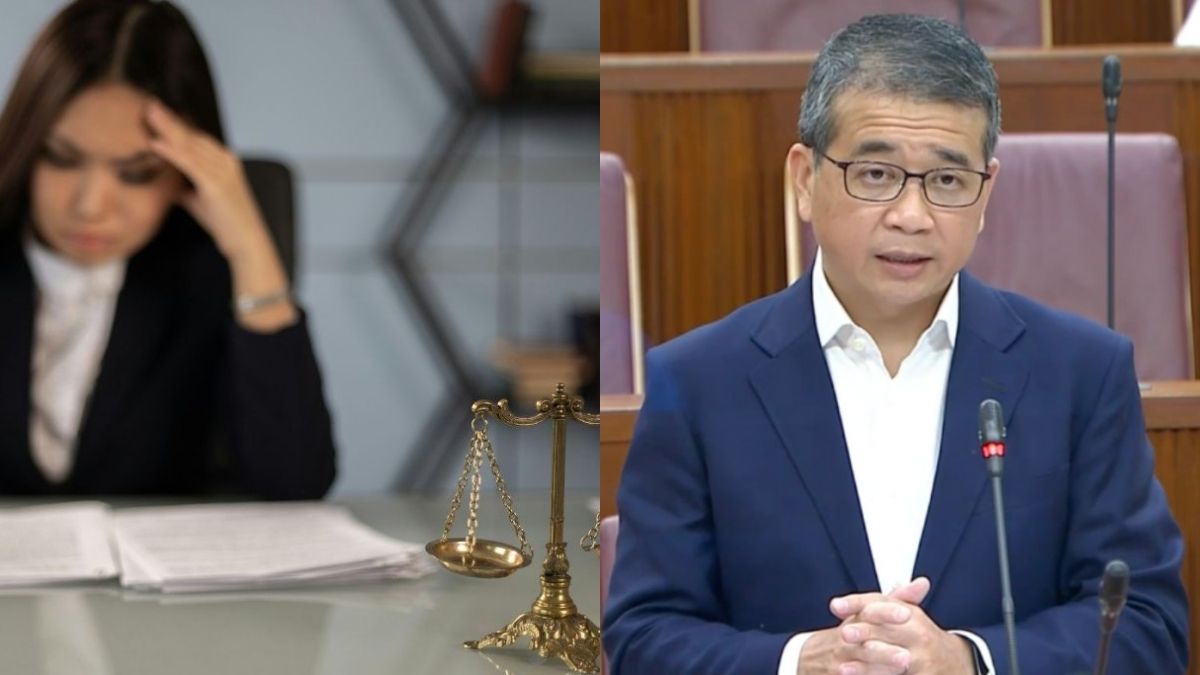
Netanyahu government to sue New York Times over Palestinian detainee sexual abuse report
Israel's Prime Minister Benjamin Netanyahu has instructed legal advisers to pursue defamation action against The New York Times and columnist Nicholas Kristof over a report alleging systematic sexual abuse of Palestinian detainees by Israeli forces.

- Netanyahu has instructed legal advisers to pursue defamation action against the Times and columnist Kristof.
- The column, based on 14 victim accounts, alleges systematic sexual violence by Israeli forces against Palestinian detainees.
- US First Amendment law poses steep obstacles to any defamation suit by a foreign government or its officials.

Israel's government announced on Thursday that Prime Minister Benjamin Netanyahu had instructed his legal advisers to pursue defamation action against The New York Times and one of its veteran columnists, Nicholas Kristof, over a published opinion piece alleging systematic sexual violence against Palestinian detainees.
Netanyahu's office described the column as "one of the most hideous and distorted lies ever published against the State of Israel in the modern press." The Prime Minister posted on X that his legal team would "consider the harshest legal action" against both the newspaper and Kristof.
"They defamed the soldiers of Israel and perpetuated a blood libel about rape, trying to create a false symmetry between the genocidal terrorists of Hamas and Israel's valiant soldiers," Netanyahu said in a statement. "We will fight these lies in the court of public opinion and in the court of law."
The Kristof column and its contents
The column, published in the Times' opinion section, drew on interviews with 14 Palestinian men and women who said they had been sexually assaulted by Israeli soldiers, prison guards or settlers operating under the protection of Israeli security forces. Kristof, a longtime Times opinion journalist, noted that he was unable to corroborate some individual accounts.
Among the allegations cited was that of Sami al-Sai, a 46-year-old Palestinian freelance journalist, who said he was sexually assaulted with a rubber baton and a carrot while held in Israeli detention in 2024.
Another account involved Mohammad Matar, a Palestinian official, who said he was stripped and prodded with a stick by settlers who joked about raping him. "For six months, I couldn't speak about it, even to my family," Matar was quoted as saying.
The column also referenced a report by the Independent International Commission of Inquiry on the Occupied Palestinian Territory presented to the United Nations Human Rights Council, which found that sexual violence had become "standard operating procedures" and "a major element in the ill treatment of Palestinians" within Israel's security apparatus.
Kristof's piece additionally cited a report by the Committee to Protect Journalists, which found that nearly a third of Palestinian journalists detained by Israel had experienced sexual violence. He wrote that American taxpayers were, by funding the Israeli security establishment, complicit in the abuse alleged.
The Times' response
The Times defended the column in a statement issued the day prior to Israel's formal announcement. Spokesperson Charlie Stadtlander said the accounts of the 14 individuals interviewed had been corroborated with other witnesses wherever possible, and cross-referenced with family members, lawyers, independent human rights research, surveys and, in one instance, United Nations testimony.
"Details were extensively fact-checked," Stadtlander said. "Independent experts were consulted on the assertions in the piece throughout reporting and fact-checking." The newspaper described the work as a "deeply reported piece of opinion journalism."
The Times did not immediately respond to a request for comment following Netanyahu's Thursday announcement.
Legal obstacles under United States law
Legal scholars said the threatened suit would face substantial constitutional barriers if filed in the United States. Rodney Smolla, a First Amendment scholar and former president of Vermont Law and Graduate School, noted that a government cannot sue for defamation under United States law.
Should Netanyahu bring the action in a personal capacity, Smolla said courts would likely find that the column did not target him specifically enough to grant standing, placing the claim uncomfortably close to a suit by the government itself.
Nadine Strossen, a former president of the American Civil Liberties Union, pointed to the landmark United States Supreme Court ruling in New York Times v. Sullivan, which substantially limited the ability of public officials to bring defamation suits. Under that precedent, a plaintiff would be required to demonstrate intentional or reckless falsity — that the publisher knew, or had strong reason to believe, the material was false.
"It can't be a matter of opinion or of analysis or of perspective. It has to be objectively falsifiable," Strossen said.
Yale Law School professor Jed Rubenfeld was more direct, assessing the suit's chances as "probably zero." He noted that criticism of a government's conduct, written without naming specific individuals as responsible for the alleged wrongdoing, falls within the protections of the First Amendment.
Jurisdiction unresolved
Netanyahu did not specify where or when any suit would be filed, nor did he identify who the formal plaintiffs would be. While a foreign government can technically initiate legal action against a United States media company, significant questions of jurisdiction remain unresolved.
This is not the first time Netanyahu has threatened the Times with litigation. Last August, he said he was "looking at whether a country can sue The New York Times" following reporting on starvation conditions in Gaza. That threat was not pursued.
The one precedent that some legal observers flagged as offering at least partial encouragement to a potential plaintiff is a 1983 case in which then-Israeli Defence Minister Ariel Sharon sued Time Magazine over coverage linking him to the massacre of Palestinian civilians in Lebanon. A federal jury found the relevant reporting to be false, but concluded the magazine had not acted with actual malice — the standard required under Sullivan — and the suit ultimately failed.
Questions of editorial consistency
The lawsuit announcement has reignited a separate debate about the Times' editorial practices. Critics have questioned why Kristof's article on alleged abuses against Palestinian detainees was published as opinion, while a December 2023 Times report on alleged sexual violence during Hamas's October 7 assault on southern Israel was published as news.
That 2023 report, which alleged a pattern of sexual abuse during the Hamas attacks, subsequently attracted significant controversy. Fifty journalism academics called on the newspaper to investigate its own reporting, and questions about its methodology were reportedly raised internally within the newsroom. The Times has maintained it stands by the piece.
A further news article published by the Times this week reported on findings from an Israeli civil commission which concluded that sexual abuse on 7 October 2023 had been "organised and patterned."
Reem Alsalem, the United Nations Special Rapporteur on violence against women and girls, said in a December statement that Israel had not responded to requests for an independent international commission to investigate sexual abuse allegations involving both Israelis and Palestinians.
The United Nations and international rights groups have separately documented the use of sexual violence by both Israeli forces and Hamas since the 7 October 2023 attacks, which triggered Israel's ongoing military campaign in Gaza.