Seven years on, Singapore's flagship anti-stigma campaign remains unknown to most
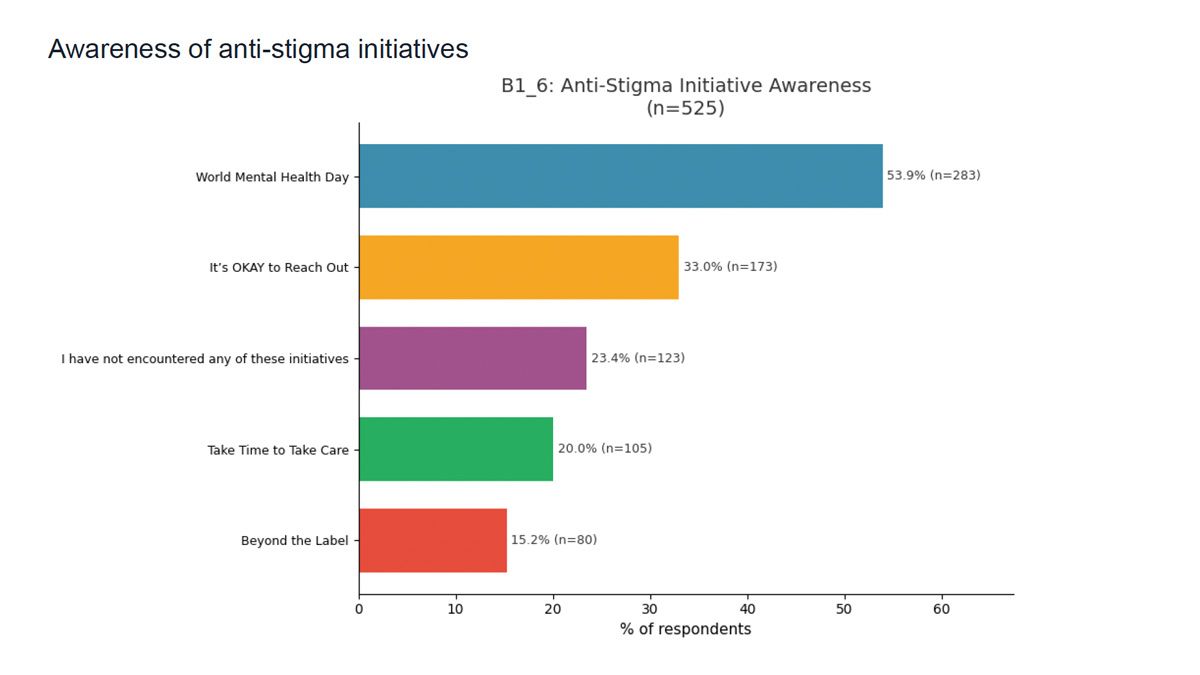
Seven years after its launch, Singapore's flagship mental health anti-stigma campaign Beyond the Label was recognised by only 15.2% of respondents in a nationally benchmarked survey — even as the government has repeatedly cited it in Parliament as evidence its mental health efforts are working. World Mental Health Day, which no one actively runs locally, scored 53.9%.
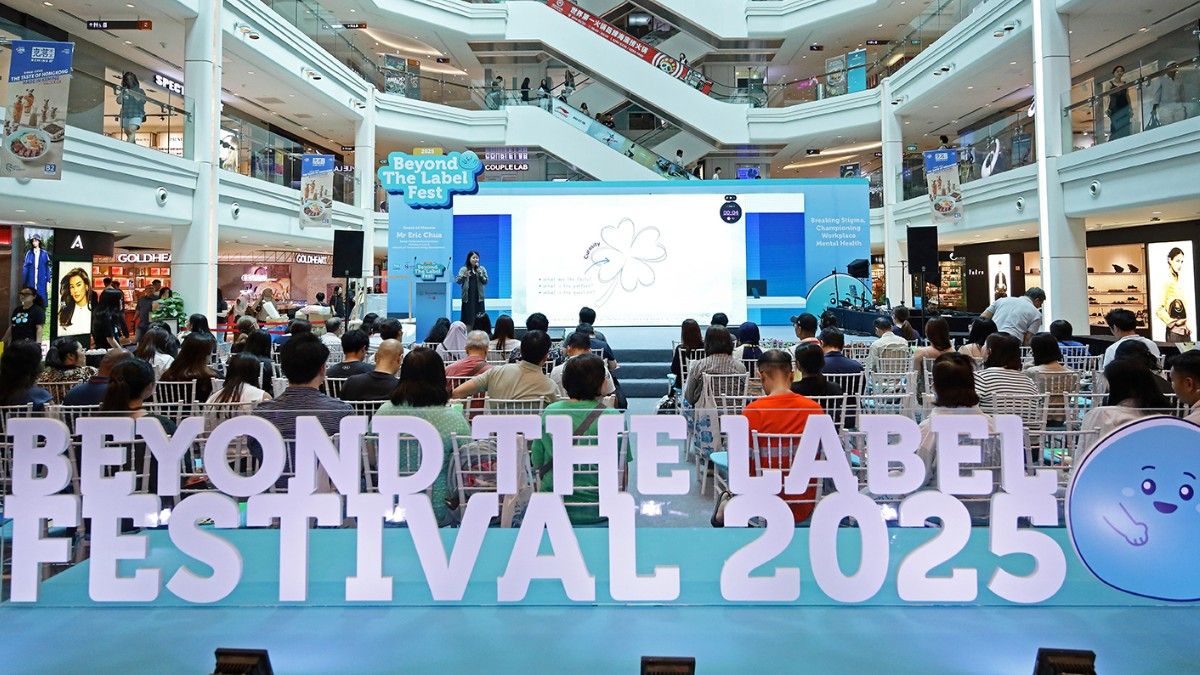

Singapore's most prominent mental health anti-stigma campaign has failed to register with the vast majority of Singaporeans — even as the government has repeatedly cited it in Parliament as evidence its mental health efforts are working.
As recently as January 2025, Minister for Health Ong Ye Kung told Parliament that Beyond the Label was among the key initiatives that had "improved public awareness and recognition of common mental health conditions."
Fourteen months later, a nationally benchmarked survey of 525 Singaporeans conducted by SG Mental Health Matters (SGMHM) found that only 15.2% of respondents could identify the campaign at all.
Beyond the Label, a nationwide movement initiated by the National Council of Social Services (NCSS) in 2018 and relaunched as Beyond the Label 2.0 in 2022 with TOUCH Community Services as co-lead, has had seven years, two phases and significant institutional backing behind it. The survey puts that investment in serious doubt.
By comparison, World Mental Health Day — an international observance on 10 October that requires no local campaign infrastructure to exist — was recognised by 53.9% of the same respondents.
What the government has told Parliament
Minister Ong's January 2025 parliamentary statement was not an isolated claim. The government's position, consistently maintained across multiple sittings, has been that campaigns like Beyond the Label are driving measurable improvements in public attitudes toward mental health.
The SGMHM survey does not dispute that attitudes are shifting. What it challenges is the attribution. Only 57.7% of those who recognised any anti-stigma initiative said it changed how they thought about mental health.
Meanwhile, the survey found that growing openness is being driven primarily by social media, peer networks and informal spaces — not by the institutional campaigns the government has been citing as evidence of progress.
Awareness without impact
The low recognition figures point to a deeper problem the SGMHM report identifies: the gap between campaign visibility and whether people actually feel safer discussing mental health in their daily lives.
Among respondents who had encountered at least one anti-stigma initiative, only 57.7% said it changed how they thought about mental health conditions. By contrast, those who had directly participated in community wellbeing initiatives reported meaningfully stronger outcomes — between 72% and 75% found them contextually relevant, and 73.9% said they had practical takeaways applicable to real life.
Passive exposure to campaigns, in other words, is doing considerably less work than the government's investment in them implies.
One respondent put it plainly: "Help-seeking barriers are psychological, not informational."
This distinction matters because it sits at the heart of what Parliament has been debating.
During the November 2025 adjournment motion on youth mental resilience, Dr Charlene Chen noted that one in three young people reported severe or extremely severe symptoms of depression, anxiety or stress — and that nearly a third of those with severe symptoms still did not seek help, citing stigma and privacy concerns as key deterrents. Beyond the Label was again mentioned as part of the solution.
The SGMHM findings raise an uncomfortable question: if the flagship campaign addressing that stigma is unknown to more than four in five Singaporeans, how much of the solution is it actually providing?
The workplace gap
The stigma problem extends into workplaces, where the survey found that psychological safety remains fragile despite a proliferation of corporate wellness programmes.
Fewer than half of working respondents — 45.6% — felt it had become easier to discuss mental health at work without fear of consequences. Only 45.8% felt more empowered to raise wellbeing concerns with supervisors. Many continued to describe workplace cultures defined by performance pressure and fear of professional consequences.
"Most workers are not like civil servants," one respondent noted. "We are judged not by how many hours we log in the office but by our actual outputs. So if we take a mental health break or reduce our workload, our bonuses and promotion will be affected."
During the 2024 parliamentary debate, several MPs raised similar concerns about the gap between policy intent and workplace reality.
Associate Professor Razwana Begum noted that Singapore ranked as the second most overworked city in a 2019 study, and that the prevailing hustle culture had profoundly negative effects on mental health. The SGMHM survey suggests that two years on, working Singaporeans are still feeling it.
Who is being left behind
The consultation found that certain groups appear largely unreached by existing efforts.
Non-working respondents — caregivers, the unemployed, retirees — scored lower than working respondents across all 20 survey items, with three gaps reaching statistical significance: willingness to approach social services, normalisation of mental health discussions, and self-care knowledge, each favouring working respondents by 21 to 23 percentage points. The strategy's outreach appears to travel primarily through workplace and institutional channels, leaving those outside formal employment significantly behind.
Gig workers and caregivers were specifically flagged as groups for whom standard wellness interventions are structurally inaccessible. "How is a Grab driver supposed to take a mental health break without losing his income?" one respondent asked.
LGBTQ+ individuals were another conspicuous gap — both in the strategy's framing and in the survey's own design, which did not capture sexual orientation as a demographic variable.
A respondent from the consultation's supplementary subpanel — a group of 23 higher-engagement participants comprising people with lived experience, caregivers, mental health practitioners and LGBTQ+ individuals — asked directly: "Why are queer people actively written out of national policy?"
The accountability question
The SGMHM findings arrive as Singapore approaches the midpoint of its National Mental Health and Well-Being Strategy's 2030 implementation timeline. The strategy, launched in October 2023, set out concrete targets across service expansion, workforce capability and public promotion — with Beyond the Label sitting within that promotion architecture.
Just over half of respondents (54.7%) reported having a clear sense of the Strategy's long-term vision, while 12.6% disagreed and 29.1% were unsure — meaning that nearly half the population lacks a clear understanding of where the Strategy is headed.
Fewer than half said they would feel comfortable raising mental health concerns with their Member of Parliament. The government has not publicly released impact metrics for Beyond the Label.