Amnesty says Indonesia critics branded ‘foreign agents’ in growing online disinformation drive
Amnesty International says coordinated online disinformation campaigns portraying Indonesian government critics as “foreign agents” have intensified under President Prabowo Subianto, fuelling intimidation and violence against activists and journalists.

- Amnesty alleged coordinated disinformation campaigns have targeted Indonesian activists, journalists and civil society groups since 2024.
- The report linked online smear campaigns to threats, intimidation and violence against government critics.
- Amnesty criticised technology companies for failing to curb harmful disinformation networks operating across major social media platforms.

Human rights organisation Amnesty International said coordinated online disinformation campaigns portraying government critics as “foreign agents” have intensified under Indonesian President Prabowo Subianto, contributing to intimidation, threats and violence against activists, journalists and civil society groups.
In a report released on 19 May 2026 titled Building up Imaginary Enemies, Amnesty said Indonesian authorities, including military-linked accounts, had used online disinformation to discredit critics, suppress dissent and justify repression amid growing public protests over corruption, military reforms, environmental issues and budget cuts.
“This disinformation is a political weapon, deployed to consolidate the government’s power when public criticism intensifies, while demonizing and weakening those who dare to speak out,” Amnesty International Secretary General Agnès Callamard said in the report.
Coordinated campaigns against activists and journalists
According to Amnesty, senior Indonesian officials repeatedly accused critics of being funded or manipulated by foreign interests following demonstrations that emerged after Prabowo took office in October 2024.
The organisation said this was followed by coordinated social media campaigns accusing activists, journalists and civil society groups of acting as “foreign agents” seeking to undermine Indonesia.
Amnesty said its research identified hundreds of social media accounts acting in synchronisation by posting identical videos, graphics and messages across platforms including Meta platforms Instagram and Facebook, TikTok, X and YouTube.
The report stated that many of the campaigns appeared designed to intentionally deceive audiences and delegitimise criticism of the government.
Amnesty said those targeted reported damage to their credibility, increased risks of criminalisation and fears for their physical safety.
Acid attack on KontraS activist
One of the cases highlighted in the report involved Andrie Yunus, deputy coordinator of Commission for the Disappeared and Victims of Violence, who suffered severe chemical burns in an acid attack in Jakarta in March 2026.
Amnesty said Yunus had been subjected for months to coordinated online campaigns accusing him of being a “foreign agent” after helping lead protests against revisions to Indonesia’s military law.
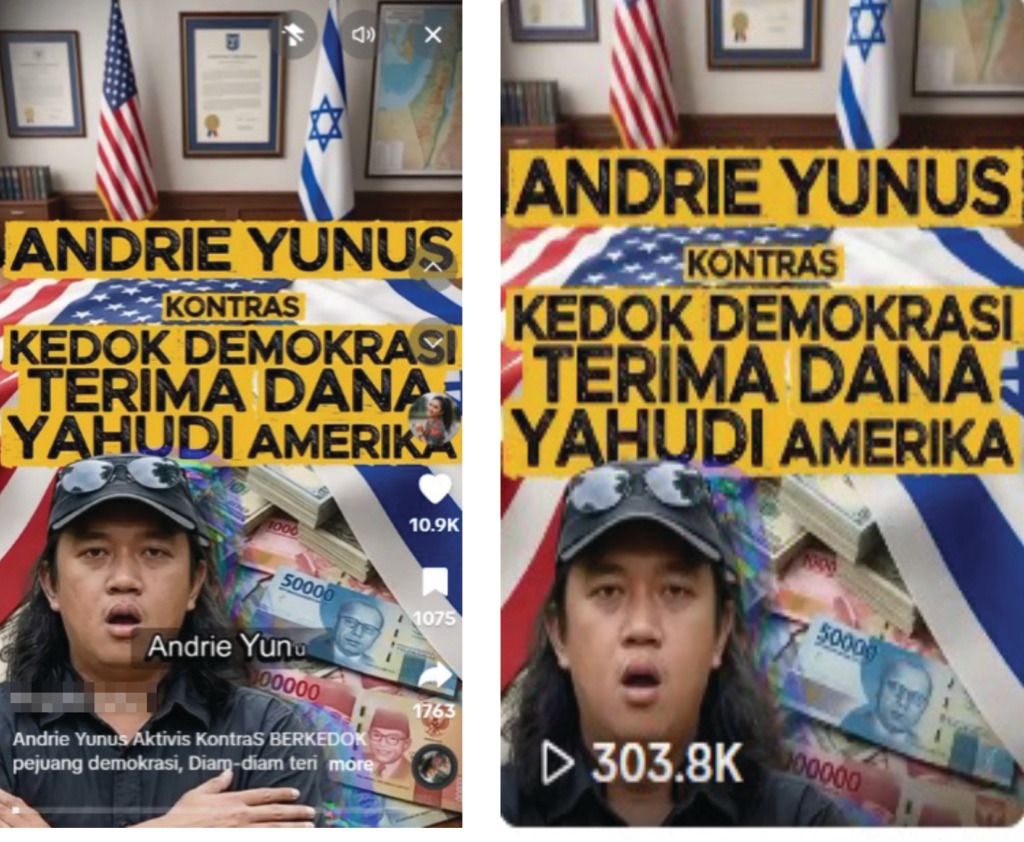
The organisation said dozens of accounts presenting themselves as part of the Indonesian military, alongside anonymous accounts, spread accusations against him online.
State investigations later resulted in the arrest of four military officers in connection with the attack, according to Amnesty.
The report said that even after the arrests, online disinformation continued, with videos circulating online alleging that Yunus had staged the attack in order to obtain foreign funding.
Tempo and journalists targeted
Amnesty also said Indonesian media outlet Tempo faced sustained online attacks after publishing reports critical of government policies.
The report said social media accounts claiming links to military units accused Tempo of being controlled by foreign donors.
According to Amnesty, the online smear campaigns were accompanied by acts of intimidation, including the delivery of a severed pig’s head and boxes containing decapitated rats to Tempo’s newsroom.
The organisation said disinformation later circulated online alleging that the intimidation incidents had been staged by the media outlet to attract international attention and foreign support.
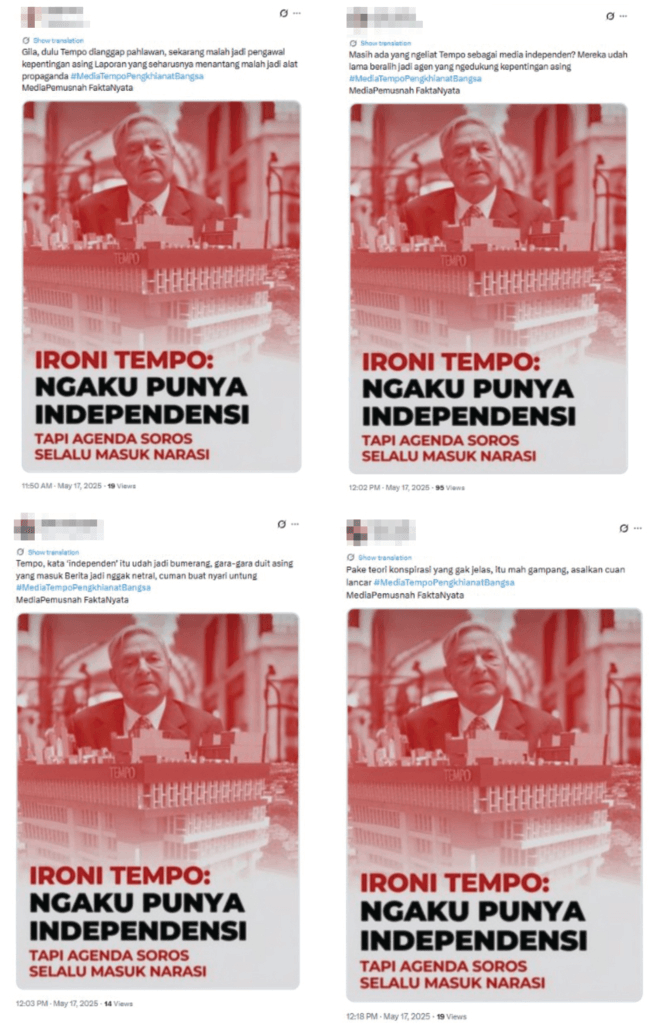
One coordinated campaign cited by Amnesty involved multiple anonymous X accounts posting identical graphics depicting billionaire philanthropist George Soros looming over the Tempo office alongside accusations that the publication promoted a foreign agenda.
Greenpeace activist reports death threats
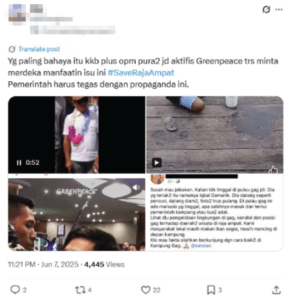
Amnesty also documented threats against Iqbal Damanik of Greenpeace Indonesia after he participated in protests opposing mining activities in Raja Ampat, West Papua.
According to Amnesty, online posts falsely linked Damanik with armed separatist groups in Papua.
Damanik told Amnesty that he received numerous threatening messages from anonymous social media users.
“One of them said, ‘Your head will fall to the ground,’” he was quoted as saying.
Concerns over shrinking civic space
Amnesty said the campaigns had contributed to a broader climate of fear that discouraged Indonesians from joining protests, working with civil society groups or expressing criticism online.
A journalist interviewed for the report told Amnesty the atmosphere resembled authoritarian conditions from Indonesia’s past.
“This is dangerous for all of us. If we all become afraid of being labelled ‘foreign agents’ and stop reporting news or any stories critical of the government, then we are back to the authoritarian atmosphere of the past,” the journalist said.
The organisation also criticised a proposed Indonesian law on “Countering Disinformation and Foreign Propaganda”, warning that it could further restrict freedom of expression.
Amnesty said Indonesian law currently fails to adequately protect victims of online disinformation and is more frequently used to prosecute critics themselves.
criticism of technology companies
The report also criticised major technology companies for failing to adequately moderate harmful content.
Amnesty said many posts spreading false accusations remained online for months and in some cases more than a year, while some content went viral.
The organisation said algorithmic amplification and insufficient content moderation by Meta, TikTok, X and YouTube contributed to the spread of disinformation.
Amnesty stated that it contacted all four companies during its research and again prior to publication of the report. Only TikTok responded, according to the organisation, saying it would introduce additional monitoring related to the issue.
Callamard said technology companies should strengthen moderation systems, conduct human rights due diligence specific to Indonesia and provide remedies for people harmed by disinformation campaigns.
Amnesty launches petition
Alongside the report, Amnesty launched a petition calling on Indonesian authorities to end disinformation campaigns targeting civil society groups and investigate attacks linked to online harassment.
The petition also urges social media companies to remove harmful disinformation networks, improve moderation systems and protect activists and journalists targeted online.
Amnesty said civil society organisations and media outlets have the right under international law to receive international funding, which it described as essential for freedom of association and independent advocacy work.