Singapore and Vietnam remain Southeast Asia’s only execution states, says Amnesty Malaysia
Amnesty International Malaysia said Singapore and Vietnam remained Southeast Asia’s only execution states in 2025, as global executions hit a four-decade high while Malaysia recorded a continued decline in death sentences.

- Singapore nearly doubled executions in 2025, with most linked to drug-related offences.
- Malaysia recorded 15 new death sentences, continuing a downward trend after reforms.
- Amnesty International urged Malaysia to commit to a full abolition timeline.

KUALA LUMPUR, MALAYSIA: Amnesty International Malaysia has urged Putrajaya to lead efforts towards abolishing the death penalty in Southeast Asia after Singapore nearly doubled executions in 2025, according to the organisation’s latest global report.
The group said Singapore and Vietnam remained the only Southeast Asian countries to carry out executions last year, even as a growing number of countries worldwide moved away from capital punishment.
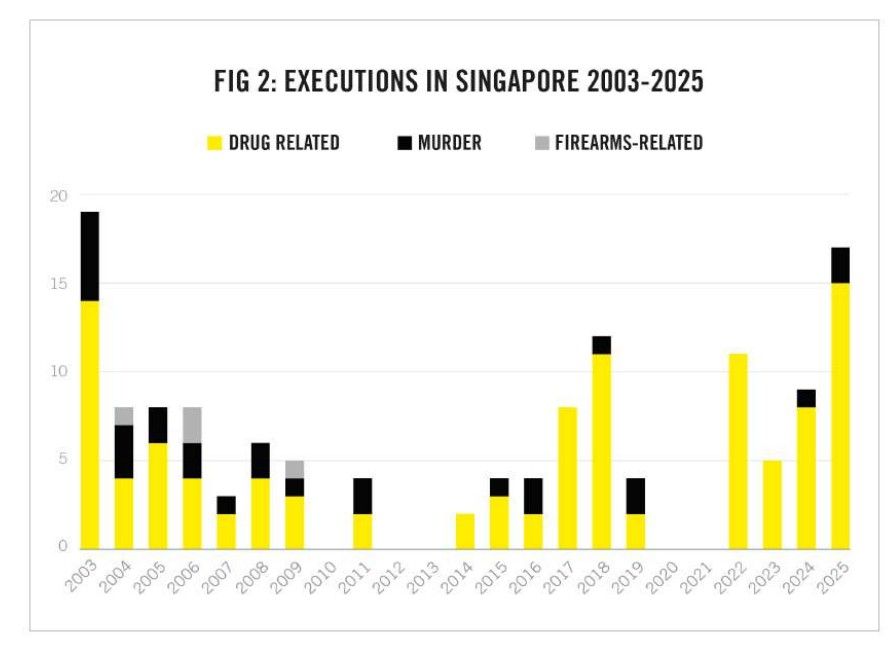
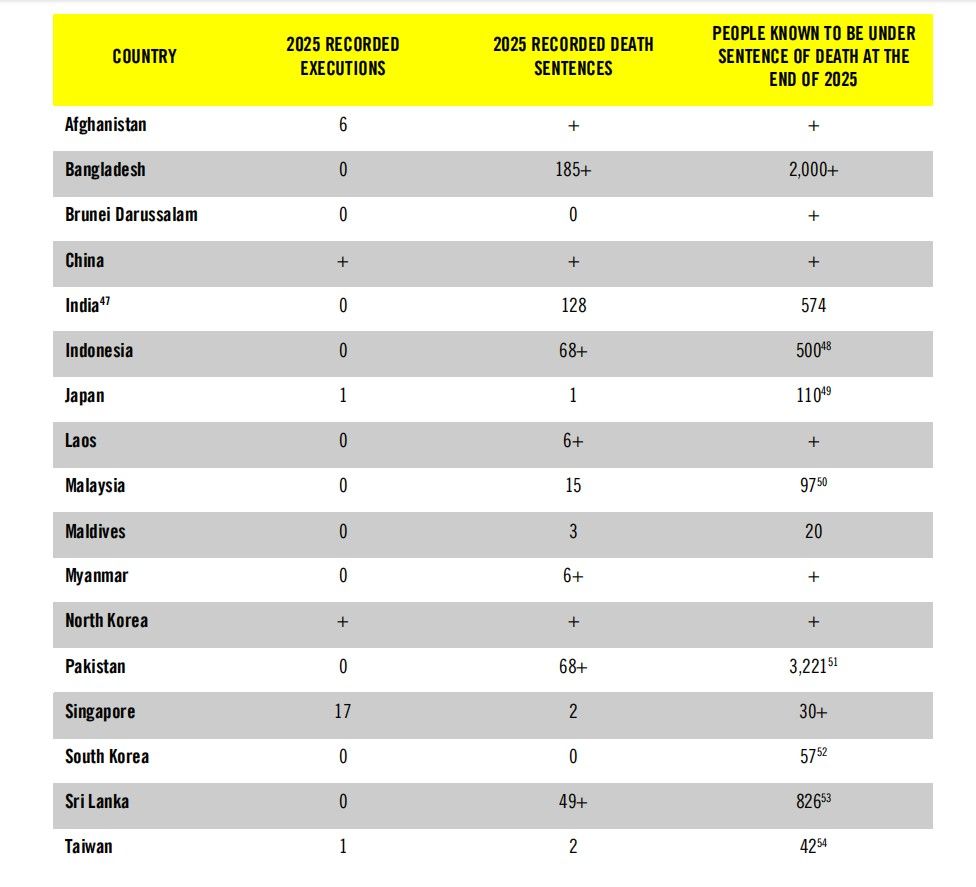
According to Amnesty International’s Death Sentences and Executions 2025 report released on 18 May 2026, executions in Singapore rose sharply from nine in 2024 to 17 in 2025.
Fifteen of the executions were linked to drug-related offences.
Among those executed were five Malaysians, including Pannir Selvam Pranthaman, a songwriter and poet sentenced to death in Singapore in 2017 for trafficking 51.84 grammes of heroin through Woodlands Checkpoint in 2014.
He was executed on 8 October 2025.
Singapore maintained that capital punishment is imposed only for the most serious offences, stressing that drug trafficking and the importation of significant quantities cause severe harm to individuals, families and society, and that its legal framework — applied with full due process — is intended to deter drug-related crimes and protect public safety.
Regional execution trends
While Singapore increased executions, Amnesty International said Vietnam had moved in the opposite direction by narrowing the scope of offences punishable by death.
Vietnam abolished the death penalty for eight offences, including drug transportation, and introduced broader pathways for commutation.
The organisation described the changes as a significant shift in regional attitudes towards capital punishment.
However, Amnesty International said Vietnam continued to conceal execution records by classifying them as state secrets despite legal amendments.
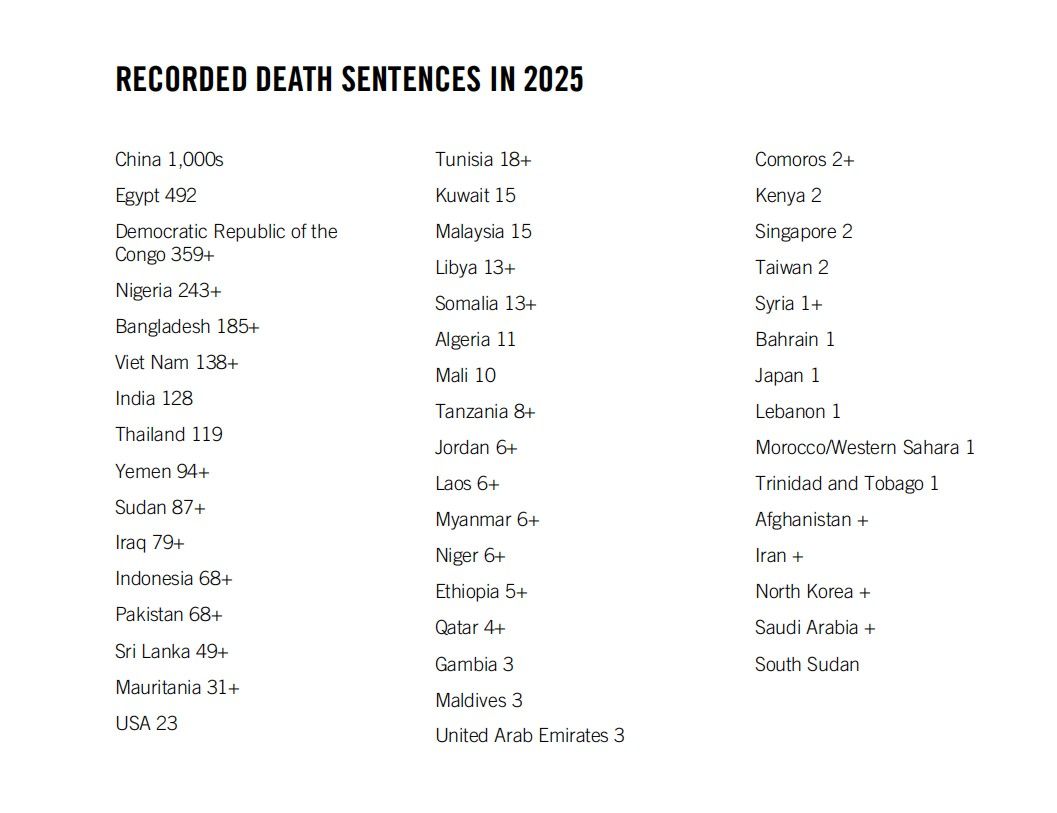
The organisation recorded 138 death sentences in Vietnam during 2025, including 100 linked to drug-related offences.
Those sentenced included three women and four foreign nationals.
Amnesty International Malaysia spokesperson Divya Shesshsan Balakrishnan said the continued use of executions in neighbouring countries highlighted the urgency for Malaysia to adopt a stronger regional leadership role.
“The surge in executions globally and the continued use of the death penalty in our region, including in Singapore, underscores the urgent need for Malaysian authorities to reject this punishment and lead on abolition in ASEAN,” Divya said.
Malaysia records decline in death sentences
The report also highlighted continued reductions in the use of capital punishment in Malaysia following reforms introduced in recent years.
Official figures provided to Amnesty International showed Malaysian courts imposed 15 new death sentences in 2025.
The figure marked a one-third decline from 24 death sentences in 2024 and was significantly lower than the 38 recorded in 2023.
No new death sentences were imposed in Sabah and Sarawak during 2025.
Appellate courts also continued reducing the number of prisoners facing execution.
The Court of Appeal commuted 42 death sentences last year, including 24 involving drug-related offences, while acquitting four individuals.
Three death sentences for murder convictions were upheld, including cases involving two foreign nationals.
Parliamentary figures showed 97 individuals remained on death row in Malaysia as of November 2025, representing one of the country’s lowest recorded totals.
Amnesty International linked the decline to Malaysia’s 2023 abolition of the mandatory death penalty, which the organisation described as a turning point in the criminal justice system.
Despite the progress, Amnesty International said the death penalty remained embedded in Malaysian law and continued to be imposed for drug-related offences.
Seven of the 15 new death sentences imposed in 2025 involved drug offences.
“These figures show that Malaysia is already moving away from the death penalty. But as long as courts continue to impose death sentences, including for drug-related offences, the law remains out of step with this progress and with international standards,” Divya said.
Global executions reach four-decade high
Globally, Amnesty International recorded 2,707 executions in 2025, the highest figure documented by the organisation since 1981.
However, the executions were carried out by only 17 countries.
The report identified China, Iran, Saudi Arabia, the United States, North Korea, Iraq and Egypt among countries that continued implementing the death penalty.
Amnesty International said more than two-thirds of countries worldwide were now abolitionist either in law or practice.
Malaysia’s abolition roadmap
The Malaysian government announced plans in 2025 to conduct a comprehensive study into the future direction of the death penalty, including the possibility of total abolition.
Amnesty International Malaysia welcomed the move but said there had been no update on the study’s progress.
The organisation warned that momentum towards abolition risked slowing without a clear timeline.
Since 2018, Malaysia has implemented several reforms, including a moratorium on executions, the abolition of mandatory death sentencing and reviews of thousands of death row cases.
The number of prisoners under sentence of death has fallen from more than 1,200 to fewer than 100 during that period.
Amnesty International Malaysia called on Putrajaya to fully abolish the death penalty, maintain the current moratorium indefinitely, establish a time-bound abolition roadmap and commute all remaining death sentences.
“Malaysia has laid the groundwork for abolition, but momentum is clearly faltering,” Divya said.
“What is needed now is concrete action to chart the way forward towards full abolition.”