Amnesty accuses Israel of accelerating displacement in West Bank Area C
Amnesty International alleges Israel has intensified a state-led campaign of displacement and settlement expansion in Area C of the occupied West Bank, citing growing settler violence, demolitions and annexation policies.
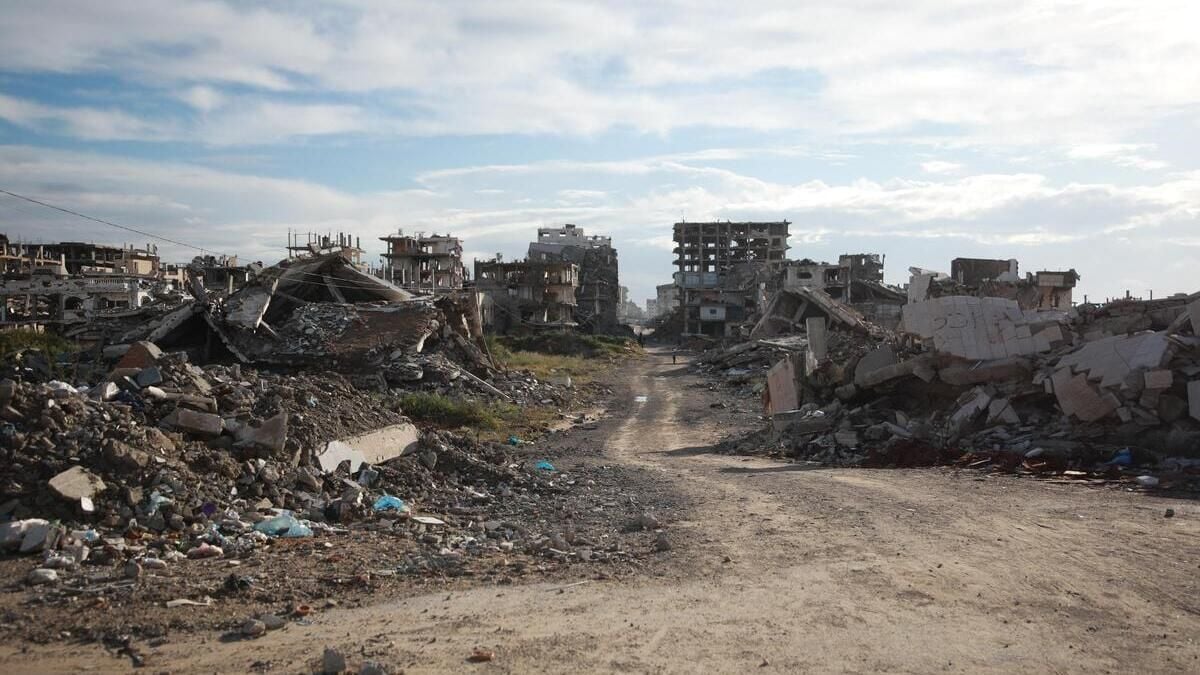
- Amnesty alleges Israeli policies are driving displacement of Palestinian communities in Area C.
- The organisation says settlement approvals and settler outposts have expanded significantly since 2023.
- Israel says security forces respond to settler violence and investigate alleged misconduct.

Amnesty International has accused Israel of intensifying what it describes as a state-led campaign of ethnic cleansing and forced displacement against Palestinian Bedouin and herding communities in Area C of the occupied West Bank.
In a report released on Tuesday, the human rights organisation said Israeli authorities have accelerated efforts to expand settlements, seize land and remove Palestinians from strategic areas of the territory, while pursuing policies aimed at formal annexation.
The report, titled Erasing Anything Palestinian: Israel’s Ethnic Cleansing of West Bank Bedouin and Herding Communities, argues that settlement expansion, state support for settlers and the displacement of Palestinian communities form part of a coordinated government strategy.
Area C, which constitutes more than 60 per cent of the occupied West Bank, remains under full Israeli civil and military control under the Oslo Accords. The area contains significant agricultural land, grazing areas and natural resources, and is home to a relatively small proportion of the Palestinian population.
The report was published amid continuing international scrutiny of Israel's conduct in the Palestinian territories.
According to the Palestinian Health Ministry in Gaza, at least 72,980 Palestinians had been killed and 173,171 injured in the Gaza Strip since the start of the war in October 2023 as of 9 June 2026. Palestinian officials have said additional victims remain missing beneath rubble in areas heavily affected by Israeli military operations.
Allegations of state-led annexation
Amnesty International Secretary General Agnès Callamard said the organisation's research indicates that the Israeli government has moved beyond informal settlement expansion towards openly pursuing annexation.
According to the report, policies adopted by Israel's current governing coalition have integrated settler priorities into official state policy.
Amnesty said government agreements and legislation support the expansion of Israeli settlements and the extension of Israeli sovereignty over parts of the occupied territory.
The report states that settlement approvals have accelerated significantly since the formation of Israel's current government in late 2022.
Data cited by Amnesty from the Israeli monitoring group Peace Now indicate that plans for 50,785 settlement housing units were advanced between 2023 and 2025. In 2025 alone, 27,941 units reportedly received approval, the highest annual figure recorded.
The organisation also said the number of new settlements authorised by the government had reached 102 by April 2026.
Amnesty argues that these developments have occurred alongside measures transferring authority in parts of the West Bank from military to civilian bodies and increasing government support for settlement infrastructure.
Displacement of Palestinian communities
The report focuses on Bedouin and herding communities in Area C, which Amnesty says have been subjected to increasing pressure through settlement expansion, demolitions, movement restrictions and settler violence.
According to figures from the United Nations Office for the Coordination of Humanitarian Affairs (OCHA) cited in the report, at least 117 predominantly Bedouin and herding communities experienced either full or partial displacement between January 2023 and April 2026.
UN data referenced by Amnesty indicate that at least 5,910 Palestinians had been forcibly displaced by the end of April 2026.
The organisation examined 27 communities that were either displaced between 2023 and 2025 or remain at risk of displacement.
Researchers interviewed 45 Palestinians from affected communities, as well as lawyers, activists, journalists and representatives of Israeli and Palestinian non-governmental organisations.
Amnesty said it also reviewed more than 420 videos and photographs and analysed satellite imagery, court documents, government statements and other materials.
Growth of settler outposts
Amnesty's report highlights a sharp increase in settler outposts across the West Bank.
According to figures from Peace Now, 363 outposts had been established in the occupied West Bank by April 2026. Of those, 212 were reportedly created after 2023.
Many of the newer outposts are described as herding outposts, which Amnesty says have been used to extend control over large areas of land through livestock grazing.
The report also states that Israeli authorities have expanded the use of state land declarations. Amnesty said nearly 58 per cent of Area C remains unregistered land and that Israeli authorities had claimed approximately half of that area through state land declarations by February 2026.
In parallel, OCHA data cited by the organisation show that Israeli authorities demolished 3,407 Palestinian homes and structures in Area C between January 2023 and April 2026, displacing nearly 3,000 people.
Zanuta case highlighted
One of the examples examined in the report is the village of Khirbet Zanuta in the South Hebron Hills.
Amnesty said the community, which was home to approximately 250 Palestinian Bedouins, became the target of repeated settler attacks following the establishment of an outpost known as Meitarim Farm about one kilometre away in 2021.
According to the report, residents experienced harassment, threats, restrictions on access to farmland and grazing areas, and violent attacks.
The organisation said the entire community left the village after a series of incidents that intensified following the Hamas-led attack on Israel on 7 October 2023.
Amnesty stated that despite Israeli Supreme Court rulings in 2024 and 2025 ordering authorities to facilitate residents' return and provide protection, villagers have been unable to return because of continued settler activity and damage to infrastructure.
The report said satellite imagery and other evidence indicate that the village has since been extensively destroyed and depopulated.
Rise in settler violence
The report describes what Amnesty calls an unprecedented increase in settler violence across the West Bank.
According to OCHA figures cited in the report, attacks involving casualties against Bedouin and herding communities increased nearly sevenfold between 2020 and 2024.
Amnesty documented allegations of assaults, threats, vandalism, arson, destruction of property and attacks on agricultural resources.
The organisation also alleged that Israeli security forces have frequently failed to prevent attacks and have sometimes participated in or facilitated actions against Palestinians.
Amnesty said that after October 2023, Israeli authorities relaxed criteria for private firearms licences. According to figures cited in the report, more than 240,000 Israeli citizens had received firearm licences by January 2026, compared with an annual average of approximately 8,000 licences before the policy change.
The organisation argues that the increase contributed to a rise in armed settler attacks.
Israeli government response
Amnesty International said it shared its findings with Israeli authorities on 13 May.
According to the organisation, the Israeli Ministry of Defense responded on 23 May, stating that security forces respond to incidents of settler violence, arrest suspects when necessary and investigate cases where personnel may have failed to intervene or comply with operational orders.
The ministry's response was included in Amnesty's report.
Calls for international action
Amnesty International called on governments to take stronger measures in response to Israeli policies in the occupied Palestinian territories.
The organisation urged states to restrict trade, investment and forms of cooperation that it says contribute to the occupation and settlement system.
It also called for targeted sanctions against senior Israeli officials, including Prime Minister Benjamin Netanyahu, Finance Minister Bezalel Smotrich, National Security Minister Itamar Ben-Gvir, Settlement and National Missions Minister Orit Strock and Defence Minister Israel Katz.
The organisation further urged states to support investigations by the International Criminal Court concerning the situation in Palestine and to pursue national investigations into alleged violations of international law.
Amnesty said that without greater international action, Palestinian communities in vulnerable areas of the West Bank would remain at risk of displacement as settlement expansion and related pressures continue.
The report concludes that ongoing settlement growth, Palestinian displacement and settler violence in Area C form part of a broader pattern that Amnesty says is reshaping the demographic and territorial landscape of the occupied West Bank.
The organisation called on governments to take what it described as urgent measures to protect affected communities and uphold international law.