NGOs call on Singapore to drop charges against rights activists ahead of UN review
Amnesty International, CIVICUS, and Human Rights Watch have called on Singapore to drop charges against activists ahead of the country's Universal Periodic Review at the United Nations on 12 May 2026, citing escalating use of repressive laws against government critics.


Three international human rights organisations have called on Singapore to immediately drop criminal charges against activists as the city-state prepares to face scrutiny over its human rights record at the United Nations Human Rights Council on 12 May 2026.
Amnesty International, CIVICUS, and Human Rights Watch issued the joint call, pointing to what they described as an escalating pattern of prosecutions targeting human rights defenders and government critics using laws including the Protection from Online Falsehoods and Manipulation Act (POFMA), the Public Order Act, and defamation provisions.
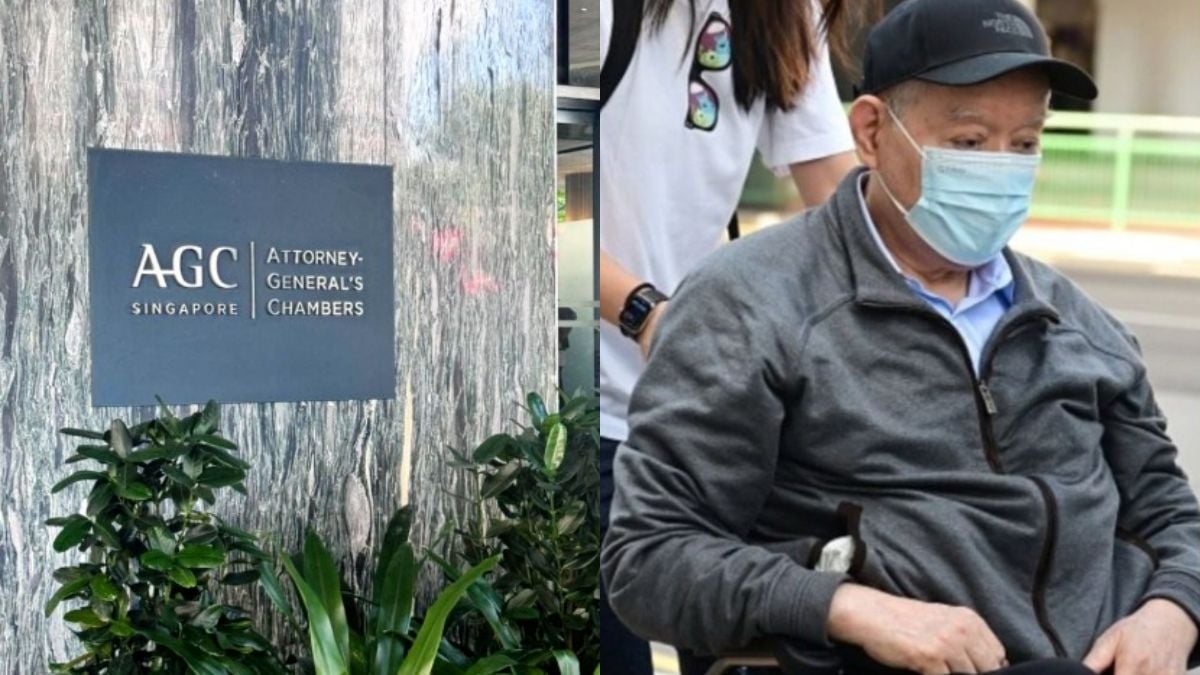
The statement centred on the case of rights activist Kokila Annamalai, the second person charged under POFMA who is due to attend a pre-trial conference on 14 May in connection with a charge of failing to comply with a POFMA correction direction issued in October 2024.
The direction arose from a social media post in which Annamalai criticised the government's execution of Singaporean Azwan bin Bohari for drug-related offences.
POFMA empowers government ministers to issue individuals correction directions requiring them to publish a notice alongside social media posts the government deems to contain falsehoods, directing readers to an official government clarification. Failure to comply is a criminal offence.
If found guilty, Annamalai faces a fine of up to S$20,000 (approximately US$15,600), a prison term of up to 12 months, or both.
The three organisations described POFMA as a law that grants authorities sweeping powers to criminalise online expression and lacks any public interest defence.
They said that overly broad restrictions on sharing information — including restrictions grounded in concepts such as false news or misinformation — are incompatible with international human rights law and risk being used to silence critics and activists.
High Court reverses acquittal of three activists
The joint call also drew attention to a High Court ruling on 30 April, in which the court reversed the acquittal of Annamalai, Mossammad Sobikun Nahar, and Siti Amirah Mohamed Asori in connection with a procession they led in February 2024.
The three activists had walked to the Presidential Palace to deliver letters urging the President to cut ties with Israel amid the conflict in Gaza. Each was fined S$3,000 (approximately US$2,300) under the Public Order Act for organising a procession in a public area without a police permit.
Jolovan Wham faces trial over vigils
On 6 April 2026, activist Jolovan Wham faced trial on three Public Order Act charges for allegedly participating in unpermitted candlelight vigils held to commemorate prisoners on death row.
A final hearing in that matter is scheduled for 13 May.
Wham has previously faced prosecution in Singapore over acts of civil expression and is a prominent figure in the country's small but active human rights community.
First criminal charge under Section 7 of POFMA
In March 2026, TikToker Jay Ish'haq Rajoo became the first person to be charged for communicating false statements under POFMA, in what the organisations noted was the first known use of the provision in a criminal context.
Rajoo faces additional charges of defamation and of promoting feelings of ill will between racial groups under the Penal Code.
The organisations characterised the cases collectively as part of a broader escalation in the harassment and criminalisation of activists in Singapore.
Singapore's UPR and prior commitments
The Universal Periodic Review (UPR) is a mechanism of the UN Human Rights Council that examines the human rights record of every UN member state on a five-year cycle. Singapore's fourth UPR will take place on 12 May 2026.
During its previous review in 2021, Singapore supported recommendations to align its laws on freedom of expression, peaceful assembly, and association with international human rights standards. The organisations noted, however, that prosecutions of activists have continued in the years since that review.
The statement called on UN member states reviewing Singapore's record to make strong recommendations to the government to uphold the rights to freedom of expression and peaceful assembly, including through ratification of the International Covenant on Civil and Political Rights (ICCPR), to which Singapore is not a party.
Amnesty International, CIVICUS, and Human Rights Watch also called on Singapore to immediately drop all charges against activists, government critics, and others prosecuted for exercising what the organisations described as their fundamental rights.