Four shipping container giants and seven executives indicted in US price-fixing conspiracy
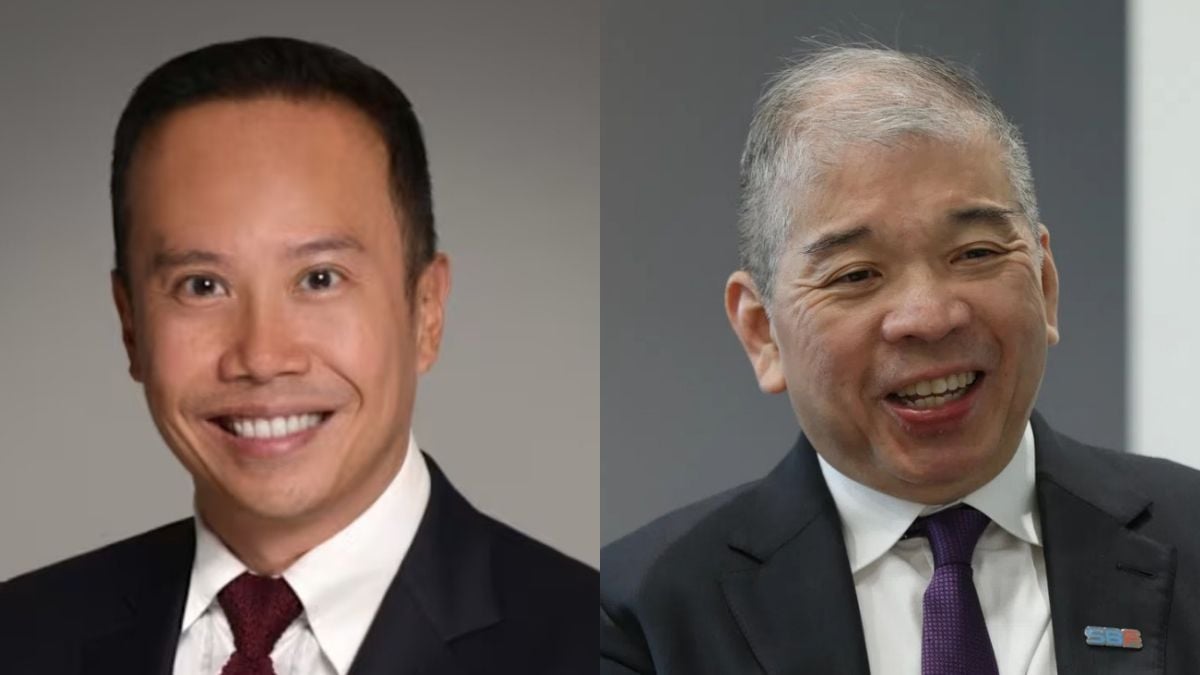
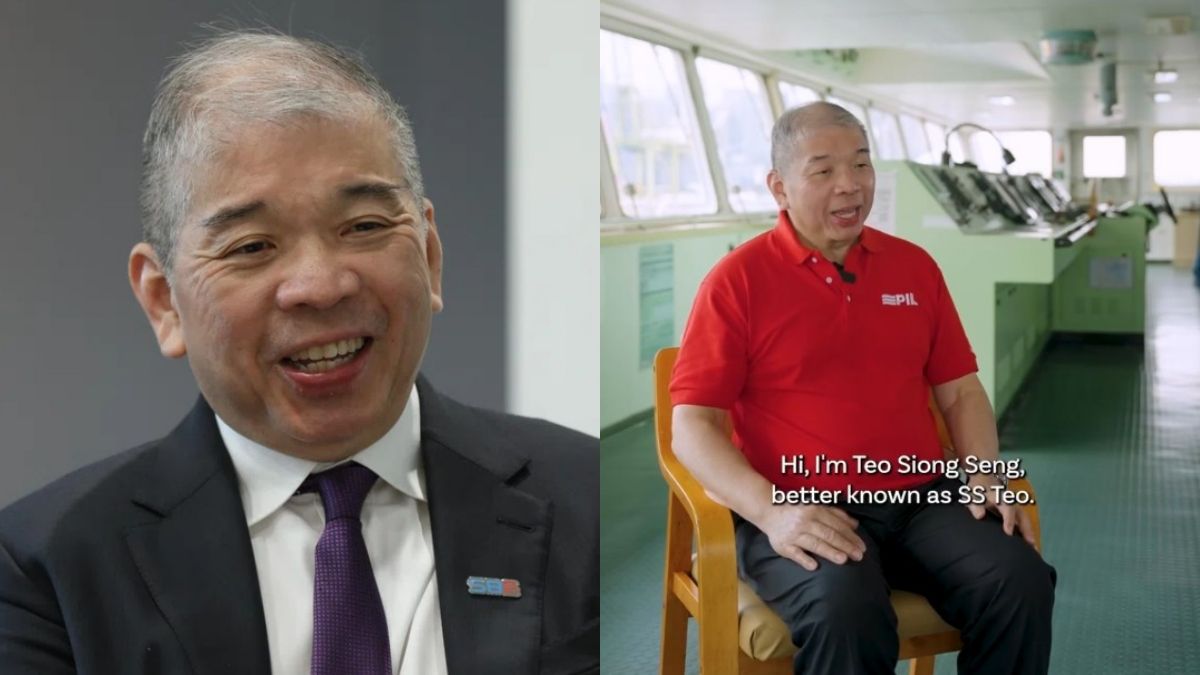
Four of the world's largest shipping container manufacturers and seven executives, including Singapore Business Federation chairman Teo Siong Seng, have been indicted in the United States for an alleged price-fixing conspiracy that is said to have roughly doubled container prices between 2019 and 2021.
- Four major container manufacturers and seven executives indicted in the US for price-fixing spanning November 2019 to January 2024.
- Standard dry container prices allegedly doubled between 2019 and 2021, boosting manufacturer profits nearly a hundredfold.
- Singapore Business Federation chairman Teo Siong Seng is among those named; one co-defendant arrested in France.

Four of the world's largest shipping container manufacturers and seven of their executives have been indicted in the United States on charges of conspiring to fix prices and restrict the output of standard dry shipping containers.
The alleged conspiracy is said to have spanned more than four years, from as early as November 2019 to at least January 2024.
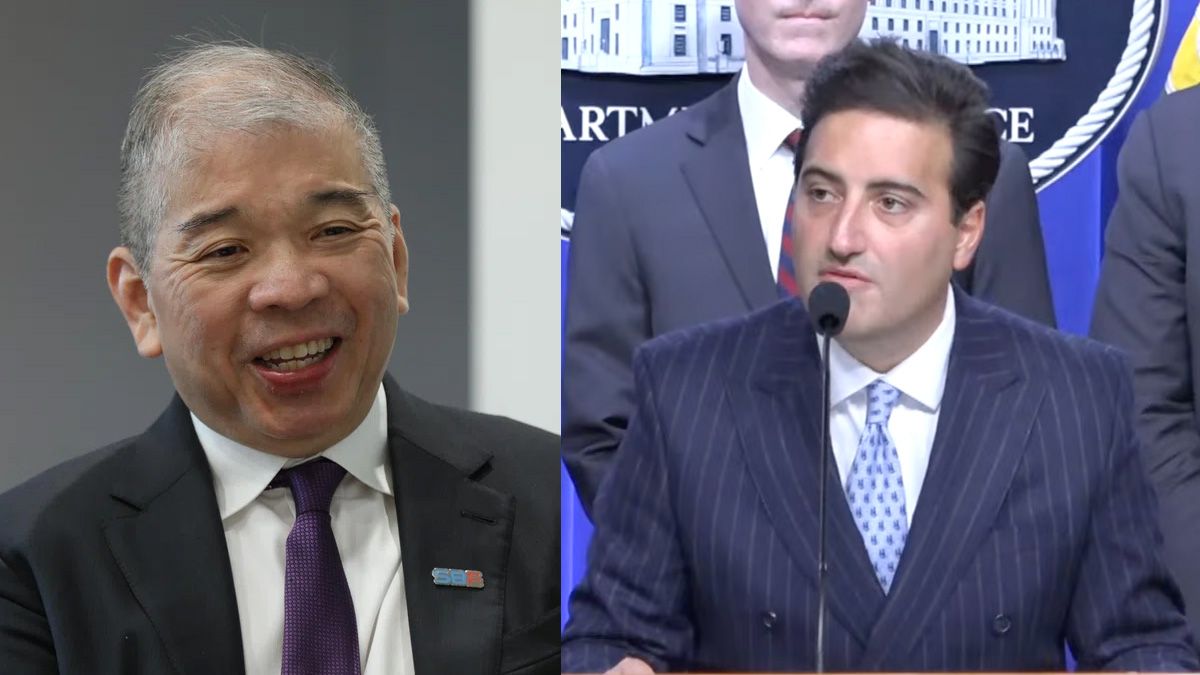
A superseding indictment, filed under seal in the US District Court for the Northern District of California on 22 January 2026 and unsealed on 19 May 2026 following the arrest of Vick Nam Hing Ma in France, names eleven defendants: four companies and seven individuals, including Teo Siong Seng, 71, a Singapore resident. Teo was added as a named defendant specifically in the superseding indictment.
Teo serves as chief executive and chairman of Singamas Container Holdings (Singamas), a subsidiary of Pacific International Lines (PIL). He also holds the chairmanship of the Singapore Business Federation (SBF).
The four companies named in the indictment are China International Marine Containers (Group) Co. (CIMC), CXIC Group Containers Co. (CXIC), Shanghai Universal Logistics Equipment Co. — operating under the Dong Fang International Containers brand — and Singamas.
According to the indictment, the four defendant companies and two unnamed co-conspirator companies together manufactured approximately 95 per cent of the world's standard dry containers during the conspiracy period.
Origins of the alleged scheme
According to the indictment, discussions about restricting container output and fixing prices began as early as March 2019.
On or around 14 November 2019, executives from CIMC, Dong Fang, CXIC, and a fourth unnamed company convened at CIMC's headquarters in Shenzhen, China.
At that meeting, the executives allegedly agreed to limit the number of shifts and production hours on each container production line per day, and to install 87 surveillance cameras across 49 production lines to monitor compliance.
They also allegedly agreed not to build any new container manufacturing facilities, and established a financial penalty fund for any company that exceeded its agreed production quota.
Singamas and a sixth unnamed company were identified at the meeting as future participants. Singamas is alleged to have formally joined the arrangement by at least March 2020.
Court documents indicate that approximately one week after the November 2019 meeting, a Singamas executive informed Teo that all six factories would convene in Shanghai on 3 December 2019.
The stated purpose was to discuss "production capacity and the healthy development of the container industry."
Teo's alleged involvement
Teo was subsequently informed of the plans to artificially restrict container production.
By February 2020, CIMC had circulated to all six company conspirators a draft contract titled the Shenzhen Moon Gazing Equity Investment Fund, which the indictment states memorialised the output-restriction agreement. The six firms signed the final version at a ceremony in March 2020.
In September 2020, the alleged conspirators agreed to restrict the number of containers they would produce for specific customers, including major logistics companies and shipping lines based in the US, Europe, and China.
In July 2022, Teo is alleged to have stated in an internal Singamas meeting that the company preferred a monthly total quota arrangement over daily working-hour restrictions.
This approach was reportedly adopted from at least September 2022 through November 2023.
A document allegedly presented to Teo in November 2023 detailed the conspiracy's "total allowable capacity" and "allowable quota," organised by company and production line.
Attempts to conceal the scheme
Court documents allege that Teo took steps to conceal the collusion. In December 2019, he allegedly responded by e-mail to a report on the six-company meeting, writing that "we also need to keep low key."
He is also alleged to have agreed to delete the relevant e-mail thread at the suggestion of a Singamas board member.
The indictment further alleges that the conspirators used the China Container Industry Association (CCIA), an industry trade body, as a vehicle to promote, facilitate, monitor, and conceal the conspiracy.
In March 2022, a Singamas executive reviewing a slide presentation Teo had prepared for an investor briefing on the company's 2021 annual results advised him to omit any reference to 'market discipline' owing to 'anti-trust issue.'
Court documents record Teo's reply as: 'Appreciate, I will make some amendments to the slide (take out come [sic] words) and revert tomorrow am.'
Price impact and financial gains
Standard 20-foot shipping container prices more than doubled, rising from approximately US$1,600 in 2019 to over US$3,500 by 2021. Standard 40-foot containers rose from approximately US$2,800 to over US$5,900 over the same period, while 40-foot high-cube containers doubled from approximately US$3,000 to over US$6,000.
According to court documents, CIMC Chairman Mai Boliang emailed subordinates as early as 13 December 2019 predicting prices would rise above US$2,000, explicitly warning them not to forward his message.
CIMC's container manufacturing profits rose from approximately US$19.8 million in 2019 to approximately US$288 million in 2020, before reaching approximately US$1.75 billion in 2021.
Singamas saw its net income swing from a loss of approximately US$110 million in 2019 to a profit of approximately US$186.8 million in 2021.
Attempt to expand to refrigerated containers
The indictment also alleges that shortly after the dry container conspiracy began, CIMC and Dong Fang sought to extend it to refrigerated shipping containers, known in the industry as reefers.
On or around 15 May 2020, Huang Tianhua of CIMC emailed the chief executive of an unnamed competing reefer manufacturer, describing the dry container arrangement as 'industry self-discipline actions' and inviting reefer manufacturers to adopt the same model.
The unnamed company declined, stating in writing that such coordination was 'strictly forbidden by the compliance policies' of the company.
Co-defendants and arrests
One executive, Vick Nam Hing Ma, 54, marketing director of Singamas, was arrested in France on 14 April 2026 while allegedly attempting to board a flight to Hong Kong. Ma is believed to be a resident of Hong Kong. His extradition to the United States is pending.
The remaining six executive defendants are at large. They include Mai Boliang, 67, who served as CIMC's president and chief executive before becoming its chairman in August 2020, and Huang Tianhua, 62, vice-president of CIMC.
Also named are Wan Yongbo, 47, general manager of CIMC's Operation Management Centre; Li Qianmin, 62, general manager of Dong Fang; and Zhang Yuqiang, 49, chief executive of CXIC. All are believed to be residents of China.
US Department of Justice statements
Omeed A. Assefi, acting assistant attorney general of the US Department of Justice (DOJ) Antitrust Division, said the defendants had held "hostage the world's supply of ocean shipping containers during the Covid pandemic when our supply chains needed it the most."
Assefi added that the defendants had "stolen from everyday Americans who paid more and waited longer for vital goods as a result."
US Attorney Craig H. Missakian for the Northern District of California said the DOJ would "not tolerate any attempt to manipulate the free markets and will continue to work with our partners at the Antitrust Division to protect the public."
Charges and penalties
The defendants face charges under Section 1 of the Sherman Antitrust Act. Individual defendants face a maximum penalty of 10 years in prison and a criminal fine of up to US$1 million.
Corporate defendants face a maximum fine of US$100 million. Fines may be increased to twice the gain derived from the crime, or twice the loss suffered by victims, if either amount exceeds the statutory maximum.
The case was investigated by the Federal Bureau of Investigation (FBI), the US Postal Service Office of Inspector General, and the US General Services Administration Office of Inspector General.
French authorities and the DOJ's Office of International Affairs provided assistance in securing the arrest of Vick Ma.
All defendants are presumed innocent until proven guilty beyond a reasonable doubt.