Japan passes law establishing National Intelligence Council amid civil liberties concerns
Japan's upper house has passed legislation establishing a National Intelligence Council, centralising intelligence coordination under Prime Minister Sanae Takaichi. Critics warn the law lacks adequate oversight mechanisms to prevent abuse.
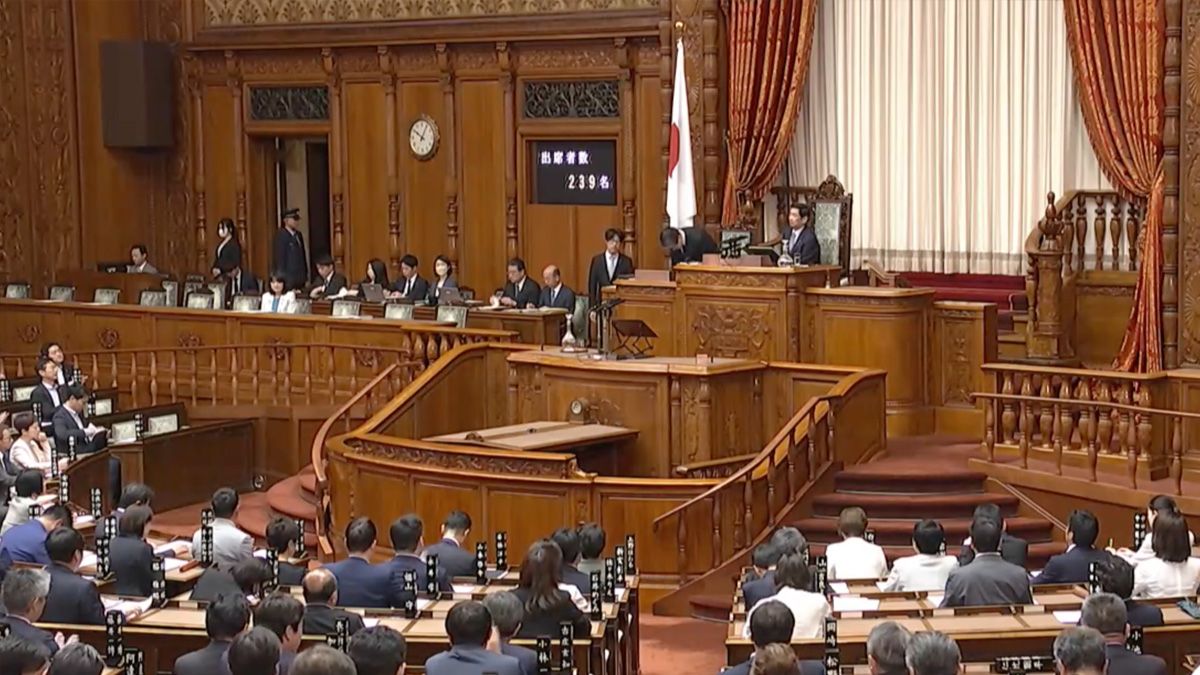
- Japan's upper house passed the National Intelligence Council Establishment Act on 27 May 2026.
- A 700-strong National Intelligence Agency will replace the Cabinet Intelligence and Research Office by summer.
- Opposition parties and critics warn the law lacks parliamentary oversight and civil liberties safeguards.

Japan's upper house, the House of Councillors, passed the National Intelligence Council Establishment Act on 27 May 2026, creating a new body to coordinate the government's intelligence gathering and analysis capabilities.
The legislation was approved by a majority comprising the Liberal Democratic Party (LDP), Nippon Ishin no Kai, and the Democratic Party for the People.
Prime Minister Sanae Takaichi, who will chair the new council, described the law's passage as "the first step in reform," signalling her intention to pursue further intelligence-related legislation, including a dedicated counter-espionage law and the creation of a foreign intelligence agency.
The National Intelligence Agency (NIA), which will serve as the council's secretariat, is expected to be operational as early as summer 2026. It will be formed by upgrading the existing Cabinet Intelligence and Research Office (Naikaku Joho Chosashtsu) into an organisation of approximately 700 personnel.
The head of the NIA will be elevated from the current position of Cabinet Intelligence Officer to a rank equivalent to that of the National Security Secretariat Secretary-General.
Under the new law, government agencies including the Ministry of Foreign Affairs, the Ministry of Defence, and the Public Security Intelligence Agency will be required to provide the council with necessary intelligence, materials, and briefings. The council will hold coordinating authority to solicit information from ministries and agencies across government.
According to publicly available documents from the House of Representatives, the council's remit will encompass: priority matters in key intelligence activities across relevant government bodies; coordination and cooperation between those bodies; the development and operation of intelligence-gathering satellites; basic policy for responding to foreign intelligence activities; assessment of domestic and international conditions relevant to intelligence operations; and comprehensive analysis of particularly significant cases involving foreign intelligence threats.
The Constitutional Democratic Party of Japan (CDP) voted against the legislation, submitting amendments that were ultimately rejected. The CDP called for the establishment of an independent body to examine whether intelligence activities infringe upon citizens' fundamental rights or violate political neutrality. It also sought to require the government to report to the National Diet on the council's activities at least once annually.
Those amendments were defeated by a majority of opposing votes.
Critics, including opposition legislators and civil liberties advocates, have raised persistent concerns that the new framework lacks sufficient mechanisms for parliamentary scrutiny. They warn the law could enable the state to arbitrarily collect personal information on citizens, including those who participate in demonstrations or support specific political parties.
The concerns are not without historical basis. Japan's Ground Self-Defense Force Information Security Unit was previously found to have collected personal information on citizens who participated in protests against Japan's troop deployment to Iraq, a case that drew significant public criticism.
Prime Minister Takaichi has stated that investigations targeting individuals solely on the grounds of participation in demonstrations are "difficult to imagine," but opposition legislators have argued that verbal assurances alone are insufficient without legally binding constraints embedded in the legislation itself.
The House of Councillors' Cabinet Committee adopted a supplementary resolution calling for consideration of future legislation — including any counter-espionage law — "on the premise that the National Diet will exercise oversight." The resolution also called for due regard for personal information protections. However, the resolution carries no legal force, and critics note that the substantive safeguards should have been written into the statute itself.
Comparative observers have pointed to the United States, where the Central Intelligence Agency (CIA) is subject to review by committees in both chambers of Congress, as a model for the kind of independent legislative scrutiny that is absent from Japan's new framework.
The government has separately indicated it intends to amend the Act on the Protection of Personal Information during the current parliamentary session to allow personal data to be acquired and shared without the consent of the individuals concerned, provided the purpose is the compilation of statistics. Critics view this as part of a broader pattern of legislation that weakens privacy protections.
Since the second administration of Prime Minister Shinzo Abe, Japan has enacted a series of laws that critics argue have expanded state surveillance powers, including the Act on the Protection of Specially Designated Secrets and legislation creating the offence of conspiracy. The latest law is viewed by some commentators as a continuation of that trajectory.
The Komeito party, which supported the legislation in the upper house, and the centrist reform coalition, which backed it in the lower house, provided the cross-party margin that secured passage. The CDP's submission of amendments was welcomed in principle by some observers, though the party's capacity to sustain opposition has been questioned given the outcome.
The government has indicated it will also convene an expert panel to begin drafting a National Intelligence Strategy and to develop the legal framework for counter-espionage measures.