Hegseth demands Indo-Pacific allies raise defence spending to 3.5% of GDP
US Defence Secretary Pete Hegseth used the 2026 Shangri-La Dialogue in Singapore to demand that Indo-Pacific allies increase defence spending to 3.5% of GDP, warning that nations unwilling to contribute to collective security would face a shift in how Washington does business with them.
- Hegseth set 3.5% of GDP as the new defence spending standard for all US allies and partners.
- Nations meeting the target will receive expedited arms sales, deeper intelligence sharing, and industrial base collaboration.
- Hegseth singled out New Zealand as a "freeloader"; Wellington pushed back, saying it was increasing investment.

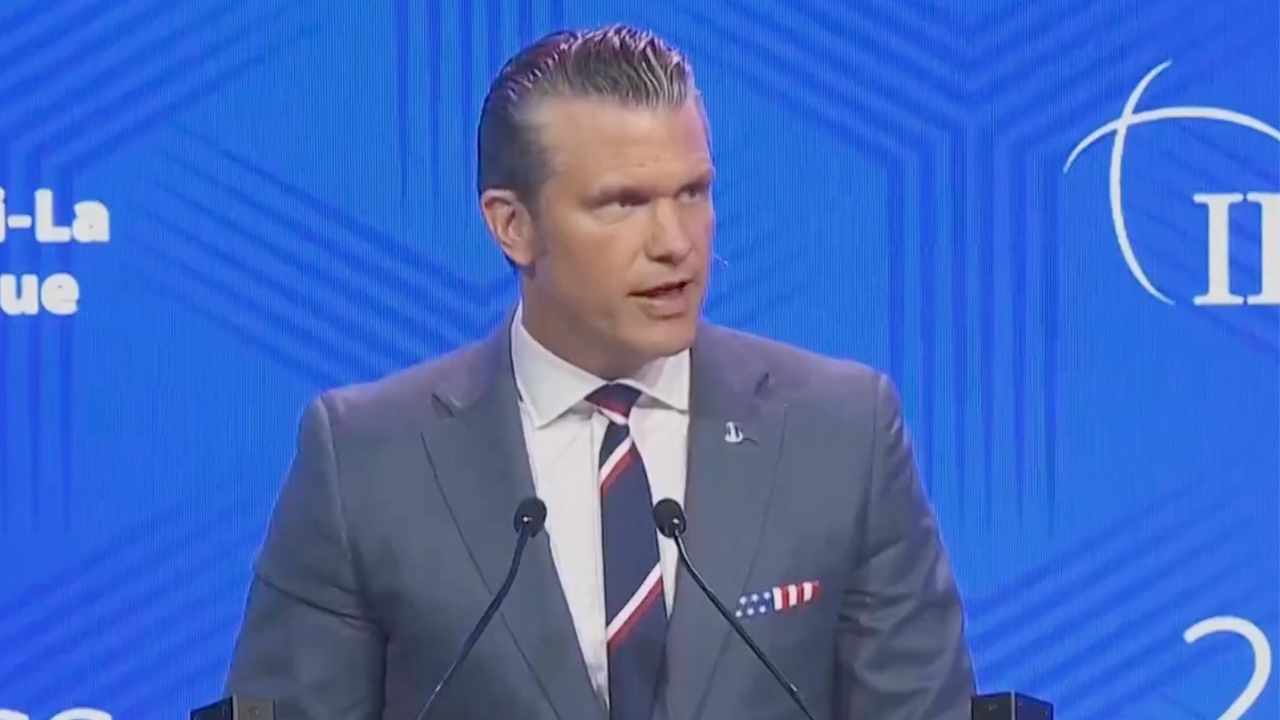
US Defence Secretary Pete Hegseth used his address to the 2026 Shangri-La Dialogue in Singapore on 30 May to issue a direct demand to Indo-Pacific allies and partners: raise defence spending to 3.5% of gross domestic product or face a fundamental shift in the United States' approach to the alliance relationship.
Speaking at the annual defence summit organised by the International Institute for Strategic Studies (IISS), Hegseth framed the demand not as a request but as a condition of meaningful partnership, signalling that preferential treatment — including expedited arms sales, expanded intelligence sharing, and deeper industrial base collaboration — would be reserved for nations that met the new standard.
"For those who believe they can continue to free ride on the generosity of the American taxpayer, hear us now. Those days are over," Hegseth told the assembled defence ministers and officials.
The era of dependency is over
Hegseth characterised the new US posture as a shift away from what he described as a model of dependency and toward "true partnership". He argued that the United States could no longer sustain the role of underwriting the security of wealthy nations that had allowed their own defence capabilities to atrophy.
"The era of the United States subsidising the defence of wealthy nations is over. We need partners, not protectorates," he said in his prepared remarks, as delivered at the forum.
He cited the 2026 US National Defense Strategy as having set the military conditions required to achieve a lasting and favourable balance of power in the Pacific region, with burden sharing identified as a core line of effort rather than an afterthought.
Hegseth also noted that US President Donald Trump planned to increase American defence expenditure to US$1.5 trillion in the current year, which he described as a "generational investment" that allies and partners should match in resolve, if not in absolute scale.
Countries praised and criticised
Hegseth praised several Indo-Pacific nations by name for what he described as meaningful progress on defence investment and interoperability.
South Korea was singled out as a model of burden sharing. He praised President Lee's decision to increase defence spending to 3.5% of GDP and to assume greater responsibility for conventional defence. "They live on the front lines, and so they build real combat power," Hegseth said.
The Philippines received praise for concluding what Hegseth described as the largest-ever Balikatan joint exercises earlier in May, as well as for President Marcos signing a defence budget that included a 12% increase in defence spending.
Japan was acknowledged for taking concrete steps to accelerate its defence transformation, though Hegseth noted the two countries were "not at the finish line yet".
Australia was cited for expanding the rotational presence of US forces and collaborating on defence industrial production. Singapore was described as consistently punching above its weight, serving as a vital hub for US logistics and rotational deployments.
On the AUKUS agreement, Hegseth was asked at a subsequent press conference whether Australia could count on the United States to deliver Virginia-class submarines on schedule. He said Australia could, adding that a review had been conducted specifically to ensure US commitments were "aligned with what we are able to do".
Indonesia, Malaysia, Thailand, Vietnam, and India were also named as countries demonstrating progress, with India identified as a "critical anchor" in South Asia and a partner in co-production efforts including Javelin anti-tank guided munitions.
By contrast, Hegseth categorised New Zealand as a "freeloader" in response to a question from the floor.
The remark drew a prompt rebuttal from Wellington. In an interview with the BBC following Hegseth's address, New Zealand's Defence Minister Chris Penk said his country was "not a freeloader" and was increasing investment from a position of "historic under-investment" toward up to 2% of GDP.
Hegseth was asked directly at the subsequent press conference whether the US defence industrial base could keep pace if Indo-Pacific allies significantly increased spending. He said ensuring it could was "one of the biggest parts of my job that is hidden from public sight".
He outlined an approach centred on giving defence manufacturers long-term order commitments — spanning five to seven years — to justify investment in new plants, equipment, and production lines. He added that co-production arrangements with capable allies were a central part of the model, allowing partners to build munitions that could also feed back into US stockpiles.
Hard power over rhetoric
Running throughout Hegseth's address was a consistent argument that military capability, rather than multilateral norms or diplomatic institutions, was the only reliable foundation for regional stability.
"You can have all the rules you want, and rules are great, but if you can't back them up with hard power, the rules are not worth the paper they are written on," he said.
Hegseth explicitly contrasted what he described as "empty globalist rhetoric about the rules-based international order" with what he called a "flexible practical realism" under the Trump administration.
In a remark that drew attention given the venue, Hegseth said: "We don't need more conferences, we need more combat power. Less Shangri-La Dialogue, more ships and more subs."
He outlined US strategy in the Pacific as centred on deterrence by denial along the First Island Chain, with a military posture described as "resilient, distributed and optimised to deny quick, decisive gains through military force".
China and the Taiwan question
While acknowledging "rightful alarm regarding China's historic military buildup", Hegseth was notably measured in his language on Beijing compared with his address to the same forum in 2025, when he accused China of posing an "imminent threat" to Taiwan.
This year, he did not mention Taiwan except in response to a direct question. He described the goal as a "genuinely stable equilibrium" in which no state, including China, could impose its hegemony on the region.
Hegseth attributed the shift in tone in part to what he described as historic direct discussions between Trump and Chinese President Xi Jinping in Beijing two weeks prior, which he said he had personally attended. He said the two leaders had agreed to build a "constructive relationship of strategic stability based on fairness and reciprocity".
He said the US would continue increasing military-to-military communication with China to "deconflict and reduce the risk of miscalculation", framing dialogue not as capitulation but as a "practical guardrail".
China declined to send its Defence Minister to the forum for the second consecutive year, instead sending a lower-level delegation.
Regional reaction
The address came hours after Vietnamese President To Lam, delivering the forum's keynote speech, called for more dialogue to resolve regional tensions — a contrast in tone that was noted by observers.
Muhammad Faizal Bin Abdul Rahman, a research fellow at Singapore's S Rajaratnam School of International Studies (RSIS), told the BBC that it remained uncertain whether Hegseth's "language of war" would resonate with Asian countries that favour peace and neutrality.
Faizal said Hegseth's emphasis on US military dominance "suggests power must always be in US advantage", adding that this approach "works in the past but not today when a rising power, China, is a near peer". He warned that the prospect of US-China competition turning into confrontation would "sustain Asian countries' worries".
On the suspended US$14 billion weapons package to Taiwan — paused to conserve munitions for the ongoing conflict with Iran — Hegseth sought to reassure allies, saying he would "very much decouple the two" issues and that the United States was in a "very strong position" in terms of its overall munitions stockpile.