Washington's Shangri-La invoice: who pays when the enforcer breaks its own system?
Three months after launching a war that depleted its munitions, lifted sanctions on its own adversaries, and exported an energy crisis to the Indo-Pacific without compensation, the United States arrived at the Shangri-La Dialogue with a demand: spend 3.5% of GDP on defence. The receipts from Washington's own Congress and the World Bank tell a different story.

This editorial builds on reporting and analysis The Online Citizen has published since Operation Epic Fury began on 28 February 2026. Readers who have followed that coverage will recognise the thread. What has changed is that the thread now has an endpoint — and the endpoint is a demand for money.
In March, we documented the structural contradiction at the centre of Washington's war on Iran. Within days of launching direct military confrontation, the United States Treasury quietly issued sanctions relief on both Russian and Iranian oil exports — General License 134A and General License U — not because of diplomatic progress or strategic concession, but because American petrol prices were rising toward levels that electoral politics could not absorb. The three-legged stool of American hegemony — security umbrella, petrodollar, financial enforcement — was being simultaneously stressed by a single strategic decision.
In May, we reported on Chinese state-linked vessels navigating Iran's permitted corridor through the Strait of Hormuz while Trump sat across the table from Xi Jinping in Beijing. China COSCO Shipping's Yuan Hua Hu carried Iraqi crude through the waterway with its AIS destination listed as "Chinese owner and crew." At least four China-linked vessels used the same corridor within a 24-hour window. The parallel trade architecture that American sanctions were supposed to prevent was operating openly, in real time, during a summit at which Washington was seeking Chinese cooperation to end the very conflict creating the conditions for that trade.
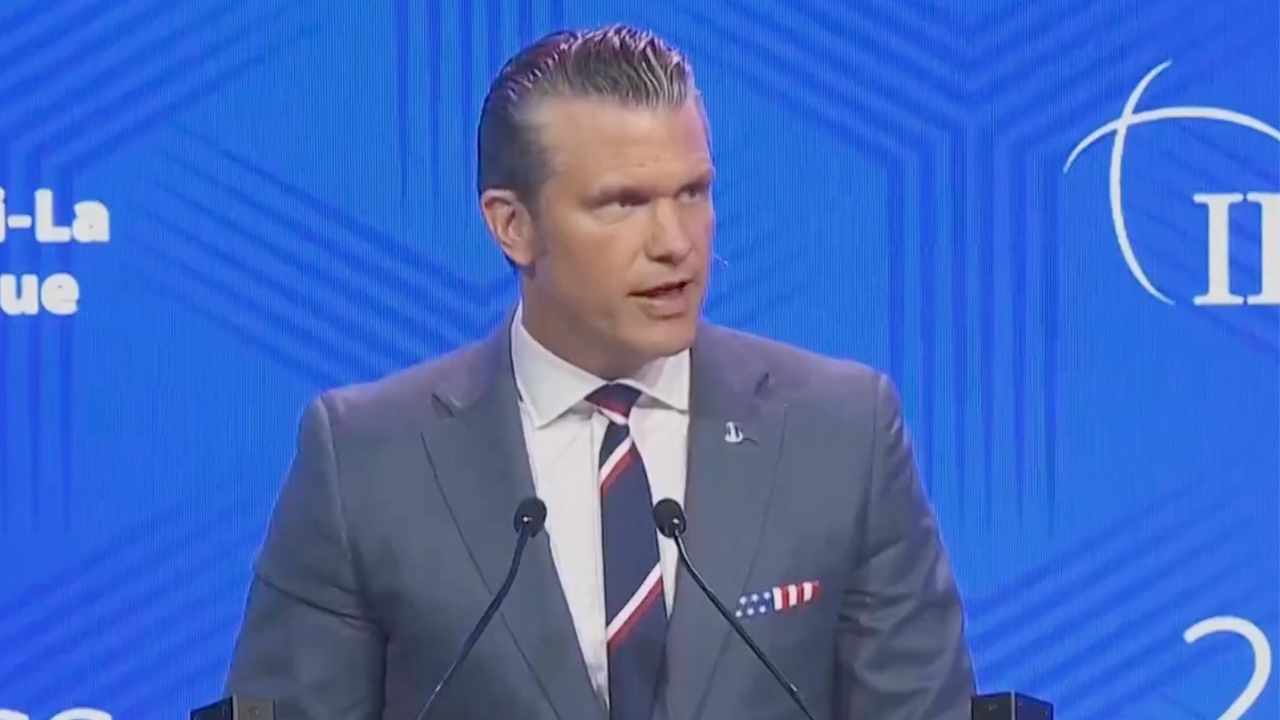
On 30 May, US Defence Secretary Pete Hegseth stood before the Shangri-La Dialogue in Singapore and told Indo-Pacific allies to spend 3.5% of their gross domestic product on defence. Nations that comply would receive expedited arms sales, expanded intelligence sharing, and deeper industrial collaboration. Those that do not would face, in his words, a clear shift in how the United States does business.
These three acts are not unconnected. They are a sequence. And the sequence raises a question that Hegseth's address carefully avoided: what exactly are allies being asked to pay for, and who is accountable for the damage already done?
The receipts
One day before Hegseth spoke, the heads of the International Energy Agency, the International Monetary Fund, the World Bank Group, and the World Trade Organisation issued a rare joint statement warning that the Middle East conflict was generating what they described as substantial and highly asymmetric impacts on energy supplies, food security, and economic activity, and that these impacts were disproportionately affecting the most vulnerable countries through higher fuel and fertiliser prices, increased uncertainty, and risks to jobs and livelihoods.
The World Bank's Commodity Markets Outlook, published in April, had already quantified the damage. The reduction in global oil supply in March 2026 — approximately 10 million barrels per day following the near-total closure of the Strait of Hormuz — was the largest oil supply shock on record.
Brent crude surged from US$72 per barrel at the end of February to US$118 by the end of March, the largest monthly price increase ever recorded. Average energy prices were forecast to rise 24% across 2026 as a whole. Fertiliser prices were projected to increase 31%, with urea rising nearly 60%. Inflation across emerging market and developing economies was projected to reach a four-year high of 5.1%. An extended conflict keeping oil prices above US$100 per barrel could push up to 45 million additional people into acute food insecurity.
The countries Hegseth praised by name at the Shangri-La Dialogue — Singapore, Vietnam, Thailand, the Philippines — were absorbing all of this in real time. Singapore and Thailand had sourced 45% and 28% respectively of their LNG from Qatar in 2024. Vietnam's oil stocks covered only 32 days of demand against an IEA benchmark of 90 days. Thailand's central bank revised GDP growth projections to 1.5–2%, with economists describing the year's objective as survival rather than growth. The Philippines declared a State of National Energy Emergency on 24 March and launched an emergency fuel subsidy programme for public transport drivers.
No compensation mechanism was offered from Washington. No economic adjustment assistance was proposed. No tariff relief was extended. The countries absorbing the inflation exported by an American military decision they had no part in making were presented instead, three months later, with a demand to spend more on defence.
A war with no end game and a Congress that knows it
The damage being absorbed by Indo-Pacific allies did not occur in a vacuum. It occurred as a consequence of a military campaign that, by the testimony of Washington's own legislators, was entered without adequate strategy, is being conducted without a defined end game, and has generated costs its own architects are struggling to account for.
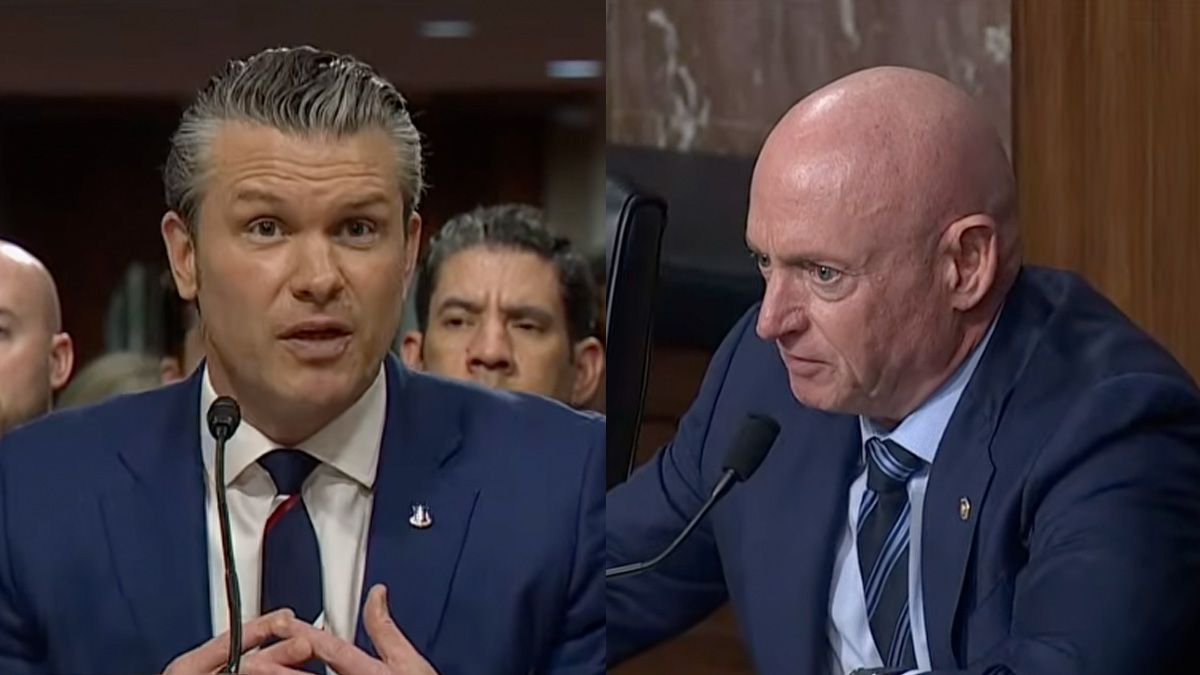
Congressional hearings held in early May before the House and Senate Appropriations defence subcommittees produced a record that deserves to be read carefully in the Indo-Pacific.
The total cost of the Iran war had reached US$29 billion by the time of the hearings, up from US$25 billion disclosed to Congress roughly two weeks earlier. Of that figure, approximately US$24 billion covers munitions replacement, repair, and operational costs for deployed forces. That total does not include the cost of repairing or rebuilding American military installations in the region that have sustained damage. The final bill for reconstruction has not yet been presented to Congress, and no timeline for doing so has been offered.
The Centre for Strategic and International Studies (CSIS), a Washington-based think tank, published an independent assessment in April concluding that American forces had expended more than half of the prewar inventory across four key weapons systems and that rebuilding those stockpiles to levels adequate for a potential conflict with China would take additional time.
Hegseth disputed this characterisation publicly, telling lawmakers that concerns had been unhelpfully overstated and that the military had plenty of what it needed. He simultaneously acknowledged that the defence industry had been instructed to build more and build faster.
The logic of both positions cannot be held at once.
The strategic picture was no more reassuring. Connecticut Representative Rosa DeLauro, the ranking Democrat on the House Appropriations Committee, told Hegseth that the administration had not presented Congress with any kind of clear or coherent strategy, and that the rationale shifts, the objectives change, and the end game is ill-defined when it is defined at all.
Delaware Senator Chris Coons, the ranking Democrat on the Senate subcommittee, pressed Hegseth repeatedly on how the administration intended to reopen the Strait of Hormuz to commercial shipping. Hegseth accused Coons of being disingenuous. Coons replied that he was concerned the administration had achieved a series of tactical successes but was on the verge of a strategic loss.
The more significant challenge came from within Hegseth's own party. Senate Appropriations defence subcommittee chairman Mitch McConnell told Hegseth directly that NATO was the most important military alliance in world history and that European allies appeared to believe the United States was reducing its presence and leaving them to fend for themselves.
Republican House Appropriations chairman Tom Cole cautioned that America First had never meant America alone, and that American power was most effective when exercised in concert with like-minded nations who share American interests and values. Maine Senator Susan Collins, who voted with Democrats last month on a failed effort to halt the conflict, questioned whether the administration had anticipated Iran's closure of the Strait at all.
Trump, meanwhile, indicated he was considering a suspension of the federal petrol tax to ease the burden of rising fuel costs on American consumers.
Taken together with the sanctions relief on Russian and Iranian oil issued in March, the picture is complete. The United States launched a war, depleted its munitions, closed the world's most critical energy chokepoint, lifted sanctions on both its principal adversaries to manage the resulting price shock, and is now considering suspending domestic taxation to manage the same pressure that sanctions relief failed to fully contain.
Senator Patty Murray put it plainly to Hegseth: the administration was spending families' hard-earned tax dollars on a war that many strongly opposed, while forcing people to pay more at the pump.
The Indo-Pacific nations sitting in the Shangri-La Dialogue audience when Hegseth delivered his burden-sharing demand weeks later were watching the same proceedings. The question of what strategic coherence they are being asked to fund at 3.5% of GDP does not have a comfortable answer.
The cascading costs no one is compensating
The fiscal consequences that American lawmakers were debating in Washington were reaching across the Pacific in a form that no congressional hearing addressed — because the people absorbing those costs were not American voters and have no vote in American proceedings.
There is no mechanism by which Vietnam, Thailand, Singapore, or the Philippines can present Washington with a bill for their depleted foreign exchange reserves, their emergency fuel subsidy programmes, or the growth projections their central banks revised downward in the weeks following the outbreak of the conflict.
There is no compensation fund. There is no adjustment assistance. There is no acknowledgement in Washington's public record that these costs exist.
There is also a deeper irony that the Congressional hearings did not address. To manage the domestic price impact of the Hormuz closure, Washington temporarily lifted sanctions on Russian oil exports — providing Moscow with fiscal relief during an active conflict in Ukraine that the same administration nominally supports resolving. Iranian oil displaced from Western markets migrated toward yuan-denominated transactions, deepening China's grip on the emerging parallel energy trading architecture. Chinese state-linked vessels then navigated Iran's permitted corridor openly, during a Trump-Xi summit, carrying crude to Chinese buyers.
The United States launched a war against Iran. Its most visible short-term strategic beneficiaries have been Russia and China. No one in the administration has offered a satisfactory account of how this outcome was anticipated, weighed, and accepted as a calculated cost. The Congressional record suggests it was not anticipated at all.
What exists instead of accountability is a demand — delivered five days after a Congress openly debating whether the war had any strategic logic — that the same countries absorbing its costs spend more.
What allies are actually being asked to buy
The burden-sharing demand is not simply inequitable. It rests on a premise that the record no longer supports: that the United States remains a coherent strategic actor whose leadership, while demanding, produces calculable outcomes for those who align with it.
For decades, the implicit bargain of US alliance relationships in the Indo-Pacific rested on a specific proposition. American military power underwrote a rules-based regional order in which sovereignty was respected, commerce flowed freely, and disputes were resolved through established international mechanisms. Allies were, in effect, investing in a system as much as purchasing a security guarantee.
That system has been materially altered. The Hormuz blockade closed the world's most critical energy chokepoint to all but Chinese and Iranian-permitted traffic. The financial enforcement architecture — the sanctions regime that was supposed to make defiance costly — was partially suspended within weeks, not because of diplomatic progress but because domestic petrol prices threatened electoral outcomes.
Hegseth said as much at the Shangri-La Dialogue, without appearing to recognise what he was describing. He dismissed what he called empty globalist rhetoric about the rules-based international order and insisted that rules without hard power behind them are not worth the paper they are written on. He was not wrong about the logical relationship between rules and enforcement capacity. He was describing, without acknowledgment, the condition his own administration had just created.
What is on offer to Indo-Pacific partners is therefore not the system they were previously aligned with. It is American firepower, on American terms, deployable at American discretion, in service of objectives that have demonstrably generated unintended consequences for the allies being asked to fund it. That is a fundamentally different product. It warrants a fundamentally different price assessment.
The protection racket problem
The protection racket does not announce itself as such. It arrives dressed in the language of partnership, mutual interest, and shared values. It offers real benefits to those who pay. It imposes real costs on those who do not. And it ensures that the entity collecting the payments remains indispensable to the security of those paying, regardless of whether that entity's behaviour is itself a source of the instability being defended against.
Hegseth's framing at the Shangri-La Dialogue matches this structure precisely. Nations that invest are moved to the front of the line. Nations that do not face a clear shift in how Washington does business. The demand runs in one direction only.
There is no corresponding mechanism by which Indo-Pacific nations can present Washington with a bill for the energy price shock, the inflation, the depleted foreign exchange reserves, or the emergency subsidy programmes their governments were forced to fund as a consequence of a war they did not authorise and were not consulted about.
That asymmetry is not a design flaw. It is the design.
The conversation that Indo-Pacific leaders are having privately — and will not have publicly while Chinese military capacity remains the dominant threat they face — is whether the terms of the arrangement have changed materially enough to warrant renegotiation. The events of the past three months have added something new to that conversation: a documented evidentiary record.
The war cost US$29 billion and is rising. The munitions are depleted and being rebuilt. The Strait of Hormuz remains closed. The ceasefire is on, in Trump's own words, massive life support. The countries absorbing the damage have not been compensated. And the enforcer, having demonstrated the domestic limits of its own architecture in public before its own Congress, is now in Singapore with an invoice.
The invoice has been presented. The receipts are available. The question is whether the region's leaders, in the bilateral meetings that follow the applause at Shangri-La, will read them.