Nvidia unveils RTX Spark superchip to power new generation of AI personal computers
Nvidia has unveiled its RTX Spark superchip at GTC Taipei, promising to reinvent Windows PCs as personal AI computers capable of running advanced AI agents locally, with new devices from major manufacturers expected this autumn.
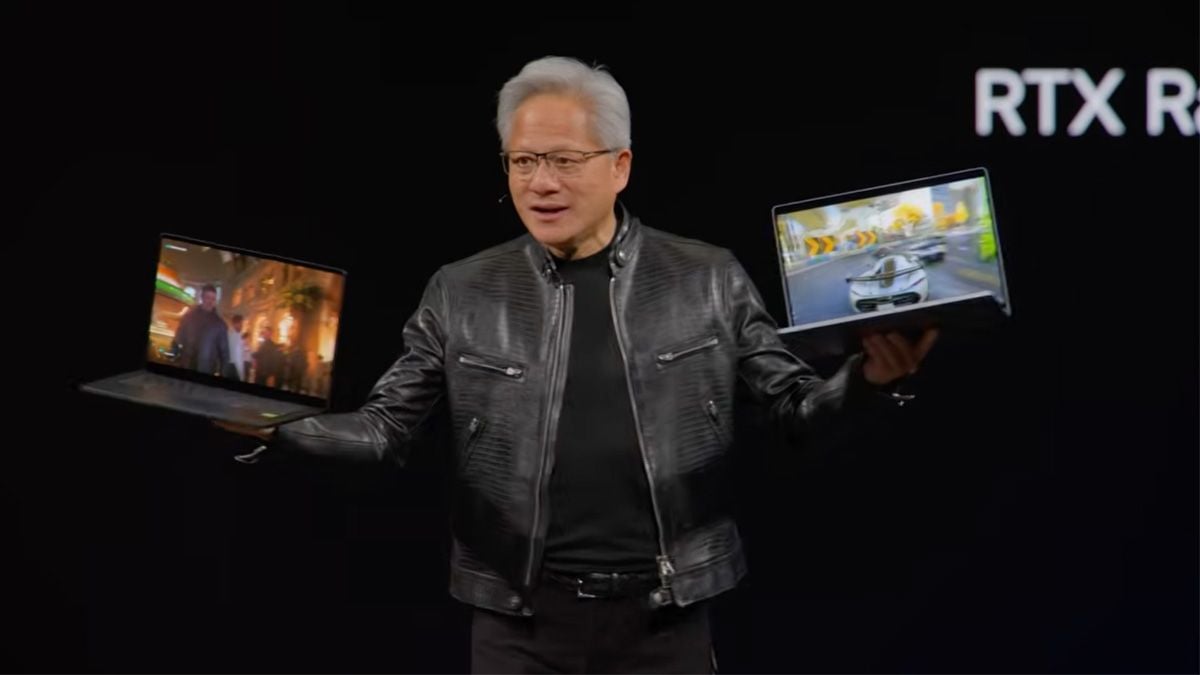
- Nvidia's RTX Spark superchip delivers one petaflop of AI performance for personal computers running local AI agents.
- Microsoft and Nvidia are collaborating to build a secure Windows platform for on-device AI agents.
- Devices from major manufacturers including Dell, HP and Microsoft Surface are expected this autumn.

Nvidia has unveiled a new superchip called RTX Spark, designed to transform Windows personal computers into devices capable of running advanced artificial intelligence agents locally, in what the company described as the most significant reinvention of the personal computer in four decades.
Jensen Huang, founder and chief executive of Nvidia, made the announcement on 31 May 2026 at the company's annual GTC event held in Taipei. The chip combines a central processing unit and graphics processing unit in a single package and is capable of delivering up to one petaflop of AI compute performance.
"For forty years, you launched apps. Click. Type. With RTX Spark and Microsoft Windows, you ask — and the PC does the work," Huang said during his keynote address.
A new class of personal computer
RTX Spark is built on Nvidia's Blackwell RTX GPU architecture, featuring 6,144 CUDA cores and fifth-generation Tensor Cores. It connects via Nvidia's NVLink chip-to-chip interconnect to a 20-core Grace CPU developed in collaboration with MediaTek, a Taiwan-based semiconductor company known for its Arm-based chip designs.
The superchip supports up to 128 gigabytes of unified memory and is designed to run AI language models with up to 120 billion parameters, with a context window of up to one million tokens. It can also render three-dimensional scenes exceeding 90 gigabytes in size, edit 12K video, and run AAA games at 1440p resolution at over 100 frames per second.
Nvidia described the chip as the foundation for a new category it calls the "AI personal computer," intended to serve creators, AI developers, and gamers within a single portable device.
Microsoft and Nvidia collaborate on agent security
A central element of the announcement is a partnership between Nvidia and Microsoft to deliver a secure platform for running AI agents on personal devices. The two companies said they are introducing new Windows security primitives alongside an Nvidia runtime called OpenShell, which together enable AI agents to operate locally under user-defined controls.
OpenShell allows users to set policies governing what agents can and cannot access, route queries to local AI models based on privacy preferences, and obscure personal information in any data sent to cloud-based models.
Microsoft chairman and chief executive Satya Nadella said the collaboration was aimed at delivering what he described as "unmetered intelligence to every home and every desk with Windows," calling RTX Spark a genuine breakthrough towards that goal.
AI agent developers including Hermes Agent, made by Nous Research, and OpenClaw, an open-source project backed by the OpenClaw Foundation, said they would adopt the new security framework for their Windows applications.
Dillon Rolnick, chief executive of Nous Research, said RTX Spark would give users of the company's Hermes Agent "a powerful and secure environment for agents to run and work alongside you."
Adobe rearchitects flagship creative tools
Nvidia announced a deepened partnership with Adobe, with the software company committing to rearchitecting both Photoshop and Premiere from the ground up to run on RTX Spark. Adobe said the rebuilt applications would deliver up to twice the AI and graphics performance compared with current versions.
Adobe's next-generation Premiere will feature a new video pipeline tapping into RTX Spark's unified memory and Blackwell GPU, enabling real-time editing and colour correction. The rebuilt Photoshop engine will support GPU-accelerated compositing, live filters, and high dynamic range imaging.
Shantanu Narayen, chair and chief executive of Adobe, said the expanded partnership with Nvidia and Microsoft would make creative experiences "faster and more powerful than ever," describing the goal as building AI-native tools that allow creators to "create at the pace of their ambition."
Updates to Premiere, Photoshop, and Substance 3D are expected to roll out alongside RTX Spark device availability this autumn.
Hardware makers line up behind new platform
Nvidia confirmed that RTX Spark laptops and compact desktop computers will be available in autumn 2026 from ASUS, Dell, HP, Lenovo, Microsoft Surface and MSI. Models from Acer and GIGABYTE are expected to follow.
Laptops will range from 14 to 16 inches and are engineered to be as slim as 14 millimetres and as light as approximately 1.4 kilogrammes. Displays will use tandem OLED panels with Nvidia G-SYNC technology.
Michael Dell, chairman and chief executive of Dell Technologies, said the company would offer RTX Spark in its XPS 16 Creator Edition, describing it as a laptop "built for people who demand the most from their hardware."
Brett Ostrum, corporate vice-president of Surface at Microsoft, said the company's Surface Laptop Ultra would be built for creators, developers and engineers who need "serious performance in a device that is thoughtfully designed, portable and deeply connected to the Windows tools."
Other announcements at GTC Taipei
Huang used the keynote to make several additional announcements. He said Nvidia's new Vera CPUs for data centres are now in full production and represent "a new major growth driver" for the company amid rising demand for AI agent infrastructure. Early customers for the Vera platform include Anthropic, OpenAI, and SpaceXAI.
Huang also revealed a humanoid robot reference design called Isaac GR00T, standing nearly six feet tall and built on the chassis of Chinese robotics company Unitree's H2 model. The robot is equipped with five-fingered dexterous hands manufactured by Singapore-based startup Sharpa and is intended as a blueprint for research, particularly in higher education.
Nvidia is already the world's most valuable publicly listed company, ahead of Apple, Alphabet, and Microsoft. Following the RTX Spark announcement, Nvidia's shares rose nearly four per cent in early United States trading. Shares of rivals Intel and AMD both fell more than three per cent.