Fourth individual charged in Singapore over fraud conspiracy linked to Nvidia chips
Aperia International’s chief financial officer has been charged in Singapore over an alleged fraud scheme involving server suppliers, adding to a widening investigation linked to Nvidia chips and export control concerns.

- Aperia executive Jenny Lim charged over alleged fraud involving server procurement misrepresentation
- Case linked to possible diversion of Nvidia chip-containing servers to Malaysia
- Broader international scrutiny grows over export controls and supply chain compliance

Singapore authorities have charged a fourth individual in an ongoing fraud investigation involving server suppliers and the alleged movement of high-value technology components.
The accused, Jenny Lim, chief financial officer of Aperia International, was formally charged on 2 April 2026, according to a statement by the Singapore Police Force.
Lim, 51, faces one count of participating in a criminal conspiracy to commit fraud by false representation in 2024.
Allegations tied to server procurement
Investigations allege that Lim conspired with two other executives to mislead suppliers about the intended end user of servers procured from Dell.
The two co-accused, Aaron Woon Guo Jie and Alan Wei Zhaolun, were earlier charged in February 2025.
At the time, Wei served as chief executive officer, while Woon was head of sales at Aperia International.
Authorities stated that the trio allegedly represented to Dell that the servers would be used by Aperia International.
However, this was not the case.
Instead, the servers were reportedly exported to Malaysia after procurement, raising concerns about the accuracy of the representations made during the purchase process.
Corporate structure and investigation scope
Aperia International operates under Aperia Cloud Services, which is its sole shareholder.
The case forms part of a broader probe into 22 individuals and companies suspected of involvement in fraudulent practices.
The investigation is being led by the Commercial Affairs Department, focusing on alleged offences committed between November 2023 and February 2025.
According to police, the alleged actions fall under Section 120B read with Section 424B of the Penal Code.
If convicted, those charged could face imprisonment of up to 20 years, fines, or both.
Lim has been released on bail set at S$350,000.
Her case has been adjourned to 22 May 2026 for a pre-trial conference, aligning with the scheduled proceedings for her co-accused.
Links to Nvidia chip movement
The case is closely linked to concerns surrounding the movement of advanced semiconductors, particularly those produced by Nvidia.
Singapore authorities conducted earlier raids involving multiple individuals following reports that intermediaries in the country may have facilitated the transfer of restricted technology to China.
Home Affairs Minister K. Shanmugam said in March 2025 that the servers in question could have contained Nvidia chips, intensifying scrutiny over the transactions.
Such chips are subject to export controls imposed by the United States, particularly concerning shipments to China.
Additional charges involving other suppliers
Separately, a Chinese national, Li Ming, 52, has also been charged in connection with the wider investigation.
Li faces one count of fraud and another under the Computer Misuse Act. Authorities allege he misrepresented the end users of servers procured from Supermicro, another supplier.
Investigators claim the servers were purchased under false pretences through a company under his control.
The cases involving Li, Wei, and Woon are scheduled for a pre-trial conference on 22 May 2026.
International dimension and US scrutiny
The developments in Singapore coincide with heightened international attention on the global semiconductor supply chain.
The US Commerce Department has reportedly been examining whether Chinese artificial intelligence firm DeepSeek has accessed restricted US technology.
In a related development, US authorities indicted three individuals in March 2026 for allegedly diverting servers assembled in the United States to China via a Southeast Asian intermediary.
Investigations revealed that the unnamed company purchased approximately US$2.5 billion worth of servers from Supermicro between 2024 and 2025.
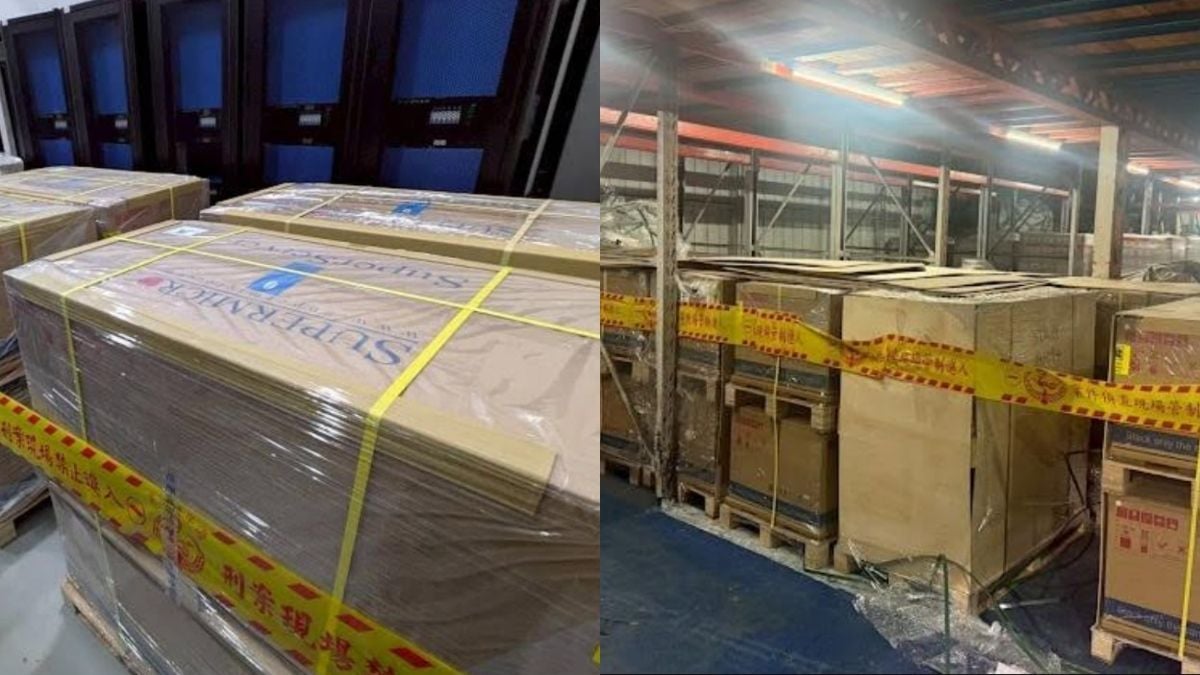
The servers were allegedly repackaged and shipped in unmarked boxes before being sent onward to China.
Calls for tighter export controls
The case has prompted calls from US lawmakers for stricter oversight of semiconductor exports.
On 23 March 2026, legislators urged Commerce Secretary Howard Lutnick to suspend export licences for advanced Nvidia chips.
The proposed measures include halting exports to several Southeast Asian countries, including Singapore, Malaysia, Thailand, and Vietnam.
Lawmakers have called for export licences to remain suspended until robust end-user verification mechanisms are implemented.
Singapore police emphasised that they take a serious view of fraud-related offences, particularly those that could undermine the country’s standing as a trusted international business hub.
In their statement, authorities said they would act firmly against individuals and companies engaging in dishonest practices.