Filipina denies willingly joining S$41.6m Cambodia scam syndicate as Singapore trial hears recruitment account
A Filipina accused of participating in a Cambodia-based scam syndicate linked to more than S$40 million in losses in Singapore told a court she travelled abroad for legitimate employment and only later realised she was in a scam operation, but lacked the means to return home.
- The accused said she travelled to Cambodia believing she had accepted a legitimate office job.
- Prosecutors allege she knowingly trained to participate in government official impersonation scams.
- The syndicate is believed to be linked to at least 330 cases involving over S$40 million in losses.

SINGAPORE: A Filipina accused of being part of a Cambodia-based scam syndicate linked to more than S$40 million in losses in Singapore told a court that she travelled overseas believing she had secured legitimate employment and never intended to become involved in fraudulent activities.
The defence case began on 4 June 2026 after prosecutors closed their case against De Villar Rizalyn Panganiban, 35, who faces charges of being a member of an organised criminal group and conspiring with others to cheat victims through government official impersonation scams.
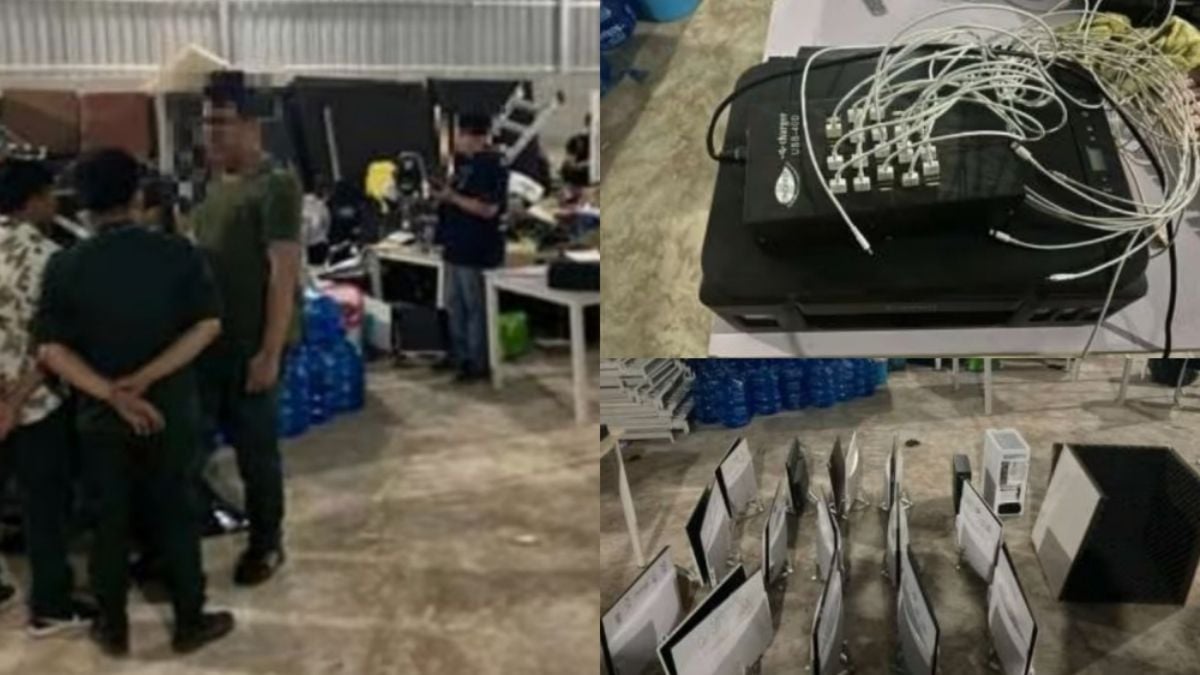
The case is the first among 12 suspects charged following a joint operation by the Singapore Police Force (SPF) and the Cambodian National Police that disrupted an alleged scam syndicate operating from Phnom Penh.
According to police statements issued after the operation, the syndicate is believed to have been linked to at least 330 reported cases involving losses exceeding S$40 million (US$31 million).
Nine Singaporeans, three Malaysians and De Villar were charged.
Defence says accused sought legitimate employment
Opening the defence case, lawyer Chooi Jing Yen argued that it was undisputed that his client initially believed she was travelling to Cambodia to work as an office employee for an online gambling company.
According to state media CNA, Chooi told the court that the period relevant to the charges was between 29 March 2025 and 24 April 2025, when De Villar was in Cambodia before later travelling to Laos.
“In other words, she's not being tried for anything she did while she was in Laos, or any information she gained after her departure from Cambodia,” Chooi said.
According to the defence, De Villar only became suspicious after spending several days at the compound and receiving limited information about the nature of the work.
Chooi said she eventually failed a test administered by the syndicate and was never deployed as an active caller.
“Your honour will hear evidence that Ms De Villar really just wanted to go home, but she couldn't,” Chooi told the court.
“She didn't have her passport, she didn't have money, she didn't know anybody in Cambodia, and the syndicate told her — if you want to go home, you need to raise money for your ticket.”
The lawyer argued that his client later travelled to Laos in the hope of earning enough money to return to the Philippines.
At one point during the proceedings, De Villar became emotional and wiped away tears while listening to the defence submissions.
“She never wanted to be a scammer”
Chooi further alleged that De Villar eventually escaped the syndicate's control by falsely claiming she needed to attend to family matters.
“But she never intended to, and that is because she never wanted to be a scammer,” he said.
Testifying through an interpreter, De Villar told the court that she had accepted the overseas job offer during a difficult period in her life.
“That time, I was facing a lot of problem,” she said.
She testified that a friend had approached her about working abroad and informed her that the monthly salary would be US$1,500.
Although initially hesitant, she accepted the offer on 24 March 2025 after several days of consideration.
A flight was arranged for her three days later.
De Villar said she became curious when she learned her flight route included Malaysia rather than a direct journey to Cambodia.
According to her testimony, she was told that travelling directly to Cambodia could attract scrutiny from Philippine immigration authorities.
She transited through Malaysia on 27 March 2025 before arriving in Phnom Penh on 29 March 2025.
She told the court she packed only office clothing and office shoes because she believed she would be undertaking legitimate administrative work.
Arrival at the compound
According to De Villar, a man met her at the airport and immediately took possession of her passport.
She was then transported to what she later discovered was a call centre operated by the alleged scam syndicate.
The court heard that she was given a script to memorise but claimed nobody explained its purpose or how it would be used.
She also testified that she was informed commissions would be derived from money obtained from customers.
“Since I work in call centre in Philippines, I know this process of training with this script,” she said.
“So I was waiting for the trainer to explain to us the words in the script, how we were going to use it.”
She maintained that nobody informed her the operation involved scams.
Prosecution alleges willing participation
Prosecutors have presented a markedly different account.
Deputy Public Prosecutors Suhas Malhotra and Yeo Kee Hwan argued that De Villar understood the nature of the operation and voluntarily participated in training to become a caller.
According to the prosecution, she memorised a scam script so thoroughly that she was later able to reproduce it word for word during police interviews conducted in September 2025.
The court also heard details of the syndicate's alleged three-tier structure.
Line one callers allegedly posed as bank officers and informed victims that their accounts or credit cards had been compromised.
Victims were then transferred to line two callers pretending to be officers from the Monetary Authority of Singapore (MAS).
A third group allegedly posed as law enforcement officers and convinced victims to transfer money into supposedly secure accounts that were actually controlled by the criminal group.
Evidence presented by prosecutors showed De Villar was added to a Telegram group chat on 30 March 2025 that monitored how victims were transferred between the different scam teams.
According to statements cited in court, the syndicate allegedly generated between S$20,000 and S$60,000 daily from victims.
Salary packages and growing suspicions
Prosecutors said De Villar trained as a prospective line one caller and was offered two compensation structures.
One package allegedly provided a US$1,500 monthly salary plus a 3 per cent commission, while the second offered an 8 per cent commission without a base salary.
The prosecution further alleged she was informed that commissions came from money stolen from victims.
During training, she reportedly participated in role-playing exercises and was told to reduce her Filipino accent and adopt speech patterns closer to Singaporean English.
She also visited an operational area where active callers were working.
According to evidence cited by prosecutors, her suspicions intensified when she noticed operators pretending to type on disconnected keyboards that had been divided into smaller sections.
By 2 April 2025, prosecutors said she had discussed with a friend her belief that they were working in a scam centre.
The prosecution contends that despite those suspicions, the pair remained because they wanted “to earn the good money”.
De Villar strongly disputed that claim during testimony.
“I told the IO I never heard the word ‘steal’ or ‘scam’ during the time I was in Cambodia,” she said.
She explained that references to “steal” in her police statements reflected her understanding when interviewed months later, after she had learned more about the operation.
Fear of violence and inability to leave
De Villar testified that she had previously encountered reports on social media and in news coverage about individuals allegedly being harmed or tortured in scam compounds.
She told the court she feared becoming trapped in such circumstances.
According to her testimony, she was told she would need to pay between US$1,000 and US$2,000 to return to the Philippines.
She said she did not possess that amount.
Prosecutors, however, argued that she was not being held captive.
According to evidence from her statements, she retained access to her mobile phone and the internet and was free to leave the premises.
The prosecution also noted that she reportedly went out for meals and visited a nail salon during her stay.
Before departing Cambodia for Laos on 24 April 2025, prosecutors allege she received US$1,000 and S$300 from the group.