Maid agency guilty of unfair practice after Mandarin-speaking claim about helper proved false, tribunal rules
A Singapore tribunal found a maid agency guilty of unfair practice for representing that a Myanmar domestic worker could speak Mandarin when she could barely understand the language, ordering S$1,827.55 in damages and costs to an elderly bedridden client.
- Tribunal found maid agency misled client over helper's Mandarin ability, awarding S$1,558.11 in damages
- Agency manager attended virtual trial from airport Starbucks, then filed recusal application dismissed as baseless
- Magistrate ruled SCT may award costs against litigants who pursue unmeritorious applications during proceedings

A Singapore employment agency has been found guilty of unfair practice after representing that a migrant domestic worker could speak Mandarin when she could barely communicate in the language, leaving an elderly bedridden woman unable to speak with her own caregiver.
In a written judgment issued on 9 June 2026, Tribunal Magistrate Leon Abraham Tan of the Small Claims Tribunals (SCT) ordered the agency to pay S$1,827.55, comprising S$1,558.11 in damages plus S$269.44 in costs and disbursements.
The parties were anonymised in the published grounds of decision.
The claimant was an elderly woman who was bedridden due to a stroke and Parkinson's disease, and who communicated almost exclusively in Mandarin. Her son approached the agency in around November 2024 to source a Mandarin-speaking caregiver with experience caring for disabled elderly persons.
The agency provided the biodata of a worker from Myanmar, which listed "MANDARIN" as her spoken language without any qualification. It also sent a video showing the worker speaking in Mandarin about herself, her family and her work experience.
Relying on these representations, the family engaged the worker in December 2024. It quickly became apparent that she could barely speak or understand Mandarin or English.
When the son reported the problem, the agency replied over WhatsApp: "Fresh they Mandarin very simple pls give her some time for her .. if dun understand can use the goegle translation first."
Video recordings tendered as evidence showed the worker struggling to comprehend basic Mandarin words such as "hold grandma", "steam", "rain", "cloth" and "tomorrow". The magistrate found her Mandarin proficiency to be "either non-existent or, at best, extremely poor".
The worker was returned to the agency in January 2025. The agency refunded S$3,340.61 but declined a full refund, prompting the claim.
Agency's defence rejected
The agency's manager argued it was engaged to find a worker who could speak only simple Mandarin, and that the family should have paid for a more expensive package if they wanted proficiency. He said finding a Mandarin-proficient worker at a S$500 monthly salary was like "looking for a needle in a haystack".
The magistrate rejected this, noting the agency produced no evidence its engagement was limited to simple Mandarin, and that no one forced it to take on the client. If the task was too onerous, it could have declined the business.
He held that agencies bear the onus of accurately characterising the skills of the workers they proffer, as this goes to their core function and they are far better placed than consumers to verify those skills.
The tribunal found the agency guilty of unfair practice under sections 4(a) and 4(d) of the Consumer Protection (Fair Trading) Act 2003, for conduct that would mislead a reasonable consumer and for misleading the client on a material fact.
Manager attended virtual trial from airport Starbucks
The judgment also detailed what the magistrate described as egregious conduct by the agency's manager during proceedings.
On the first day of trial on 22 September 2025, the manager joined the video-conference hearing from a Starbucks cafe at Changi Airport, with a domestic worker in his vicinity whom he was sending off on a flight.
The magistrate explained that this breached video-conferencing guidelines and the statutory requirement that SCT proceedings be conducted in private, since passersby could observe or eavesdrop on the hearing.
The manager refused three offers of a break to arrange a substitute, insisted his work matter was urgent, and at one point asked the magistrate: "So what? What? What? What do you want me to do?"
When told that attending by video-conference was a privilege requiring compliance with the court's rules, the manager replied: "Come down to court lor." He then threatened to file a complaint against the magistrate, and did so during the break given for parties to travel to the State Courts Towers.
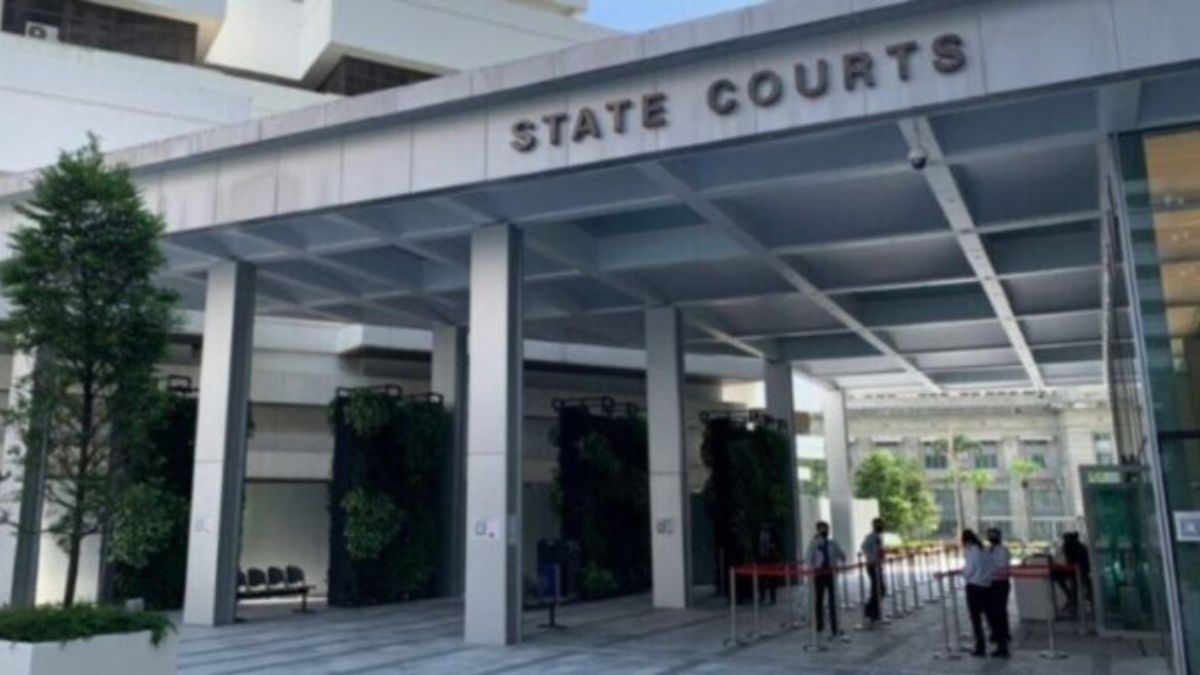
The trial was converted to a physical hearing. The manager arrived nearly half an hour after the 11am start the magistrate had set, and subsequently filed an application for the magistrate to recuse himself.
Recusal application dismissed as baseless
The magistrate dismissed the recusal application, finding that none of the eight reasons advanced satisfied the test for apparent bias set out by the Court of Appeal. He described the manager's grievances as "entirely self-induced" and the manager as "the architect of his own misfortune".
He also rejected the suggestion that filing a complaint against an adjudicator could itself establish bias, warning this would let litigants judge-shop by complaining about any adjudicator they perceived negatively.
Tribunal can award costs for unmeritorious applications
Significantly, the magistrate held that the SCT's power to award costs is not confined to the three factors listed in the Small Claims Tribunals Rules, such as frivolous or vexatious claims.
Drawing on the legislative history of the 2018 amendments to the Small Claims Tribunals Act, including the second reading speech by then Senior Minister of State for Law Edwin Tong, he found the power extends to egregious conduct of proceedings, even where the underlying claim or defence is not hopeless.
He awarded the claimant S$150 in costs for the recusal application, cautioning that this modest sum should not be taken as a benchmark or ceiling for future cases.
The magistrate concluded with observations that the SCT's informality "is not a licence for discourtesy", that video-conference attendance is a convenience and not an entitlement, and that allegations of judicial bias must never be made lightly, with serious consequences possible if found unmeritorious.