US completes strikes on Iran over Apache downing as Tehran retaliates against bases in Bahrain and Jordan
The US military said it completed precision strikes on Iranian air defence and radar sites near the Strait of Hormuz on Tuesday, 9 June 2026, after an Iranian drone downed a US Army Apache helicopter. Iran's Revolutionary Guards retaliated against US targets in Bahrain and Jordan.
- US completed strikes on Iranian air defence and radar sites near Strait of Hormuz after Apache downing
- Iran's Revolutionary Guards targeted US Fifth Fleet in Bahrain and Al Azraq base in Jordan
- US official said strikes were a warning shot unlikely to hinder ongoing war-ending negotiations

The United States military said it has completed a wave of retaliatory strikes against Iran after an Iranian drone brought down a US Army Apache helicopter, prompting Tehran to launch missiles and drones at US military targets in Bahrain and Jordan.
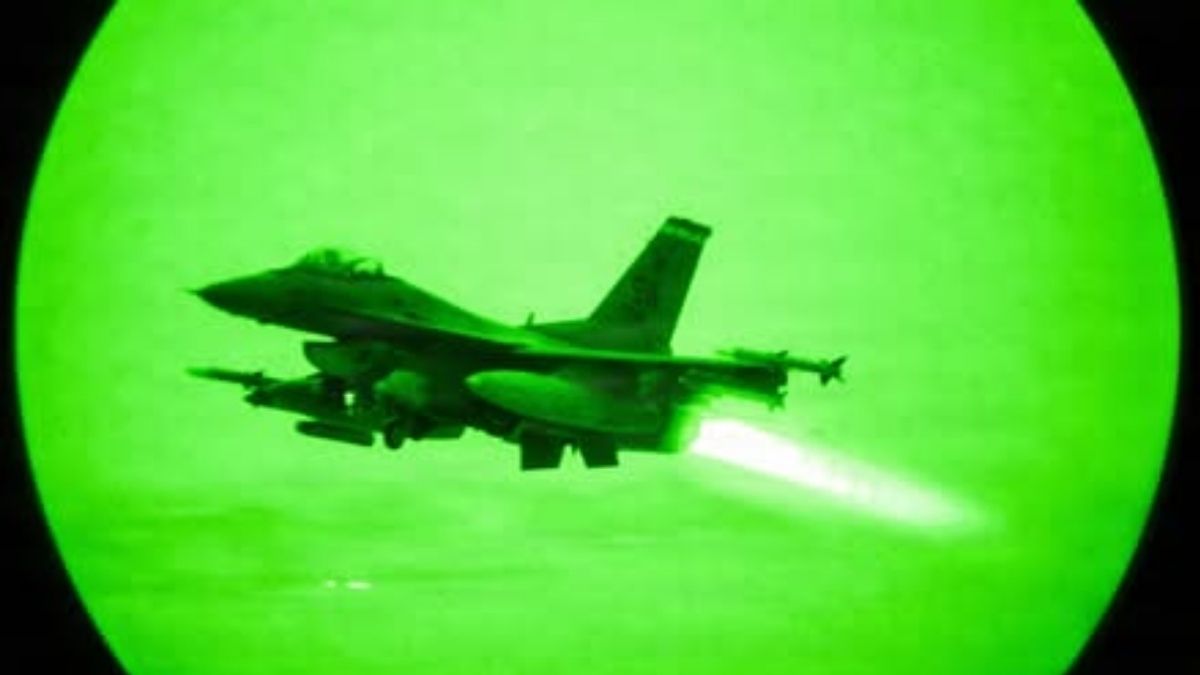
US Central Command (CENTCOM) said its forces struck Iranian air defence systems, ground control stations and surveillance radar sites near the Strait of Hormuz using precision munitions delivered by US Air Force and Navy fighter jets.
The strikes were carried out with precision munitions from US Air Force and Navy fighter jets, CENTCOM said in a statement.
It described the operation as a proportional response to recent attacks on US forces and international commercial ships transiting regional waters.
CENTCOM added that US forces "remain vigilant and postured to defend against unjustified Iranian aggression". The strikes began at 5pm Eastern Time on Tuesday, 9 June 2026.
A US official told CNN the strikes were intended as a warning shot, and that the Trump administration believes they will not hinder negotiations to end the months-long conflict. A source told the network that additional strikes are expected.
Iranian retaliation triggers sirens in Bahrain and Kuwait
Iran's Islamic Revolutionary Guard Corps (IRGC) said early Wednesday, 10 June 2026, that it had launched missiles and drones toward US targets in the region in response to the strikes.
In a statement carried by the semi-official Tasnim News Agency, the IRGC said its naval forces launched a drone attack at 2.30am local time against the US Fifth Fleet, headquartered in Bahrain.
The IRGC also claimed it targeted the Al Azraq base in Jordan, which hosts US forces, with long-range solid-fuel missiles. No air raid sirens were reported in Jordan.
Bahrain's Ministry of Interior said sirens had been activated, urging citizens and residents to remain calm and head to the nearest safe place, in a post on X.
Sirens also sounded in Kuwait early Wednesday. The Gulf state's military said its air defence systems were "intercepting hostile aerial targets in accordance with approved operational procedures", and told residents to follow official safety instructions.
Helicopter brought down by Iranian drone
Two US officials told CNN the Apache helicopter, downed off the coast of Oman on Monday, 8 June 2026, was struck by an Iranian drone. A separate source familiar with the incident identified the aircraft as a Shahed drone.
One US official said it remained unclear whether the drone had targeted the Apache intentionally or brought it down inadvertently. The helicopter's two crew members were rescued by an uncrewed US drone boat and were uninjured.
President Donald Trump said the US "must, of necessity, respond to this attack", in a post on Truth Social, despite earlier telling the Wall Street Journal the downing "wasn't a big deal".
Speaking to ABC's Jonathan Karl by telephone as CENTCOM announced the strikes, Trump said the US response was "very strong, very powerful".
"I think it's very important to respond. They shot down a helicopter, and we are responding as we speak," he said.
Explosions reported around Strait of Hormuz
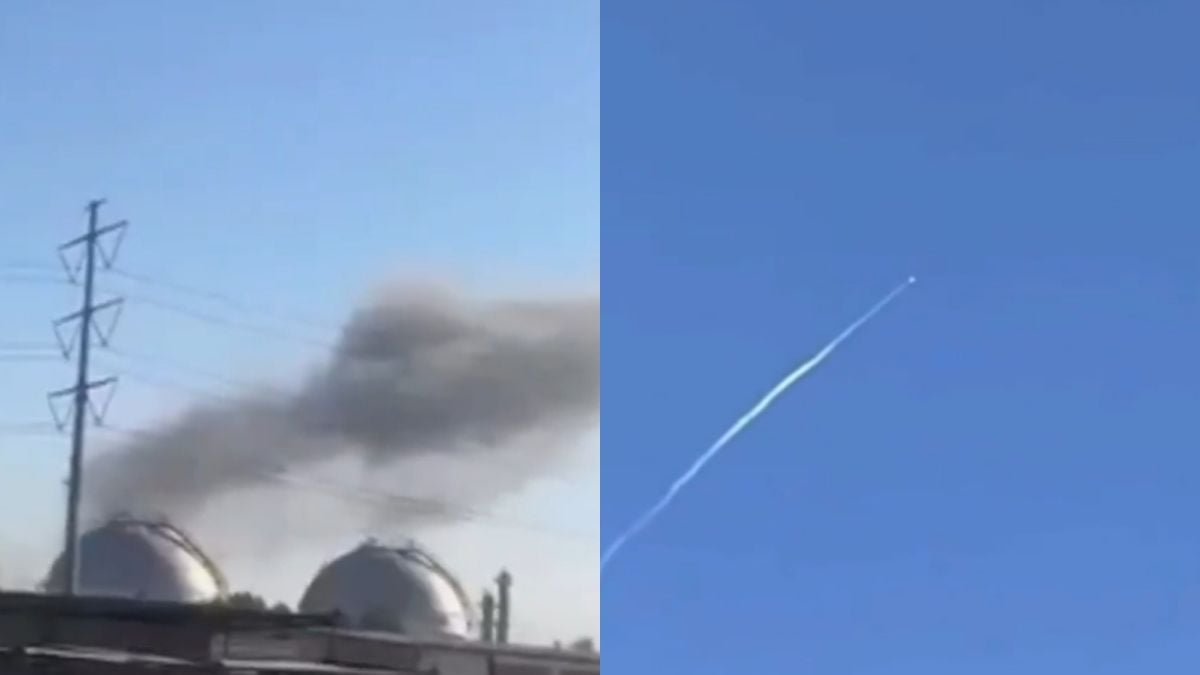
Iranian state media reported explosions in three strategic locations around the Strait of Hormuz, including Qeshm Island, the port city of Bandar Abbas, and Jask county.
Qeshm Island forms part of Iran's "arch defense" near the strait, while Bandar Abbas hosts a key naval and air base. Jask county is home to a naval presence and a strategically positioned shipping port east of the strait.
Iran's semi-official Mehr News Agency reported that residents in the coastal city of Sirik heard a number of explosions, though the governor of nearby Minab clarified that no attack on that city had been reported.
The IRGC said US strikes damaged a communications tower in Sirik and destroyed two water reservoirs in the Bamani district, according to Tasnim.
The chief executive of the Hormozgan Water and Wastewater Company, Abdul Hamid Hamzehpour, said the destroyed reservoirs comprised a 500-cubic-metre tank and a 2,000-cubic-metre tank supplying drinking water to the Bamani district and the city of Kuhestak, Mehr reported.
Water distribution has been halted in all villages of the Bamani district and in Kuhestak, according to Mehr. CNN said it had sought comment from CENTCOM on the reports.
Tehran vows no attack will go unanswered
Iranian Foreign Minister Abbas Araghchi said no US attack would be left "unanswered".
"Despite its defeats on the battlefield, the US opted to test our determination. Our powerful armed forces will leave no attack or threat unanswered," Araghchi said in a post on X. "Leave our region if you want to be safe."
Araghchi had earlier urged foreign forces to exit the Strait of Hormuz, warning they were "at constant risk" from human error, accidents or crossfire. He said the strait is shared by Iran and Oman and is not international waters.
The strait is nonetheless considered an international strait under the UN Convention on the Law of the Sea, granting foreign vessels the right of transit passage. Neither Iran nor the US has ratified the convention, and Tehran rejects the transit passage provision.
Mohammad Bagher Ghalibaf, the speaker of Iran's parliament, warned the US against breaking its commitments and threatened escalation if diplomatic efforts collapse.
Negotiations continue despite strikes
The exchange of strikes places renewed strain on the fragile ceasefire between the US, Israel and Iran, which had already come under pressure in recent days when Israel and Iran traded strikes for the first time since April 2026.
Vice President JD Vance told CBS Sunday Morning the administration was "very close" to a deal with Iran, though he said it could come within the week or months from now. He expressed confidence an agreement would be reached before the November midterm elections.
Trump said on Monday that a deal to end the war would be reached within two weeks, before announcing the helicopter downing and vowing to respond.