Philippines quake kills 61 as coastal rise transforms parts of Mindanao shoreline
The death toll from the 8 June earthquake in the southern Philippines has risen to 61, with dozens still missing, widespread infrastructure damage reported, and recovery efforts complicated by aftershocks and flooding.
- The earthquake has killed 61 people and left at least 40 others missing.
- More than 724,000 people have been affected across Southern and Central Mindanao.
- Recovery operations face challenges from aftershocks, flooding and damaged infrastructure.

The death toll from the magnitude 7.8 earthquake that struck southern Philippines on 8 June has risen to 61, while at least 40 people remain missing and more than 1,400 have been injured, according to the National Disaster Risk Reduction and Management Council (NDRRMC).
Disaster authorities said 54 deaths were recorded in the Soccsksargen region, officially known as Region 12, while seven fatalities were reported in the Davao Region.
More than 724,000 people, or approximately 173,000 families, have been affected by the earthquake across Southern and Central Mindanao. Around 10,000 people remain housed in 34 evacuation centres.
The earthquake struck at 7:37 a.m. local time approximately 32 kilometres (20 miles) offshore west of the municipality of Maasim in Sarangani province.
Initial government assessments estimate infrastructure damage at around 1 billion Philippine pesos (approximately US$17.7 million). A total of 725 structures, including schools, hospitals, government buildings and other facilities, sustained damage.
Authorities also reported damage to approximately 54,000 homes. Of these, around 9,900 houses were destroyed while the remainder suffered partial damage.
A state of calamity has been declared in 13 municipalities affected by the disaster.
Search operations continue amid aftershocks
Rescue and recovery operations remain underway in several areas as authorities continue searching for missing people trapped beneath collapsed structures.
The Bureau of Fire Protection (BFP) confirmed that two bodies were recently recovered from the ruins of a collapsed supermarket building. Officials believe that up to 11 people may still be missing in the affected area.
More than 380 firefighters from Region 12 have been deployed in disaster response operations, while over 800 additional personnel remain on standby.
The Philippine Coast Guard also recovered the body of a 10-year-old boy who had been reported missing at sea near Barangay Siguel in Sarangani province. The remains of another child were recovered a day earlier.
Rescue efforts have been complicated by continuing aftershocks. The Philippine Institute of Volcanology and Seismology (Phivolcs) reported a magnitude 4.9 aftershock in Sarangani several days after the main earthquake.
Damaged roads and bridges have further hindered access to isolated communities.
Heavy rainfall triggers flooding
Recovery efforts faced additional challenges over the weekend when heavy rainfall triggered flash floods in parts of Sarangani province and General Santos City.
Floodwaters temporarily rendered the Kumaba Bridge in Barangay Kanalo, Maasim, impassable. In the municipality of Maitum, sections of the national highway were submerged under knee-deep water, disrupting traffic along major transport routes.
The flooding occurred as many residents were still coping with the effects of the earthquake and living outside damaged homes.
Families remain without shelter or assistance
Several days after the earthquake, many families continued living in makeshift shelters along roadsides after their homes were deemed unsafe.
In Barangay Siguel in General Santos City, residents said they had not yet received government assistance and were struggling to obtain food, clean water and shelter.
Marilyn Jekirani said her family had been forced to sleep beside the road because their house risked collapse after structural supports were damaged during the earthquake.
She expressed frustration at the lack of assistance reaching the community.
Another resident, Christine Dalani Kauto, said the house where her family had lived for three decades suffered severe damage when its walls and roof collapsed. Three families who had occupied the home are now sleeping outdoors.
Residents also reported urgent medical needs. Nuridja Laki said members of her family fell down a staircase while fleeing the earthquake, injuring a one-year-old child who suffered a head wound.
Some residents said they had chosen to remain inside damaged houses despite safety concerns because they had nowhere else to stay, particularly with rain affecting the area.
The Philippine Army and Bureau of Fire Protection later delivered emergency assistance to roadside evacuees in Barangay Siguel. Army personnel distributed potable water to approximately 580 families using a mobile water purification system.
Local authorities acknowledged that relief assistance had not yet reached some affected communities because of logistical constraints.
Schools remain closed for millions of students
The earthquake struck on the first day of the new academic year for millions of students across the Philippines.
More than 3.2 million learners have been affected, with classes suspended in over 6,200 public and private schools pending structural inspections and safety assessments.
The Department of Education has been conducting evaluations of damaged school facilities before allowing students to return.
Meanwhile, the Commission on Higher Education distributed tertiary education subsidies to 786 students enrolled in institutions located in South Cotabato province.
The United Nations Children's Fund (UNICEF) expressed concern over the impact of the disaster on children and young people affected by the earthquake.
Seabed rises by two metres after quake
Scientists are also investigating significant geological changes along parts of the southern Mindanao coastline.
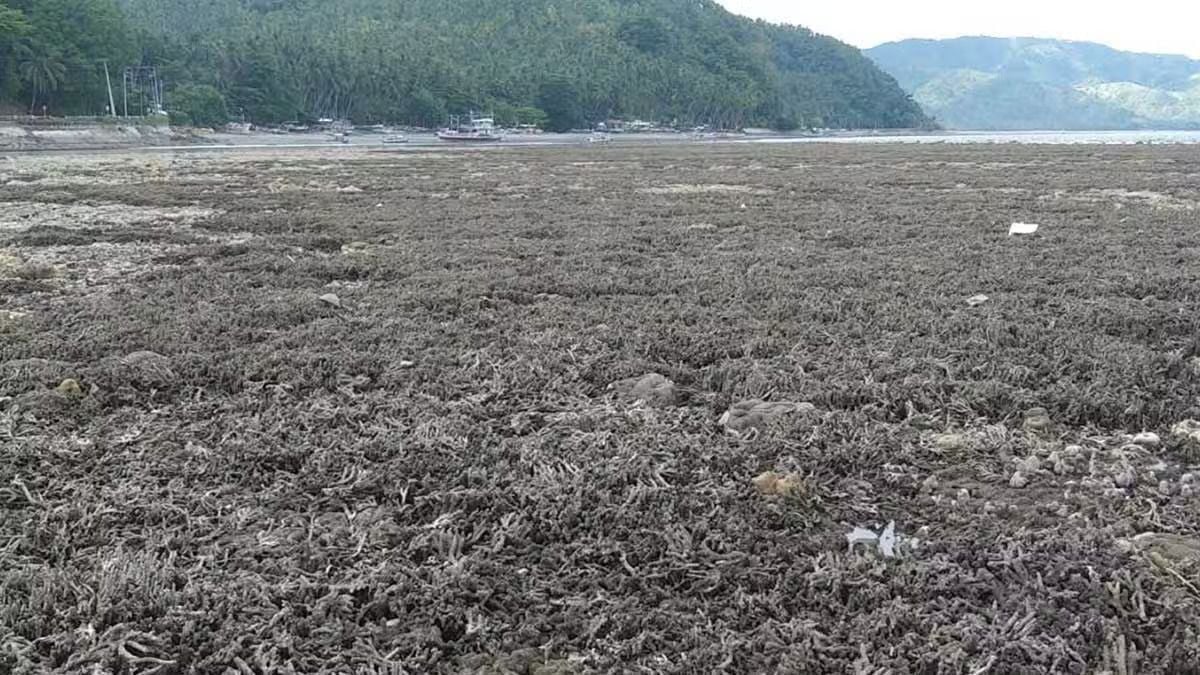
The Department of Environment and Natural Resources (DENR) reported that sections of the seabed were raised by approximately two metres (6.6 feet) following the earthquake, exposing large areas of coral reefs and seagrass beds.
Residents first reported unusual coastal conditions in the municipality of Glan in Sarangani province on 10 June. They observed that sea levels had remained unusually low and that the shoreline had expanded significantly.
According to the Philippine Institute of Volcanology and Seismology, movement along the Cotabato Trench caused sections of the coastlines of Sarangani and Davao Occidental provinces to rise above sea level.
The phenomenon, known as coastal uplift, extended parts of the shoreline by as much as 200 metres (656 feet).
Environmental survey teams found extensive stretches of coral reef and seagrass beds exposed to the air.
Photographs released by environmental authorities showed dead fish, eels, shellfish and other marine organisms stranded on newly exposed seabed.
The DENR said exposed coral and seagrass ecosystems had begun dying alongside the marine species that depended on them.
Officials said they are continuing surveys to determine the full extent of environmental damage.
Infrastructure and transport gradually restored
Authorities have begun restoring essential services across affected areas.
The Department of Public Works and Highways has deployed round-the-clock road-clearing and repair teams throughout Mindanao.
Power outages and telecommunications disruptions reported immediately after the earthquake have gradually been addressed, although some communities continue to experience service interruptions.
The Department of Transportation and the Civil Aviation Authority of the Philippines announced that commercial flights at General Santos International Airport would resume after safety inspections were completed.
The Philippine Charity Sweepstakes Office has also dispatched additional food packs and emergency supplies to communities that had previously been inaccessible because of damaged infrastructure.
According to the NDRRMC, government agencies have provided approximately 67.6 million Philippine pesos (about US$1.2 million) in humanitarian assistance to affected families.
Pope Leo XIV offers prayers
Pope Leo XIV expressed solidarity with those affected by the disaster and offered prayers for victims and their families.
The Vatican said the pontiff had conveyed his closeness to the Filipino people following the earthquake and remembered those who had lost their lives as well as those involved in rescue and recovery efforts.
As emergency operations continue across Mindanao, authorities remain focused on locating missing persons, restoring damaged infrastructure and delivering assistance to communities still struggling with the aftermath of one of the strongest earthquakes to strike the southern Philippines in recent years.