Singapore High Court stays X subsidiary's defamation suit against Media Matters
The Singapore High Court has stayed a defamation suit brought by a subsidiary of Elon Musk's X Corp against US media watchdog Media Matters, ruling that Texas, not Singapore, is the more appropriate forum to hear the claims.
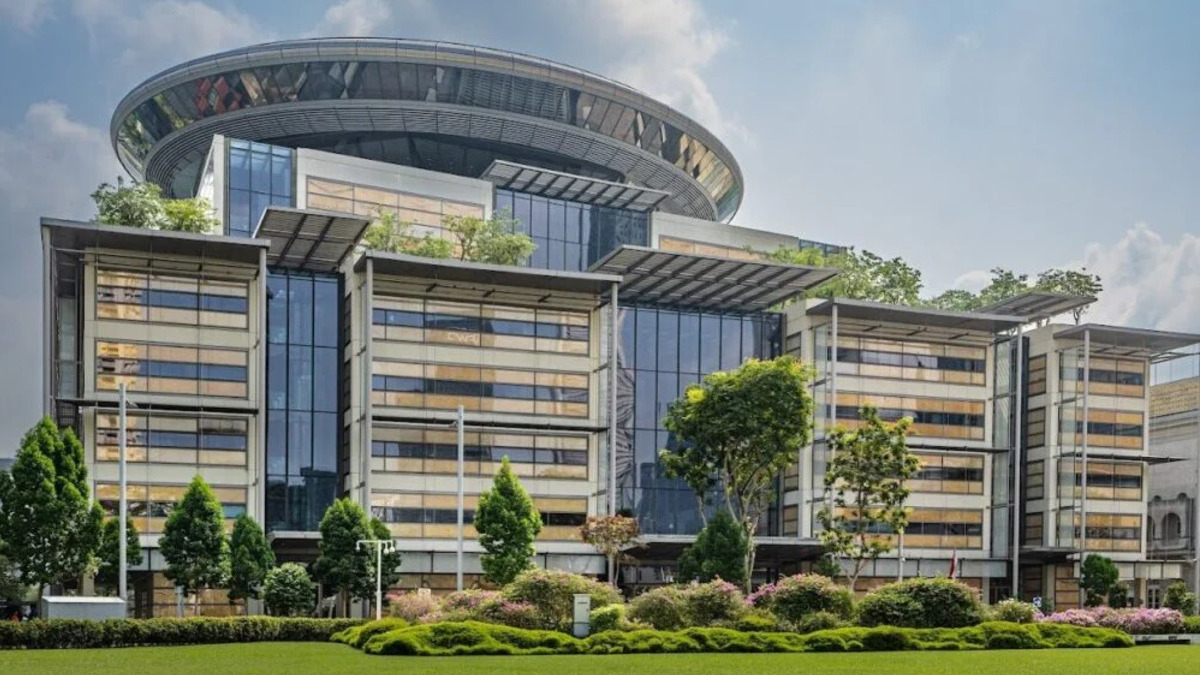

The Singapore High Court has stayed a defamation lawsuit filed by the Singapore subsidiary of Elon Musk's social media company X against Media Matters for America, a US-based non-profit media monitoring organisation.
According to local media reports, in a judgment delivered on Friday, 19 June, Judicial Commissioner Low Siew Ling held that, despite arguable claims of defamation and malicious falsehood, Singapore was not the proper forum for the suit.
She said the Texas court, where a trial over the same article is scheduled to begin in March 2027, was "clearly and distinctly the more appropriate forum" to resolve the claims.
The case was brought by X Corp's Singapore-incorporated subsidiary Twitter Asia Pacific (TAP), now known as X Asia Pacific Internet, against Media Matters, a research centre dedicated to monitoring and correcting misinformation in the US media.
The dispute arose from an article Media Matters published on its website on Thursday, 16 November 2023. The article alleged that advertisements from major brands had appeared alongside pro-Nazi content on the X platform.
The Straits Times reported that the article's headline referred to advertisements for Apple, Bravo, IBM, Oracle and Xfinity appearing next to pro-Nazi content as Musk endorsed an antisemitic conspiracy theory.
Musk responded by vowing a "thermonuclear lawsuit" against the organisation. His public threat followed moves by major companies, including Apple and IBM, to pause advertising on the platform formerly known as Twitter.
Musk recently became the world's first trillionaire, following the Nasdaq debut of his aerospace company SpaceX.
On Monday, 20 November 2023, X Corp filed suit in a US district court in Texas against Media Matters and the reporter who wrote the article. The organisation's chief executive was later added as a defendant.
A second action followed on Wednesday, 6 December 2023, in Ireland's High Court. That suit, for defamation and malicious falsehood, was filed by X Corp's Irish subsidiary, an entity named Twitter International Unlimited.
More than seven months later, on Tuesday, 23 July 2024, the Singapore case was filed by Twitter Asia Pacific, which handles advertising clients across the Asia-Pacific region. TAP sought special damages of US$26 million (S$33.6 million) in lost advertising revenue.
Findings on the merits
While staying the case, Judicial Commissioner Low found that TAP had an arguable claim in defamation. Local media reported that she held the article's statements, read in context, could not be said to amount to neutral factual observations.
The judge said the article's title drew a deliberate association between the placement of the advertisements next to pro-Nazi content and Musk's alleged endorsement of an antisemitic conspiracy theory.
She found that the article conveyed an impression to an ordinary, reasonable reader that the appearance of the advertisements reflected the authentic experience of an average user of the X platform.
TAP argued that Media Matters' employees had set up a separate account that exclusively followed a subset of users falling into two categories: those known to produce extreme, fringe content, and the X Group's major advertising clients.
This alternate account followed only 30 users, compared with the average of 219 accounts followed by a typical active user, to ensure that only a limited type of content appeared in its feed.
According to the subsidiary, Media Matters also repeatedly scrolled and refreshed the feed to generate 13 to 15 times more advertisements per hour than those viewed by an average user.
Media Matters did not dispute these assertions before the judge, who found that TAP had made a good arguable case that the offending statements were false and maliciously made in a calculated attempt to cause loss to the X Group.
The judge also found a good arguable case of damages suffered in Singapore through lost advertising revenue, and that the article could have referred to the named Singapore subsidiary, even though TAP was not specifically named.
However, she found that TAP failed to establish a good arguable case that the article had been published in Singapore.
TAP claimed that at least 183 users based in Singapore had accessed the article 54 times through the X platform, and that at least 7,455 Singapore-based users had interacted with a post containing a hyperlink to it.
The judge found these assertions unsupported by evidence, with no details explaining how the figures were derived, and agreed with Media Matters that publication in Singapore had not been established.
Why Texas was preferred
Despite finding the claims arguable, Judicial Commissioner Low ruled that the US was the appropriate forum. She found that TAP's claims arose from statements researched, written and uploaded for publication in the US, concerning a platform operated from the US.
The vast majority of relevant witnesses and documentary evidence are located in the US, she said. Having so many witnesses fly into Singapore to testify would be costly.
The Straits Times reported the judge as saying this would place a particular strain on Media Matters, a non-profit entity that, unlike TAP, was not part of a large and well-financed corporate group.
She also found substantial overlap between the Singapore and Texas proceedings, which were filed by X Group entities against the same defendant over the same losses and the same article.
The potential duplication of resources and risk of conflicting judgments was therefore significant, she said. The Texas proceedings are at a much more advanced stage, with more than 400,000 documents disclosed.
TAP, represented by Andy Leck of Wong & Leow, had appealed an earlier decision by an assistant registrar on Friday, 24 October 2025, that the Singapore court was not the appropriate forum.
Media Matters, represented by Lin Shumin of Drew & Napier, maintained that the United States was the proper place to hear the case. The Texas trial is expected to begin on Monday, 29 March 2027.