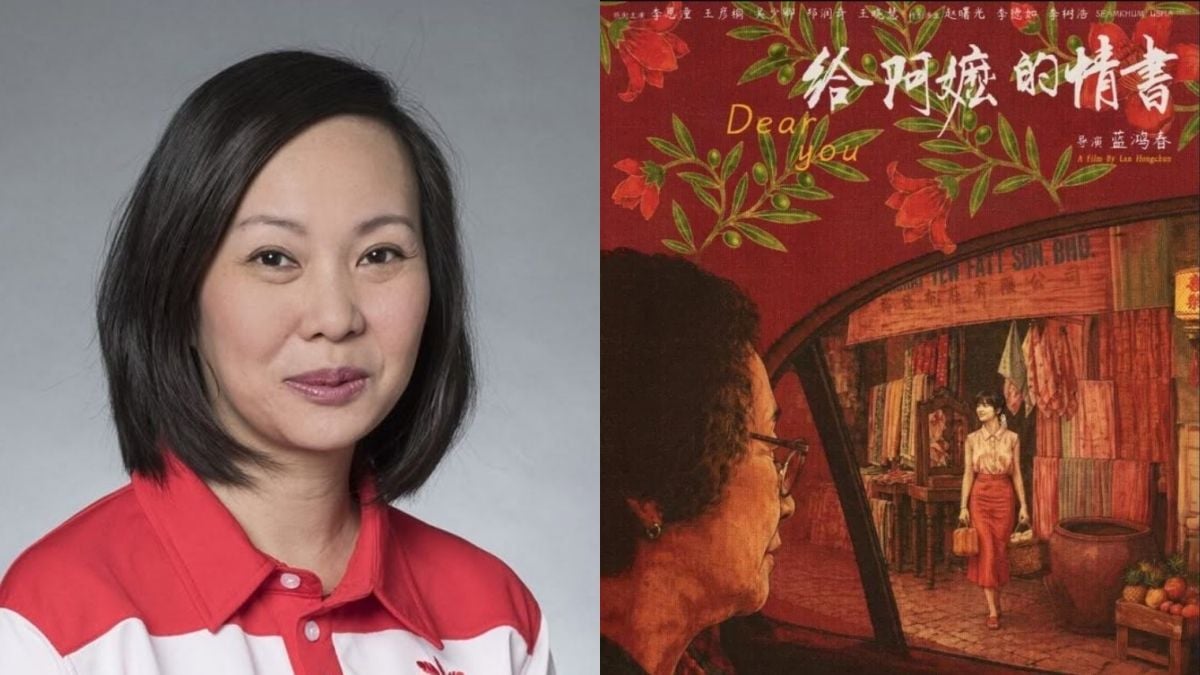
Dear You Teochew screenings sell out in 1.5 hours as demand overwhelms Golden Village website
All eight additional screenings of Dear You in its original Teochew dialect sold out within 1.5 hours on 22 June 2026, with moviegoers facing virtual queues lasting up to four hours as demand surged for the highly anticipated screenings at GVMax in VivoCity.
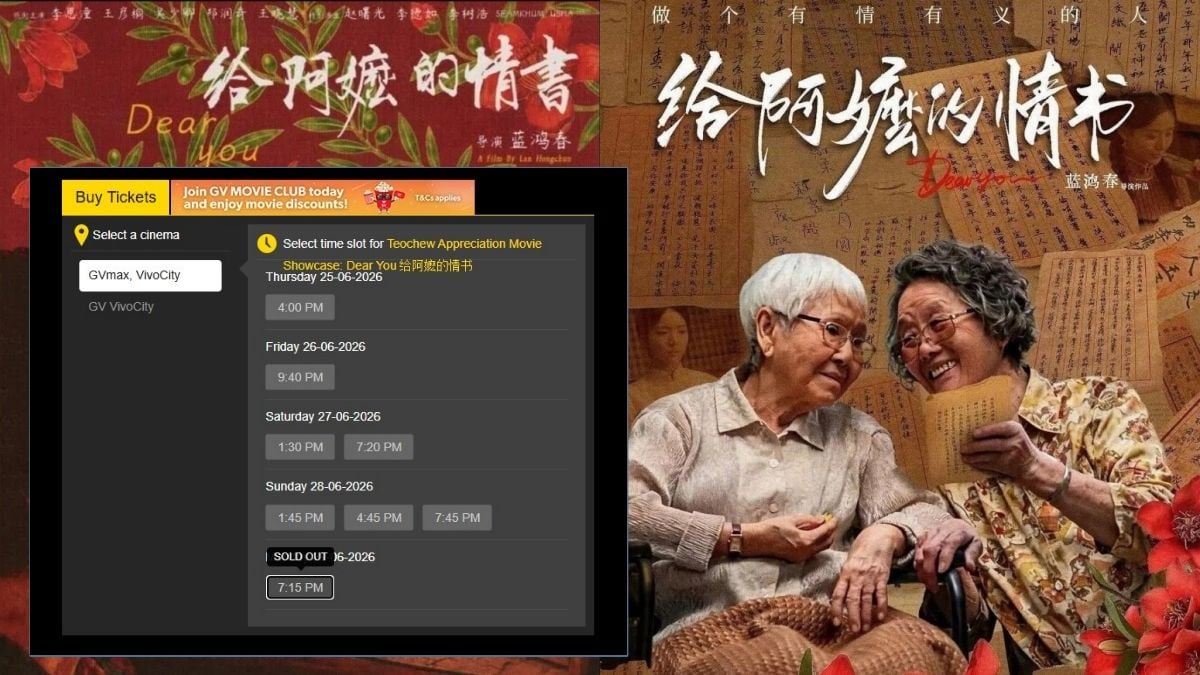
- All eight additional Teochew-language screenings sold out within 1½ hours of ticket sales opening.
- Moviegoers faced long online queues, with some reporting waits of more than four hours.
- The sell-out follows public debate over restrictions on dialect-language film screenings in Singapore.

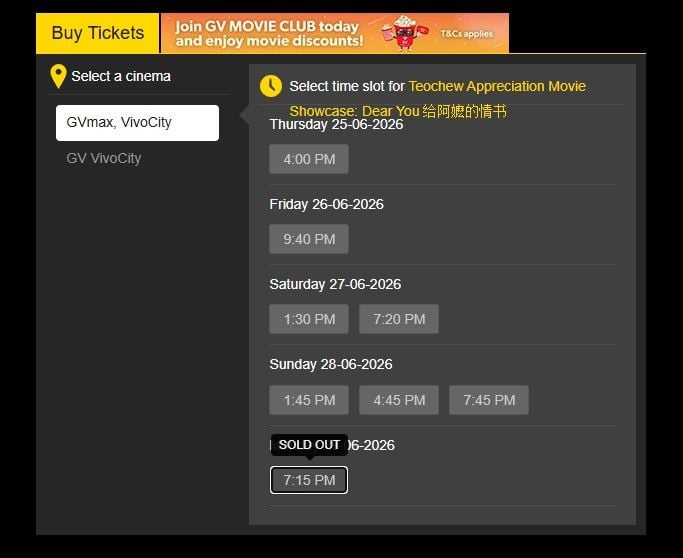
All eight additional screenings of Chinese film Dear You in its original Teochew dialect sold out within 1.5 hours after tickets went on sale on Golden Village’s website on 22 June 2026, underscoring strong public demand for dialect-language cinema in Singapore.
Ticket sales for the additional screenings began at 3pm.
A check of Golden Village’s official website showed that all tickets had been snapped up by around 4.30 pm.
The eight screenings will be held at GVMax in VivoCity, a cinema hall with 602 seats, according to information on the mall’s official website.
Strong demand overwhelms ticketing system
Moviegoers reported heavy traffic on Golden Village’s ticketing platform shortly after sales opened, with many placed in virtual queues within minutes.
Some users said they encountered difficulties completing their purchases despite successfully selecting seats.
One moviegoer said they repeatedly attempted to access the Golden Village website from 3pm onwards.
“Although I managed to select seats several times, I was ultimately unable to complete payment,” the person said.
Another member of the public said that when attempting to buy tickets at 3.50pm, the online queue system indicated a waiting time of more than four hours before reaching the booking page.
Users across social media similarly reported long waiting times and difficulties securing seats as demand surged.
Long queues at VivoCity
Interest in the screenings was also evident offline.
According to local media outlet 8World News, nearly 200 people were queuing at around 2.30pm before ticket sales opened.
Many of those in line were reportedly elderly moviegoers eager to secure tickets for the original-language version.
One member of the public told reporters that they had already watched the Mandarin-dubbed version of the film but specifically came to purchase tickets for the Teochew-language screening.
“Without the Teochew version, I’m not happy,” the moviegoer said.
The latest screenings were added after Golden Village announced on 19 June 2026 that more sessions would be made available in response to overwhelming demand.
Debate over dialect-language screenings
The popularity of Dear You has fuelled a wider discussion about Singapore’s language policies and the place of Chinese dialects in contemporary society.
The film was shot almost entirely in Teochew.
However, the Infocomm Media Development Authority (IMDA) had earlier said the movie would be released generally in a Mandarin-dubbed version.
IMDA said the decision was made in support of Singapore’s bilingual policy, which promotes Mandarin as the main language among Chinese Singaporeans.
Under the arrangement, Dear You opened in Singapore on 18 June 2026 in a Mandarin-dubbed version, while the original Teochew version was initially permitted only for the premiere and selected festival or niche screenings.
The decision sparked discussion among filmmakers, artists and audiences over the cultural implications of limiting access to dialect-language films.
Filmmakers call for policy review
In a letter published in The Straits Times on 19 June 2026, filmmakers Eric Khoo and Jack Neo urged authorities to reconsider the policy.
They said there was clear demand for the film to be screened in Teochew and argued that exhibitors and distributors should be allowed to translate that demand into commercial success.
“Screening a dialect film is now no different from screening a French or Malay film,” they wrote.
“Dialect films are not an issue on home videos and streaming platforms and even on board airplanes, so why should cinemas continue to bear the brunt of this outdated policy?”
Filmmaker Boo Junfeng also weighed in on the debate.
While acknowledging that his ability to speak English and Mandarin was a result of Singapore’s bilingual policy, he argued that the policy should evolve.
“The policy has served its purpose, but I think it is time to move on from it,” Boo said.
“Being able to watch films in their original Chinese dialects is not going to erode our ability to be bilingual.”
Theatre director Ivan Heng similarly called for policies to evolve alongside society, while veteran producer Daniel Yun said the appeal reflected the views of much of Singapore’s filmmaking community.
MPs raise questions over dialect film policy
Amid widespread public scrutiny over the preservation of Chinese dialects and Singapore’s cultural heritage, several MPs have weighed in on the issue.
Workers’ Party MPs Kenneth Tiong and Dennis Tan called for greater recognition of dialects and questioned existing policy, while Bishan–Toa Payoh GRC MP Cai Yinzhou has filed a Parliamentary Question seeking clarification on IMDA’s decision to require Dear You to be dubbed into Mandarin for general cinema release instead of retaining its original Teochew dialogue.
The latest sell-out follows a similar response to previous Teochew-language screenings.
Golden Village had screened eight sessions of Dear You in Teochew between 18 June and 21 June.
All 4,800 tickets for those screenings sold out within two hours after being released on 16 June.
The rapid sell-out of both the initial and additional screenings has highlighted sustained audience interest in viewing the film in its original language, with demand continuing to outstrip available seats.