Lawrence Wong says the PAP wants dissent. His party's record says otherwise
PM Wong told Young PAP the party doesn't want everyone thinking alike, and invited dissenters to join. But look at who actually gets fielded as PAP candidates, what happens to the rare MP who disagrees, and why GE2025 forced the party to dip twice into a scheme built for non-partisan voices.
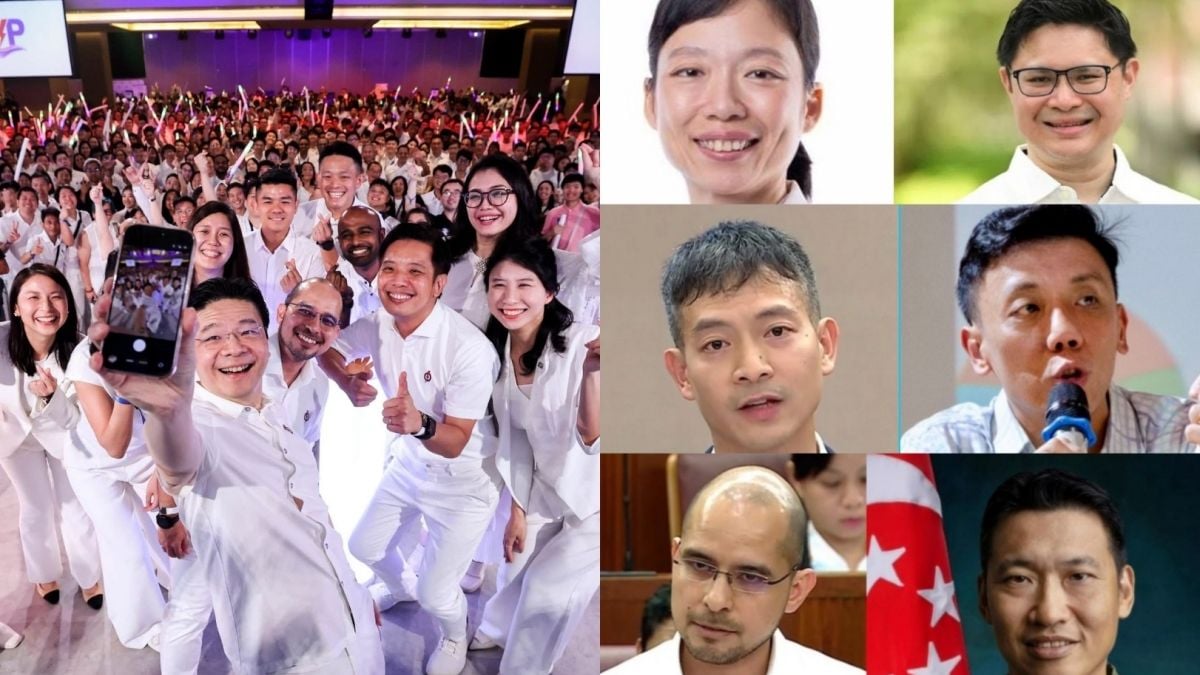

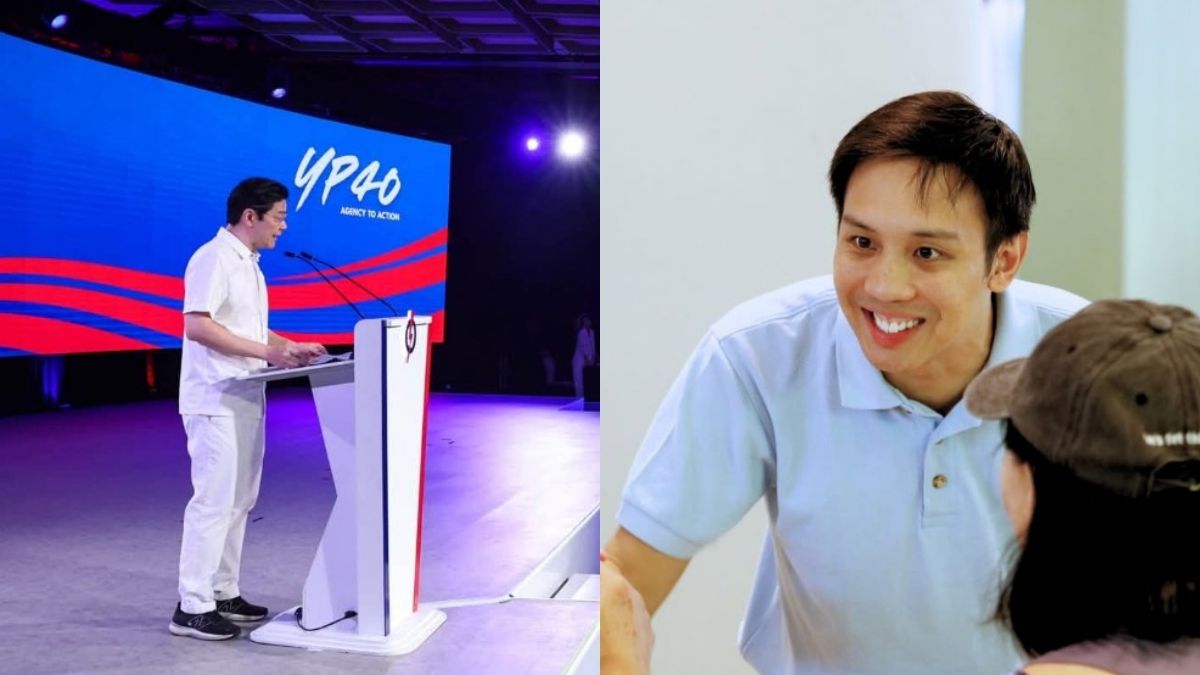
"You do not have to agree with us on every single issue," Prime Minister Lawrence Wong told more than 1,200 Young PAP activists on 4 July, marking the youth wing's 40th anniversary. "In fact, it's the opposite."
It's a generous line. It is also, on the evidence, difficult to square with how the PAP actually behaves once someone crosses from activist to Member of Parliament.
Start with who actually gets to wear the white. The PAP fielded 32 new candidates for GE2025 — its largest slate in recent history — and the marquee names tell their own story: former Chief of Army David Neo, former senior civil servant Jeffrey Siow, and a former Nominated MP, Syed Harun Alhabsyi, introduced in Nee Soon GRC.
Another NMP, lawyer Raj Joshua Thomas, resigned his seat and joined the PAP in February 2025, evidently being groomed as a candidate too, before pulling out in April.
Many of these new faces became publicly visible as PAP figures only in the months before the election was called.
Some had prior community involvement, to be fair — a few candidates in past slates can point to years of genuine grassroots volunteering.
But that's precisely what makes those cases notable enough to name individually: they're the exception.
The dominant pathway for the marquee names is not activists rising through branch ranks after years of internal political work. It's accomplished individuals from the military, the civil service and the professions being identified first, and attached to grassroots networks second, as part of the introduction.
If the PAP genuinely wanted more people "with different experiences, perspectives and ideas," as Wong put it, one might expect its own grassroots — the thousands of Young PAP activists doing Meet-the-People sessions and manning branch events for years — to be the natural pipeline into Parliament.
Instead, when the party needed a late injection of credible faces, it reached for a former general, a former top civil servant, and not one but two people from a scheme designed explicitly for non-partisan voices.
The PAP would say Young PAP was never meant to be the candidate pipeline — that it's an activist wing, and recruitment has always drawn from the professions, the public service, unions and community networks. Fair enough, as far as it goes.
But that only sharpens the actual question, which isn't why Young PAP activists rarely become MPs. It's this: if the party wants more internal diversity, what mechanism lets those diverse views shape policy once their holders are inside Parliament — as opposed to simply diversifying the party's photograph?
The contrast with the Workers' Party is instructive here, because it's a difference in pipeline, not just optics. Gerald Giam and Dennis Tan each spent years as Non-Constituency MPs — effectively runners-up, seated in Parliament without a ward — before winning their seats outright in 2020.
Pritam Singh entered Parliament in 2011 and spent seven years as a rank-and-file MP under Low Thia Khiang before rising to Secretary-General in 2018. That is a party whose people rise by being seen and tested over years, often after losing first.
The PAP's model increasingly runs in reverse: identify someone already accomplished inside the civil service, the military or a profession, bring them into the party, and introduce them as a candidate within months. Both approaches can produce capable MPs. But only one resembles what Wong described on Saturday — a movement that widens itself from the ground up.
Then there's the matter of what happens to the MPs who do voice disagreement. Singapore's parliamentary record on this is thin, and that's the point. Tan Cheng Bock remains the closest thing the PAP has to a case study in genuine dissent — in 1992, as an elected backbencher, he broke ranks and voted against his own government's motion to create the Nominated MP scheme, a rare moment where the whip stayed up and an MP defied it anyway. He eventually left the party altogether, and ran for president as an independent in 2011, losing narrowly.
Three years later, in February 2014, Tan wrote on Facebook that he'd been "un-invited" to the Istana's Chinese New Year garden party — an event hosted by the People's Association, which works hand-in-glove with the PAP, that he had attended without fail since 1980. The reason given: a new "policy" restricting invitations to those who had served as grassroots advisers in the most recent general election.
Tan had stood down in 2006. Whether that particular snub traces back to the 1992 vote, the presidential run, or plain bureaucratic tidying-up is impossible to prove from the outside, and it would be unfair to insist otherwise.
What isn't in dispute is the more important fact: more than three decades on, Tan remains essentially the only example anyone can point to of a PAP MP publicly voting against his own government with the whip up. The rarity is the evidence. A party culture that genuinely welcomed public parliamentary dissent would have produced more than one Tan Cheng Bock by now.
Since then, dissent inside the PAP has mostly taken the form of MPs voicing concern in the chamber and then quietly not voting at all. During the 2013 Population White Paper debate, backbencher Inderjit Singh publicly challenged the government's own population targets, telling reporters he "spoke from my heart and will do what I can to change things."
He didn't vote against the paper, though — he simply wasn't in the chamber when the division bell rang. Asked directly if he had absented himself, his reply was clipped: "All I want to say is I was not present for the vote." The paper passed 77 to 13. Every one of those 13 objecting votes came from the Workers' Party and the Nominated MPs — not one from a PAP backbencher, because voicing concern and voting against it turned out to be two very different things, and the party only ever tolerated the first.
During the 2022 debate to repeal Section 377A, some PAP backbenchers were known to hold personal reservations, largely on religious grounds — yet the whip was never lifted, and all 83 PAP MPs voted as one.
Compare that to the Workers' Party, which lifted its own whip for that vote and let two MPs, Gerald Giam and Dennis Tan, vote against the party's official position. That is what allowing a differing view to actually count looks like. Apart from Tan Cheng Bock's exceptional 1992 vote, the PAP has never normalised it.
So when Wong says the party doesn't want everyone thinking alike, the honest rebuttal is: it isn't short of people who think differently. Through its umbilical link to the People's Association and its access to the civil service and military top brass, the PAP has never lacked institutional reach or resources.
What it lacks — at least in the public record voters can actually evaluate — is people able to think differently, act differently, and still remain part of the team. That the party had to reach into the NMP scheme twice for fresh GE2025 talent is the tell.
The scheme exists precisely so Parliament has voices answerable to no party — it's the seat Tan Cheng Bock voted against creating in 1992 because he believed non-elected, non-partisan MPs shouldn't sit in an elected chamber at all.
Using it as a feeder pool for PAP candidates doesn't just look opportunistic. It changes the political meaning of the scheme: a mechanism built to bring voices from outside party politics into Parliament becomes, in these two cases, a pathway for those voices to join the dominant party instead.
It's also worth asking why the party needed to reach at all. The PAP walked into GE2025 having just absorbed an unusually disruptive term of departures — Tharman Shanmugaratnam leaving Cabinet and Parliament in 2023 to contest the presidency, Tan Chuan-Jin and Cheng Li Hui resigning over their affair, S Iswaran resigning after his corruption case, and Ng Eng Hen retiring, on top of the roughly 20 MPs who had already stepped down after GE2020.
Whatever the individual circumstances, the net effect on the PAP's parliamentary bench was the same: a significant loss of seats, seniority and experience within a single term, Tharman's departure especially so, given he was Senior Minister and one of the party's most recognisable figures right up to the point he left.
Put that loss in perspective, though. This is a party that has governed Singapore continuously since 1959, with unmatched access to the civil service, the military officer corps, the GLCs, the unions and the grassroots machinery of the People's Association — every institutional feeder a party could ask for, cultivated over six and a half decades in office. The real question isn't the number of vacancies. It's the source of what filled them.
After 65 years of institution-building, renewal still depended heavily on parachuting in nationally accomplished but politically untested figures — a former Chief of Army, a former top civil servant, and, twice, the NMP scheme — rather than promoting people who had spent years climbing a visible internal political ladder. That dependency is revealing. If anything, GE2025 should have been a wake-up call for the party — not because its candidates were poor, but because renewal still looks this externally sourced after six and a half decades in office.
One could argue this is uncharitable — that Wong's speech was aimed at attracting idealistic 20-somethings to grassroots work, not rewriting whip discipline overnight, and that no governing party anywhere hands new recruits veto power over the front bench. Fair enough.
But Wong didn't frame it as an invitation to knock on doors. He framed it as a party that wants people who "do not have to agree with us on every single issue" — a much larger claim, made at a moment when the PAP's talent pipeline is visibly straining. And that matters beyond party HR: who ends up in that pipeline, and how they got there, is no longer just an internal party concern. It's an electoral one.
Because here is what GE2025 actually showed: in the eight constituencies where the Workers' Party went head-to-head against the PAP, WP won 50.04 per cent of the vote, and took three of those eight seats outright.
The PAP's national landslide — 65.57 per cent overall — wasn't built on beating WP. It was built on routing everyone else.
In Bishan–Toa Payoh GRC, for instance, the PAP took 75.18 per cent against the Singapore People's Party's 24.82.
That's the pattern outside WP's turf: smaller opposition parties polling in the 20s and 30s. WP was the only opposition party to clear 40 per cent in every single seat it contested.
A Workers' Party with deeper resources and more credible candidates, running on a brand that has stayed consistently competitive wherever the two parties meet on a ballot, is the PAP's real nightmare.
Whether Wong intends it this way or not is a separate question, and probably unknowable from the outside. But the effect is the same either way: Singaporeans with alternative ideas are invited to enter politics through a structure where disagreement is welcomed at the discussion stage, and almost never permitted to survive as an independent act once a vote is called.
There's a real defence available to the PAP here, and it deserves to be stated plainly rather than waved away: debate before a decision, unity after it, is how most governing parties everywhere operate. Cabinet collective responsibility is not a Singapore invention, and no party — PAP, Labour, the Democrats — lets backbenchers freelance once caucus has decided. That principle is not, by itself, sinister.
But it does raise the question voters are actually entitled to ask. If every meaningful disagreement is resolved behind closed doors before it ever reaches the floor of Parliament, how is an electorate meant to tell the difference between having elected an independent representative and having elected a well-credentialed messenger for a position the party had already settled on?
The PAP doesn't have a diversity problem. It has a control problem it has successfully rebranded as an outreach programme. Until a PAP backbencher votes against the party line and keeps their seat, Wong's invitation is just recruitment copy.