Jasmin Lau: Central kitchen meal model limited to schools with stallholder shortages
The Ministry of Education said the central kitchen meal model will only support schools struggling to attract stallholders, stressing it will not replace traditional canteens. Authorities cited positive outcomes but said investigations into recent illness cases are ongoing.
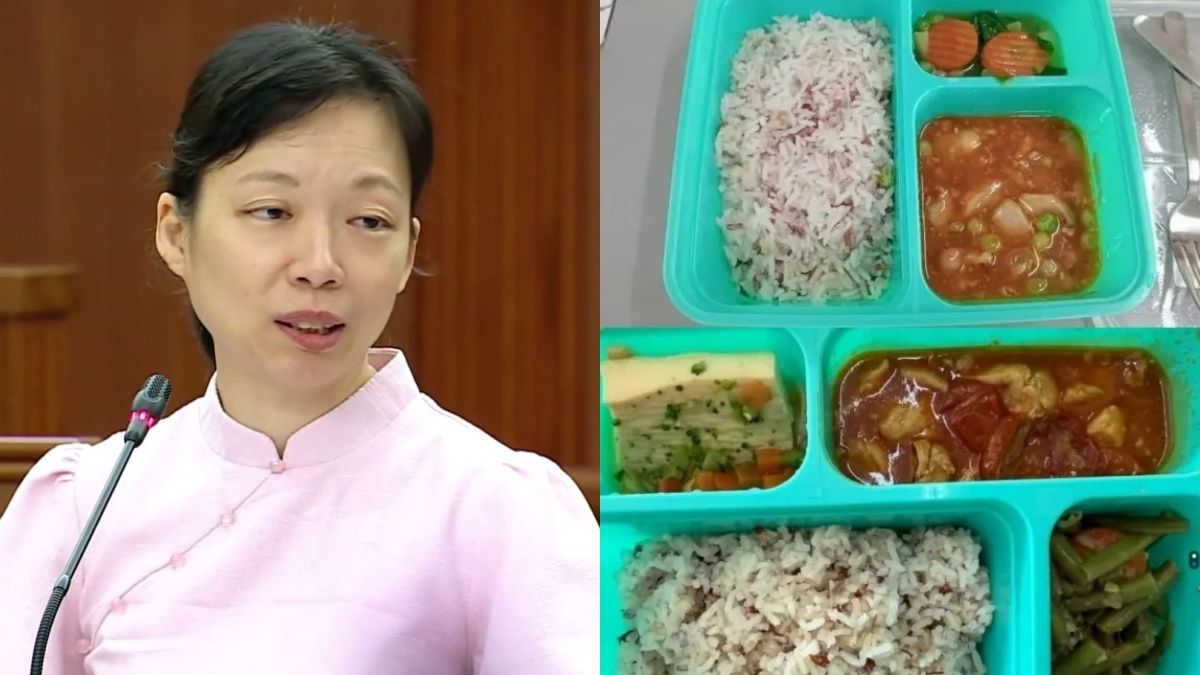
- MOE said the central kitchen meal (CKM) model will be used only where schools cannot secure enough canteen stallholders.
- The model is not intended to replace traditional school canteens and has no expansion target.
- Authorities said food safety and nutrition checks remain robust, amid ongoing investigations into recent gastroenteritis cases.

SINGAPORE: The Ministry of Education (MOE) will explore the central kitchen meal model only in schools that face difficulties securing sufficient canteen stallholders, Minister of State for Education Jasmin Lau told Parliament on 3 February 2026.
She assured MPs that MOE has no intention of scaling the model across all schools and has set no expansion target. The scheme is intended as a support measure rather than a replacement for traditional school canteens.
Ms Lau was responding to parliamentary questions on the rollout of the model, which was introduced last month in 13 schools. The initiative aims to address a growing shortage of canteen operators while keeping meals affordable.
“We did not introduce this scheme to replace the traditional canteen model,” Ms Lau said in Parliament. She explained that MOE was exploring alternatives for schools struggling to attract stallholders.
“We wanted to help schools that had severe shortages of functioning stalls,” she said. “This was to avoid students being at risk of not having good access to affordable, nutritious and balanced meals.”
Pilot origins and expansion rationale
Ms Lau said the pilot began at Yusof Ishak Secondary School, which relocated from Bukit Batok to Punggol and did not have existing stallholders at its new campus.
After observing “positive results” from the pilot, MOE decided to trial different central kitchen meal models in 13 other schools that had faced similar challenges securing stallholders.
Some schools have adopted hybrid arrangements, she said. Under these models, operators deliver pre-ordered meals while also preparing fresh food on site.
According to Ms Lau, the model has delivered several operational benefits. Students spend less time queueing for meals, parents have clearer visibility of what their children are eating, and teachers have access to a wider range of food options.
Concerns over variety and nutrition
Associate Professor Jamus Lim, the Workers' Party MP for Sengkang GRC, raised concerns about meal variety and whether the model could affect certain students, particularly picky eaters, who may reject the available options.
He asked whether the centralised approach could inadvertently lead to nutritional deficiencies among a segment of the student population.
In response, Ms Lau said central kitchen operators currently provide between six and 14 meal options daily, with menus changing weekly.
She added that all meals are checked by MOE to ensure nutritional sufficiency. Parents can also view meal options and nutritional values through pre-ordering applications.
Ms Lau noted that feedback from parents has been positive. Many appreciate knowing what their children consume in school and being able to monitor nutritional content in advance.
Food safety oversight and inspections
Food safety was addressed separately by Senior Parliamentary Secretary for Sustainability and the Environment Goh Hanyan.
She said central kitchens are subject to more frequent inspections because they process food on a larger scale.
This inspection regime is consistently applied across caterers serving vulnerable groups, including nursing home residents.
Since August 2025, the Singapore Food Agency (SFA) has stepped up checks on central kitchens supplying meals under MOE’s programme, she added.
Gastroenteritis cases under investigation
Questions were also raised about recent suspected gastroenteritis incidents at River Valley Primary School and North View Primary School.
Ms Lau said SFA, MOE and the Communicable Diseases Agency are jointly investigating the causes of both incidents.
Food at River Valley Primary is supplied by central kitchen operator Gourmetz, while North View Primary uses traditional stallholders.
Workers’ Party MP Kenneth Tiong cited media reports describing concerns raised by parents and students about the taste and smell of chicken used in a meal at River Valley Primary.
He asked about the status of the investigation and how the food had passed hygiene checks.
Ms Lau cautioned against speculation and urged MPs to wait for the investigation findings before drawing conclusions.
Nutrition education and stallholder support
Mr Tiong also asked whether Singapore would consider introducing accredited diet and nutrition professionals in schools, similar to Japan’s model of diet and nutrition teachers.
Ms Lau said MOE works closely with the Health Promotion Board to ensure meals across all education levels meet students’ nutritional needs.
She added that food hygiene officers are present in schools using the central kitchen model, and they conduct checks on food handling to ensure safety.
On sustaining individual stallholders, Ms Lau said MOE already provides significant support. Stall rentals are kept “very low”, ranging from S$5 to S$15 per month, alongside preferential electricity tariffs and reviewed food pricing guidelines.
However, she said challenges extend beyond cost. School canteens have limited operating hours and a small customer base, while some elderly stallholders may face health-related constraints.
“This is a complex issue with no easy solutions,” Ms Lau said. “But we will continue to explore new ways to support our stallholders.”