Jasmin Lau defends PISA SES gap, says measures uplift weaker students without capping top performers
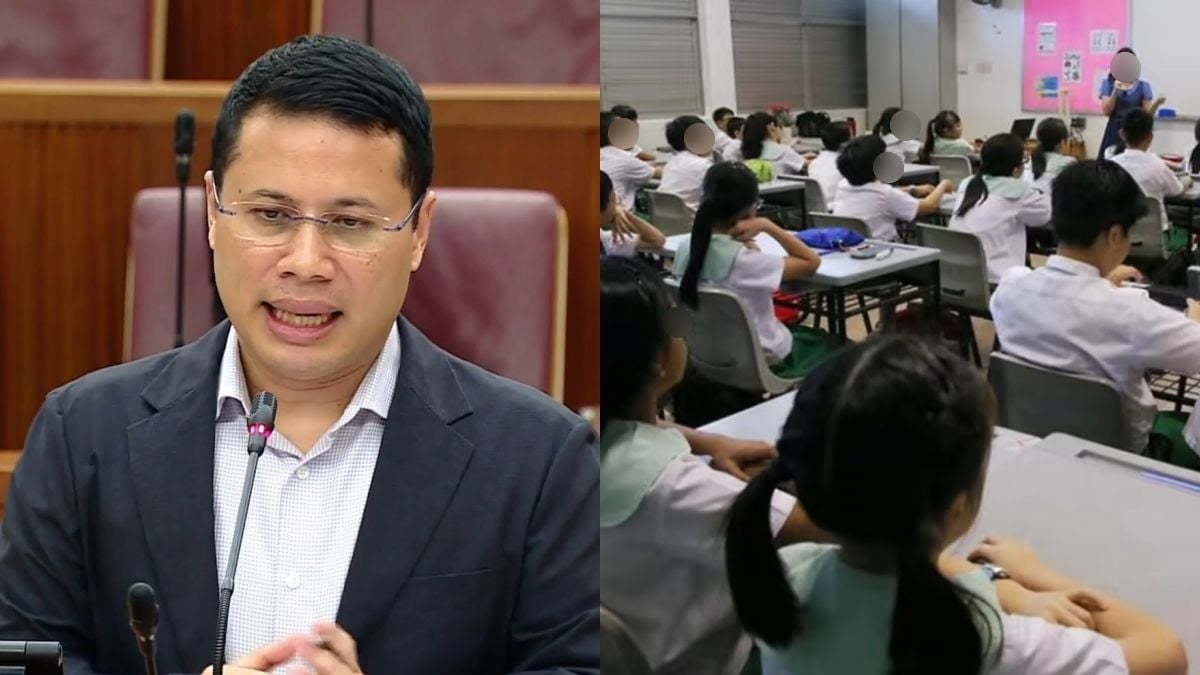
Minister of State for Education Jasmin Lau said Singapore’s steeper PISA SES slope reflects higher-performing students excelling alongside uplifted peers from lower-income backgrounds, adding that flattening the slope by limiting top achievers is not educationally sound.

- Singapore’s PISA SES slope is steeper due to stronger outcomes for higher SES students and uplifted lower SES peers.
- MOE provides targeted support without capping high performers, including after-school and school-based programmes for lower SES students.
- SES-performance correlation remains monitored, with MPs questioning interpretation and policy implications.

Minister of State for Education Jasmin Lau addressed questions in Parliament on 8 April 2026 regarding Singapore’s ranking in the Programme for International Student Assessment (PISA).
She highlighted the country’s steeper association between social economic status (SES) and student performance compared with the OECD average.
Lau explained that while students from lower SES households perform better than their OECD peers with similar backgrounds, higher SES students outperform theirs by an even larger margin. “
One simplistic way to flatten the slope is to stop our higher-performing students from doing so well, but that is not educationally sound and goes against our education philosophy of helping all students to develop to their full potential,” she said.
Parliamentary questions on SES slope
The discussion followed a parliamentary question submitted by NMP Associate Professor Kenneth Goh.
He asked how the Ministry of Education (MOE) assesses Singapore’s ESCS slope ranking of second out of 79 PISA systems, noting that comparable high-performing countries such as Japan and Korea rank significantly lower.
He also queried what specific measures aim to reduce this slope and what progress is expected.
Lau responded that MOE remains committed to uplifting students needing additional support without capping those who excel.
“We do so through targeted measures such as providing additional support to students who come from lower-income households or who have higher needs, including school-based after-school programmes for students from more challenging home environments,” she said.
MPs probe SES correlation and policy implications
Kenneth Goh raised concerns over whether the SES slope might reflect differing opportunities rather than simply capping potential.
“It’s not about capping potential, but whether or not the folks from higher SES have more opportunities and because of that, that leads to that increase in academic performance,” he said.
He further asked whether MOE would consider using the slope as an indicator to track the effectiveness of measures implemented.
Lau confirmed the Ministry monitors the trend closely, stating, “We will continue to watch this trend and this indicator closely as part of a suite of overall indicators that we use when assessing the overall educational outcomes for our students.”
She added, “My assurance is that we want to make sure that all Singaporean students have as much access to opportunities as possible, regardless of social economic statuses.”
Workers’ Party MP raises research on early tracking
Associate Professor Jamus Lim, Workers’ Party MP for Sengkang GRC, also addressed the issue, emphasising agreement with Lau’s stance that early tracking does not aim to suppress high achievers.
He cited research by Professors Eric Hanuschek and Ludger Wößmann, published in 2006 in the Economic Journal, noting that early tracking increases the impact of SES on educational inequality, lowering performance for both lower and higher achievers.
Lau acknowledged the reference, saying, “I don’t think I heard a specific question, but if the question is about whether I’m aware of the research, well, after today I definitely will be. Thank you.”
MOE approach to SES disparities
MOE’s approach, as outlined by Lau, is designed to balance support for students requiring additional help while maintaining opportunities for high performers.
This includes after-school programmes and school-based interventions targeted at students from lower-income families or those with higher educational needs.
The Ministry emphasises that flattening the SES-performance slope by restricting the achievements of higher-performing students is inconsistent with its educational philosophy.
Instead, Singapore focuses on providing equitable opportunities across all social and economic backgrounds, ensuring that no student is limited by their SES.
Both Lau and MPs acknowledged that the PISA slope provides insights into educational inequality, with Goh suggesting that different interpretations of the data could influence policy decisions.
Lau reaffirmed that MOE considers multiple indicators when assessing student outcomes and continues to track the relationship between SES and performance trends closely.