Valerie Lee calls for dedicated miscarriage recovery leave to support grieving couples
Speaking at the Committee of Supply debate, PAP MP Valerie Lee has called for dedicated miscarriage recovery leave, automatic counselling referrals and clear workplace guidelines for pregnancy loss.
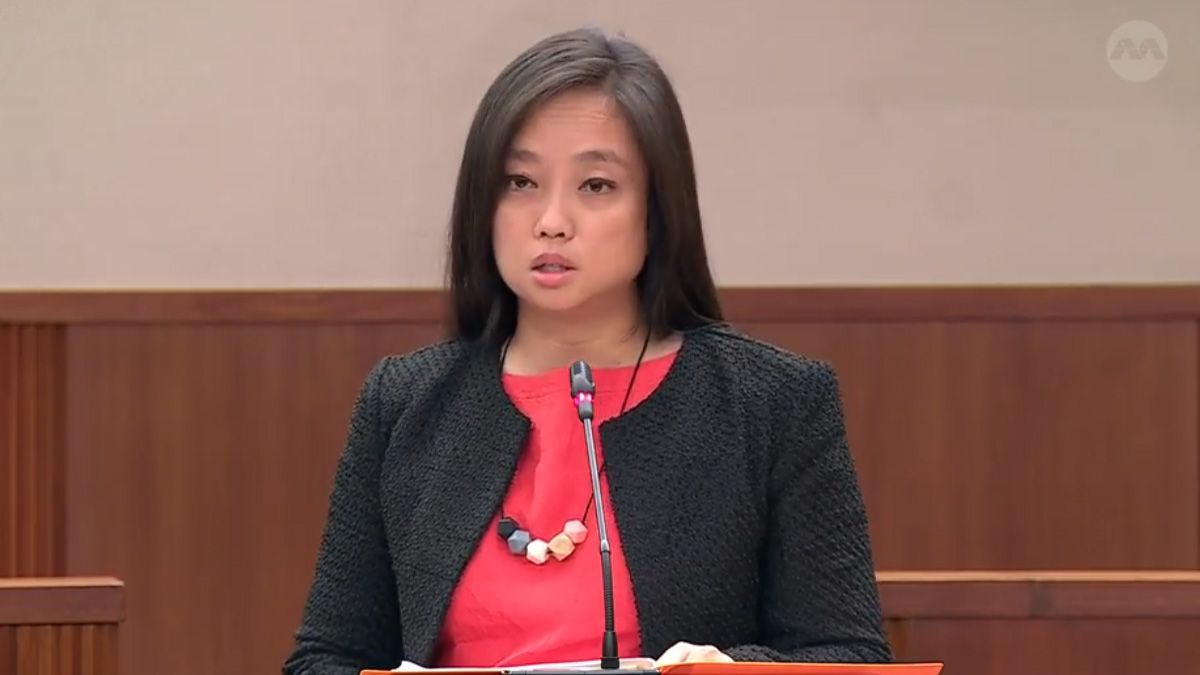
- PAP MP Valerie Lee proposed miscarriage recovery leave, automatic counselling referrals and clear workplace guidelines, citing models from India, the UK and New Zealand.
- Her call came at the 26 February 2026 Committee of Supply debate, the same session in which Deputy Prime Minister Gan Kim Yong separately revealed Singapore's total fertility rate had hit a record low of 0.87.
- Public reaction was divided, with many affirming the toll of pregnancy loss while others raised concerns about workplace strain and competing policy priorities.

A People's Action Party (PAP) Member of Parliament has urged the Singapore government to introduce a dedicated miscarriage recovery leave entitlement, citing both international precedents and her own personal experience of pregnancy loss.
Speaking at the Committee of Supply debate on 26 February 2026, MP Valerie Lee called for structured support mechanisms for couples who experience miscarriage, describing the condition as far more common than most people realise, yet frequently suffered in silence.
Lee disclosed that she had personally experienced two miscarriages, lending an uncommon degree of personal weight to her parliamentary address.
According to a 2022 study by KK Women's and Children's Hospital (KKH), between 15 and 25 per cent of recorded pregnancies end in miscarriage. Despite this prevalence, Lee argued that workplace and institutional support for affected couples remains inadequate in Singapore.
"Structured support is critical if we want couples to continue, or, for some, start their parenthood journey," she told Parliament.
Lee pointed to several international models as potential references for Singapore. India offers up to six weeks of paid leave following a miscarriage. The United Kingdom and France provide access to hospital-based bereavement midwife services and dedicated mental health support, with New Zealand extending similar provisions.
She outlined three specific proposals for Singapore to consider: a dedicated miscarriage recovery leave entitlement, automatic referral pathways for counselling support, and clear workplace guidelines to assist employees experiencing pregnancy loss.
"Supporting couples through miscarriage is not only compassionate, it increases the likelihood that they feel emotionally ready to try again," Lee said.
Her remarks were made in the context of a broader parliamentary discussion on Singapore's declining birth rate. At the same debate, Deputy Prime Minister Gan Kim Yong revealed that Singapore's resident total fertility rate had sunk to a record low of 0.87 in 2026, down from 0.97 the previous year.
"The overall trend is of grave concern. Marriage rates have come down, and those who are married have fewer or no children," Gan said.
Minister Indranee Rajah, who also spoke at the Committee of Supply debate, responded directly to Lee's proposal. She noted that psychosocial support, including counselling, is already available in public healthcare institutions, but acknowledged that more can be done.
"We agree that more can be done, and will study her suggestions to see how we can better support those who experienced miscarriages," Indranee said. The government did not, however, commit to introducing a dedicated leave entitlement, automatic referral pathways, or new workplace guidelines at this stage.
Lee's proposal drew significant public attention online, with a report by Mothership generating a large volume of reader comments reflecting a wide range of views.
Many commenters expressed personal solidarity with the proposal. A commenter who identified himself as having recently suffered an early-stage pregnancy loss with his wife wrote that "the pain is profoundly real," describing the proposed leave as potentially "very needful" for some couples, even if others might not feel the need to access it.
A woman who shared that she had experienced a late miscarriage at 19 weeks called the grief "mentally and physically torturing" and affirmed the importance of emotional and psychological support.
A local fertility wellness provider echoed these sentiments, noting that many women who experience miscarriage "suffer in silence" and often blame themselves. "Healing is not just physical. The womb and the heart both need time and care," the centre wrote.
One commenter drew a direct parallel between existing compassionate leave for bereavement and the proposed miscarriage leave. "If we have compassionate leave for the loss of family members, why not leave for such situations as well?" she wrote, adding that the absence of empathy in some of the responses was "disheartening."
Another commenter raised the point that miscarriage affects not only the mother but also the partner, arguing that both should be entitled to such leave. She noted the particular stress faced by husbands who fear their wives may fall into depression during the grieving period.
Not all reactions were supportive. Several commenters questioned the practicality of new leave categories in a private-sector environment already stretched by existing family leave obligations.
One commenter raised concerns about the unequal distribution of workload onto single or childless colleagues. "Please also ensure that companies hire enough people to cover the job of people going for maternity or paternity leave," the commenter wrote.
Another cautioned that paid leave of up to six weeks, as in India's model, could lead to "workplace productivity loss and colleagues' fatigue," noting that some individuals may prefer to return to work promptly as part of their grieving process.
Several commenters suggested that extending existing compassionate leave, rather than creating an entirely new category, might be a more pragmatic solution.
The question of scope also arose. A commenter called for support to extend to women who have undergone abortions, arguing that the mental and emotional toll is comparable. Another separately called for greater support for those undergoing in vitro fertilisation (IVF).
One commenter recounted that despite his wife's miscarriage, her employer — a publicly listed company — continued to demand results and additional reports, suggesting that cultural attitudes within the workplace remained a significant barrier regardless of formal policy.
A commenter who was broadly supportive of the proposal addressed the more dismissive responses directly. "Miscarriage is a medical and emotional crisis," the commenter wrote. "Supporting women through that isn't asking for handouts — it's humane policy."
While the government has stopped short of committing to new measures, Minister Indranee's acknowledgement that more can be done signals that the proposal remains under active consideration.
The broader context of record-low fertility rates has placed renewed pressure on policymakers to address the structural and emotional barriers that may be discouraging Singaporeans from starting or expanding their families.