Trump declares Strait of Hormuz will reopen completely on Friday as US-Iran deal is signed
US President Donald Trump has declared the US-Iran agreement signed and the Strait of Hormuz set to reopen completely on Friday, but Israeli strikes in Lebanon and disputes over maritime fees expose the deal's many unresolved tensions.
- Trump says US-Iran deal is signed; Strait of Hormuz to reopen fully by Friday's Geneva ceremony.
- Continuing Israeli strikes in southern Lebanon and fee disputes threaten the fragile agreement.
- Oil fell over 4 per cent; analysts warn normal shipping may take months.

US President Donald Trump has declared that the agreement with Iran is signed and that the Strait of Hormuz will be "completely open" from Friday, even as Western leaders at the G7 summit worked to prevent the fragile arrangement from unravelling almost immediately.
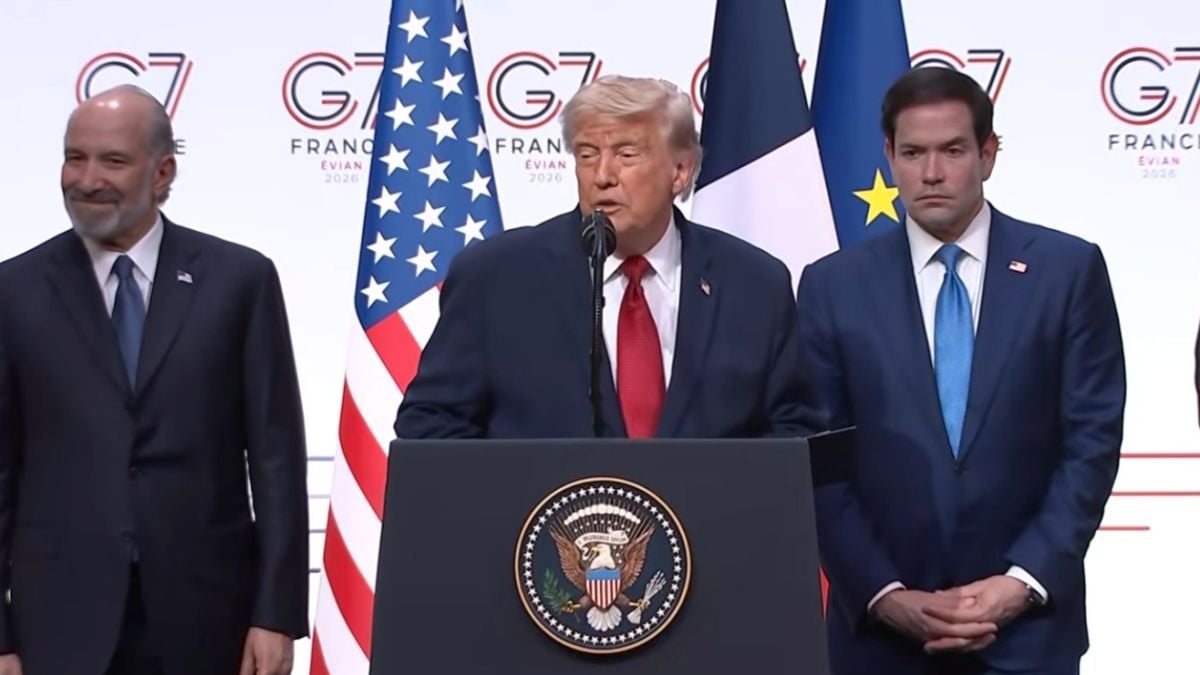
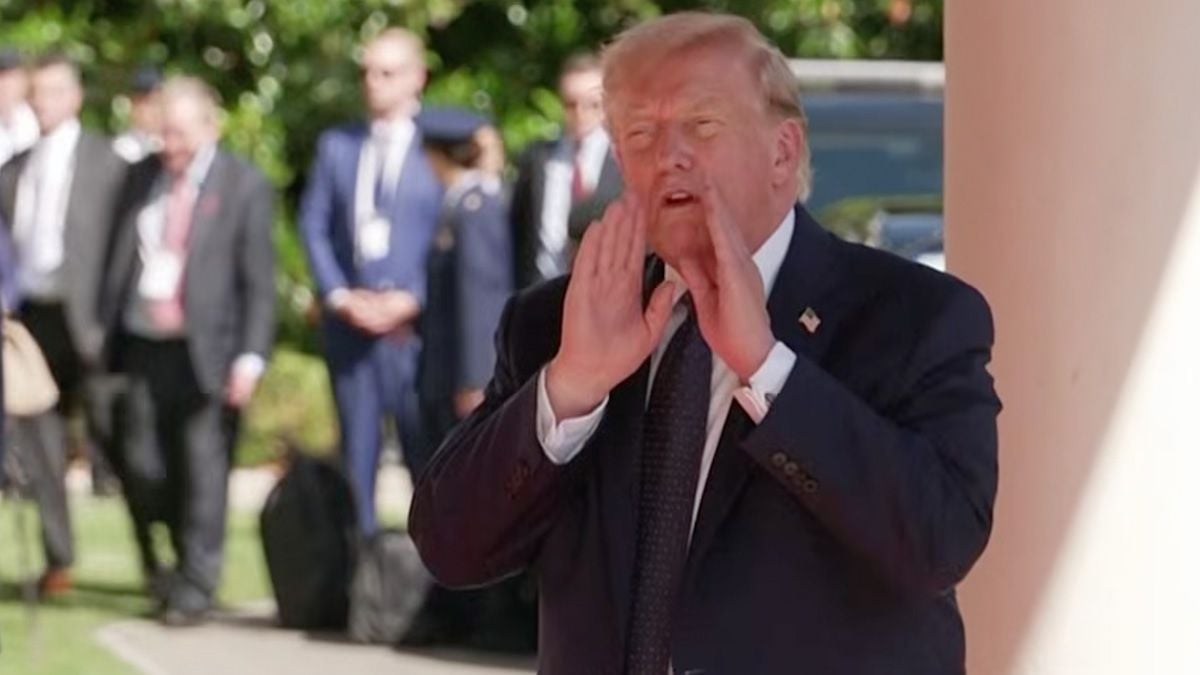
"The deal's all signed. And the strait is already partially opened," Trump said on arrival at the summit in Évian-les-Bains, France, on Monday, 15 June 2026. Yet Israeli strikes in Lebanon and Iranian claims over maritime fees exposed the agreement's loose ends.
The memorandum of understanding, mediated by Pakistan, would reopen the strait in exchange for lifting a US naval blockade on Iran. It is set to be formally signed in Geneva, Switzerland, on Friday, attended by US Vice-President JD Vance and the chief Iranian negotiator.
The agreement is intended to end more than 100 days of war that began in late February. White House officials said the full details would be published within 24 to 48 hours, though Trump suggested the document itself might be released sometime after Friday.
Speaking alongside French President Emmanuel Macron, Trump rejected a proposed UK-France joint naval mission in the strait. "I don't think we will need much help" keeping it open, he said.
Trump emphasised the deal's central objective. "The main thing is that Iran will not have a nuclear weapon. They fully agreed to that with strong policing powers," he said, also pointing to falling oil prices and rising stock markets.
Vance told CNBC the short-term deal would "immediately" reopen the strait and included an Iranian commitment never to develop or procure a nuclear weapon. He said sanctions would be lifted only after a verification process, describing this as the enforcement mechanism over Iran's nuclear programme.
The memorandum leaves key issues unresolved. According to Iranian state media, the two sides have 60 days to determine the fate of Iran's stockpile of highly enriched uranium and its nuclear programme. US officials said no frozen assets had yet been released by any country.
Markets responded strongly to the announcement. US crude oil closed down 4.8 per cent at US$80.75 per barrel, while Brent crude fell 4.7 per cent to US$83.17, the lowest closing prices since early March. The Dow Jones set a record high, closing up 468 points.
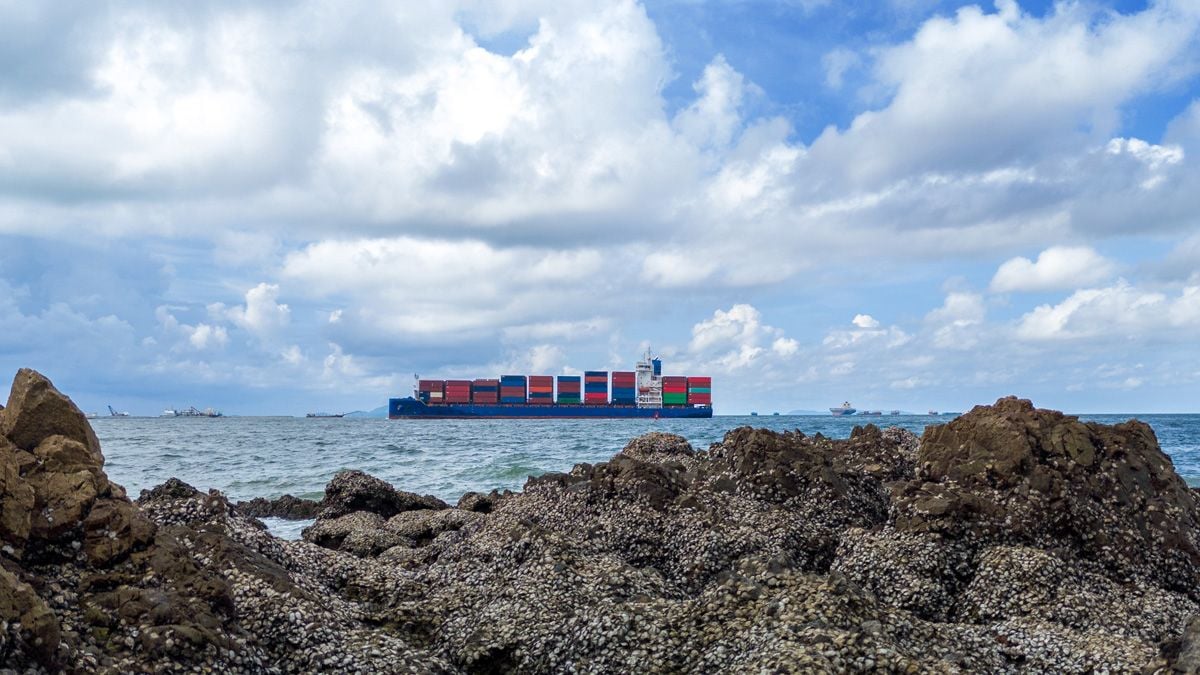
However, the response on the ground was more cautious. Iran's state broadcaster IRIB reported there was "zero passage through the Strait of Hormuz", saying the waterway remained closed until further notice and that the Islamic Revolutionary Guard Corps Navy had permitted no vessels to transit for more than 96 hours.
Analysts warned the practical reopening would be slow. Dimitris Ampatzidis, Maritime Risk and Compliance Manager at Kpler, said roughly 500 vessels were in the strait and that a return to pre-war movement would likely take two or three months.
The fate of a proposed Franco-British maritime taskforce, intended to clear mines and escort ships, remained uncertain. Macron said France could send its Charles de Gaulle aircraft carrier and other vessels within days, but contributor countries insisted the taskforce could not operate against Iranian military resistance.
A central dispute concerned whether Iran could charge fees for maritime services in the strait, a formulation European leaders fiercely opposed as a de facto tolling system. Trump insisted this would not be the case, saying the agreement meant the waterway would be "toll-free". Macron and European Commission President Ursula von der Leyen both called for a toll-free reopening.
The most immediate threat to the deal came from Lebanon. An Israeli drone strike killed one person in Kfar Tebnit in southern Lebanon, the second death since a 60-day ceasefire was agreed. The Israeli military said Hezbollah had fired rockets, an anti-tank missile and mortar shells at its troops, and that it had conducted strikes on people it described as posing an imminent threat.
Hezbollah confirmed it targeted Israeli soldiers, saying they had attempted to advance towards the Kfar Tebnit crossing. According to Lebanon's health ministry, nearly 3,800 people have been killed and over 11,700 wounded in Lebanon since the start of the latest hostilities.
German Chancellor Friedrich Merz said the deal could stabilise the world economy but warned that the ceasefire must apply to Lebanon. Von der Leyen warned there could be no lasting peace "whilst Lebanon remains in flames".
Israel signalled it would not be constrained by the agreement. Science Minister Gila Gamliel said Israel was not a party to the deal and would continue its campaign until Hezbollah was disarmed, adding that its forces would not withdraw from areas occupied up to the Litani River.
Israeli Prime Minister Benjamin Netanyahu distanced himself from the negotiations, describing the agreement as Trump's decision and saying Israel had its own interests. He said he did not know the broader details of the deal and stated that Israel would remain in security zones in Lebanon "no matter what it takes".
Netanyahu faced domestic criticism. Former prime minister Naftali Bennett, seeking to replace him, said Netanyahu's term was "ending with a failure against Iran". Far-right ministers Itamar Ben-Gvir and Bezalel Smotrich both rejected the deal, with Smotrich calling it "bad for Israel and the entire free world".
Iran approached the agreement with caution. President Masoud Pezeshkian said a final agreement "has not yet been formed", describing it as an important step toward stopping the war. Foreign Minister Abbas Araghchi said Tehran was negotiating "on the basis of distrust", citing past agreements that went unimplemented or were torn up.
Iran's foreign ministry spokesperson, Esmail Baghaei, insisted that respect for Lebanon's sovereignty was an inseparable part of the deal and that ending Israeli attacks was a US responsibility. Iran's army pledged to maintain heightened readiness, warning it would forcefully restore the prior military situation if the agreement were violated.
Some analysts questioned what the war had achieved. Ross Harrison, a senior fellow at the Middle East Institute, said the framework essentially returned the region to its pre-war situation, with Iran emerging in a stronger negotiating position.