Motorists may pay for roadside parking via ERP 2 unit from August trial
From August, 1,000 motorists will trial a roadside electronic parking feature on the ERP 2 on-board unit, letting them start and end parking sessions automatically at 644 car parks islandwide.
- LTA to trial roadside electronic parking via ERP 2 unit from August at 644 locations.
- About 1,000 motorists already testing location-based and checkpoint charging features.
- Parking.sg app remains available for motorists without OBU touchscreen displays.

Motorists parking along Singapore's roadsides may soon be able to pay through their ERP 2 on-board unit (OBU) display, instead of relying on the Parking.sg mobile application.
The new roadside electronic parking (REP) feature will be trialled from August at 644 designated car park locations, covering about 19,000 roadside parking lots across Singapore, a Land Transport Authority (LTA) spokesperson said on Monday, 15 June 2026.
More car parks will be progressively added to the REP system during and after the trial, the spokesperson added. The roll-out date for the REP feature has not yet been announced.
About 1,000 motorists will test the new feature. They are already part of a separate trial for location-based and checkpoint charging under ERP 2, which began in June.
Those two features, location-based charging and checkpoint charging, are scheduled to be rolled out nationally on 1 January 2027, when Singapore fully switches from its gantry-based ERP system to the satellite-based ERP 2 system.
At present, all designated roadside car park locations in Singapore continue to accept existing payment methods, including the Parking.sg application.
How the parking session would start
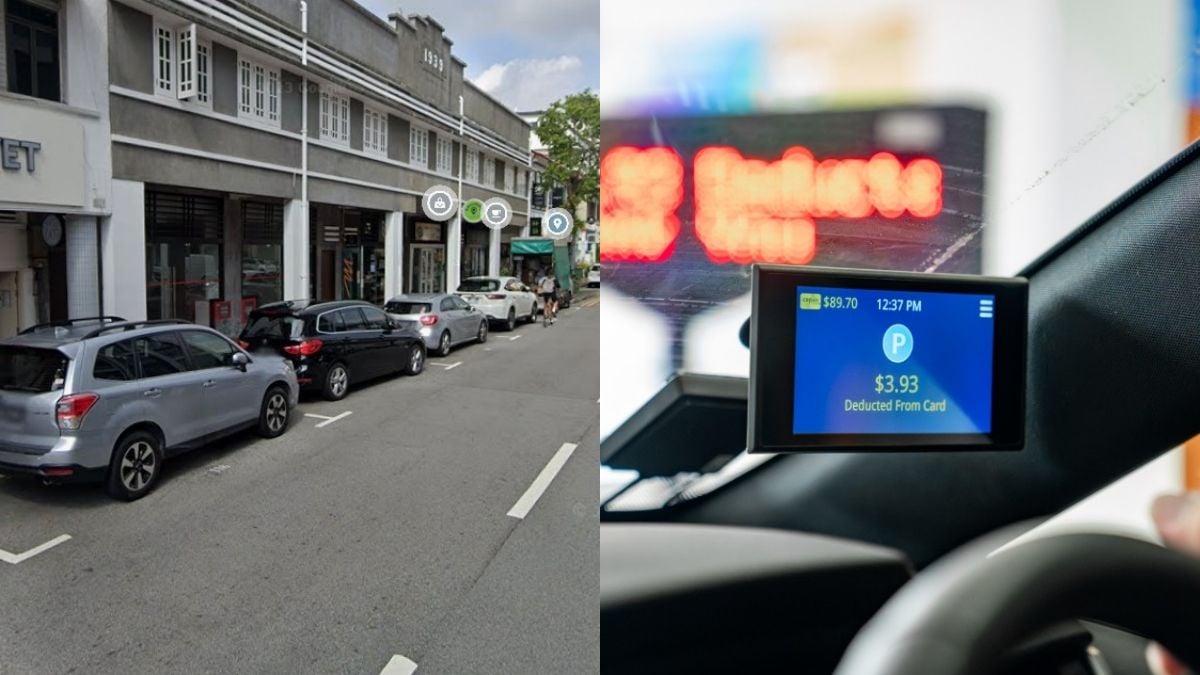
From August, trial participants will see a "P" icon appear in the top-right corner of their OBU display once parked.
Motorists will have two options to begin a session.
They may tap the "P" icon after parking, or switch off the vehicle's engine, which triggers a parking prompt on the OBU for about two minutes.
Pressing the prompt starts the parking session, after which the OBU shuts down automatically.
If the OBU detects only one nearby car park, a single option will appear on the display.
Where multiple car parks or zones are detected, motorists must select the correct location from a list, typically shown as the first option.
The LTA spokesperson said motorists will still need to confirm the start of a session, as this verifies their intention to park and mirrors how the Parking.sg application currently operates.
This step also helps ensure parking charges are applied accurately.
Once a session begins, a "parking in progress" notification will appear on the OBU display along with other details, before the unit shuts down.
How the parking session would end
The parking session will end automatically when the motorist drives out of the car park, the spokesperson said.
Parking charges will then be displayed and deducted from the motorist's selected payment mode. The OBU will calculate charges automatically, without requiring motorists to estimate or extend their parking duration, according to the LTA.
The REP feature will be introduced to motorists who have installed the OBU touchscreen display.
As of 31 May 2026, about 960,000 vehicles, or more than 96 per cent of vehicles in Singapore, had installed the ERP 2 OBU. Of these, about 98 per cent opted to install the touchscreen display, the LTA said.
The Parking.sg application will remain in operation after REP is fully rolled out, and motorists without the OBU touchscreen display may continue to use it.
Since the installation of OBUs was extended to foreign-registered vehicles from 1 April 2026, more than 5,700 such vehicles have opted to install the unit.
Broader ERP 2 trial features
The REP trial sits within a wider user experience study of ERP 2 features running from June to November, involving roughly 1,000 motorists, including passenger car owners, motorcyclists, taxi drivers and commercial vehicle operators.
Among the features being tested is an "ERP Ahead" alert, which notifies drivers of an upcoming charging point and displays the applicable fee in advance, generally about 200 metres before the charge location on expressways and 60 metres on arterial roads.
The alert appears at the last possible exit before a charging point, giving motorists time to choose an alternative route if they wish to avoid the fee, the LTA said.
Trial participants can also experience automatic toll payment through the OBU when crossing the border at the Woodlands and Tuas checkpoints, a feature introduced from mid-June.
Separately, five combinations of road signs and markings have been deployed at five locations on expressways and roads, as part of a second phase of study into visual cues for ERP charging without gantries.
This follows an earlier trial along Bayshore Drive in March.
The LTA said it is gathering feedback on how well motorists are informed of charging locations in the absence of gantries. Feedback may be submitted to [email protected] by 31 July 2026.
In February, Acting Transport Minister Jeffrey Siow told Parliament that the ERP 2 system would allow authorities to introduce new toll charging points without installing large, costly physical gantries, enabling charges to be spread across several locations rather than concentrated at one point.
With gantries set to be progressively removed under ERP 2, information such as operating hours and prevailing rates will instead appear on the OBU touchscreen or on compatible ERP 2 smartphone applications.