HDB corrects content creator's BTO tally as housing ballot debate reignites
Singapore's Housing and Development Board disputed a viral TikTok account of 13 failed public housing applications, saying the true figure was 11, while defending the ballot system as fair and transparent.
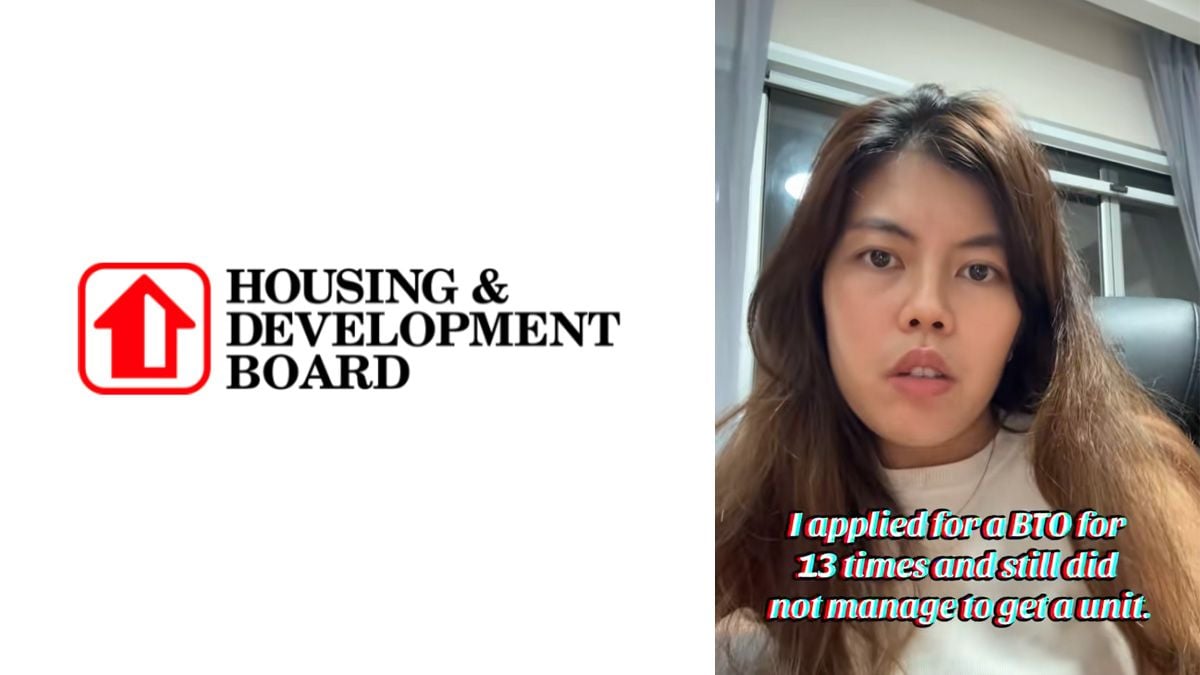
- HDB confirmed the content creator applied 11 times, not 13, and declined a flat offer in her final attempt.
- All applications targeted high-demand areas where ballot queues far exceeded available supply.
- Public reaction revealed widespread frustration with the BTO system, prompting calls for structural reform.

Singapore's Housing and Development Board (HDB) issued a public clarification on the evening of Saturday (14 Mar), disputing key details in a viral TikTok video in which a content creator described 13 failed attempts to secure a Build-To-Order (BTO) flat.
HDB said the actual number of applications was 11, not 13. In her final attempt, under the May 2023 Sale of Balance Flats (SBF) exercise, she was invited to select a flat but declined to do so.
The statement came in response to a video posted on 4 March by the TikTok account XinandXuan.
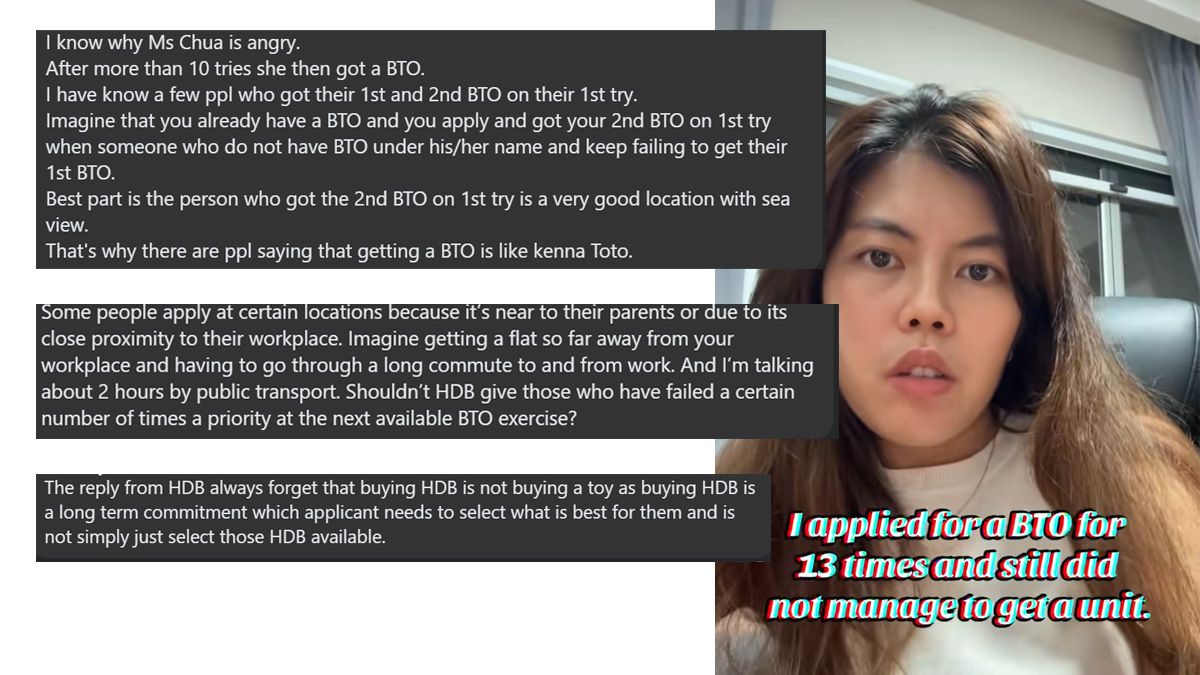
The account holder, known as Chua, documented her experience navigating the BTO ballot system before eventually purchasing a resale flat with CPF Housing Grants.
HDB's version of events
According to HDB, Chua applied for a four-room flat in BTO and SBF exercises between November 2020 and May 2023. All 11 applications targeted popular locations — specifically Kallang Whampoa and Bukit Merah — where demand significantly exceeded supply.
HDB said Chua was unable to secure a chance to book a flat in her first ten applications because of the high application rates in those areas. In her eleventh and final application, she was offered the opportunity to select a unit but chose not to proceed.
The board also addressed Chua's question about why unsold BTO units were offered in subsequent SBF exercises rather than being reserved for original applicants still holding queue numbers.
HDB explained that SBF flats comprise unsold, unselected or returned units from previous BTO launches. They become available for SBF only after all eligible applicants from the original launch have had the opportunity to select a flat.
"Such flats are offered in an SBF exercise to give all Singaporeans, and not just the original applicants of the BTO launch, an opportunity to apply through a fair and transparent process," the board stated.
HDB concluded its statement by encouraging applicants with urgent housing needs to consider projects with lower application rates.
What Chua said
In her video, Chua described the ballot process as prolonged and opaque. She said that across her years of applying, the queue numbers she received consistently far exceeded the number of available units.
One episode she highlighted involved a 2023 appointment at HDB Hub for a Kallang Whampoa project. On the scheduled day, she said she was informed the visit was no longer necessary, as all four-room flats under the Chinese ethnic quota in that project had already been allocated.
Chua also cited published data indicating that several projects she had applied for carried unsold inventory after the selection process. Bukit Merah Ridge, for instance, listed 28 per cent of three-room flats and 16 per cent of four-room flats as balance units.
She questioned why those units were not made available to applicants still in the queue. She shared formal rejection notices from August 2021 and February 2022, each confirming that her queue position had far exceeded available supply.
Chua visited her Member of Parliament (MP) in 2023 to raise her concerns. The MP's advice, she said, was to await the ballot outcome at the end of August that year — a response she described as deeply frustrating after years in the process.
She was careful to clarify she was not seeking preferential treatment based on the number of failed attempts. She said she simply wished to understand why units she had applied for were later listed as unsold. Her video drew more than 87,000 views within six days of posting.
Public reaction: calls for reform alongside scepticism
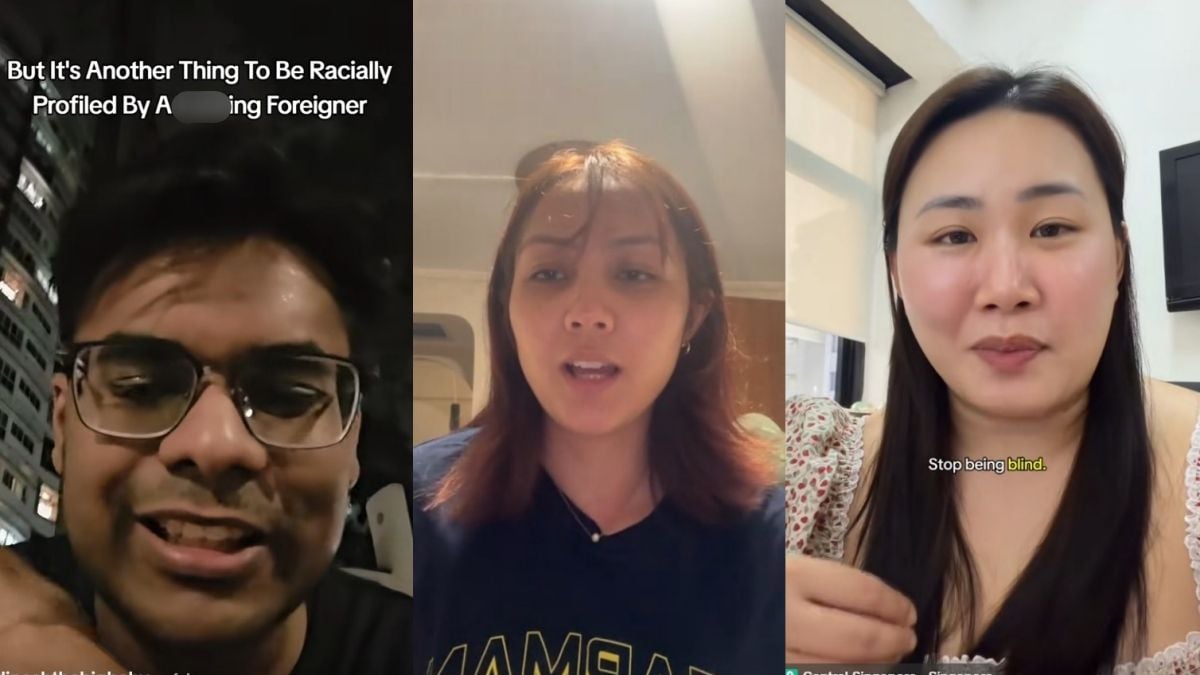
HDB's statement drew a large volume of public responses, with opinion broadly divided between those sympathising with Chua's account and those who questioned her repeated choice of high-demand locations.
Many commenters shared their own accounts of multiple failed applications, some describing seven to more than fifteen unsuccessful attempts, including for non-mature estates. Several called on HDB to implement a weighted ballot to improve the odds of success for repeat applicants.
Others raised the experience of having selection appointments cancelled at short notice due to ethnic quota limits being reached in their preferred project. Some said this had occurred to them specifically in Kallang Whampoa.
Proximity to ageing parents emerged as a recurring concern. Multiple commenters described applying repeatedly for areas near elderly relatives for caregiving reasons, not for investment purposes.
Several said they had ultimately been forced to purchase resale flats at considerable distance from their families.
Some commenters, however, took a more sceptical view. They argued that persistent applications for prime and mature estate locations amounted to seeking a financial windfall, drawing comparisons to a lottery.
Several noted that the ballot system cannot be expected to guarantee eventual success to every applicant repeatedly targeting the most oversubscribed locations.
A separate concern focused on the transparency of the electronic balloting process. Commenters questioned whether the computer-generated system could be independently verified as fair, given that its parameters are written by human programmers.
Some called for public disclosure of how queue numbers are generated and how ethnic quota thresholds are applied in practice.
One commenter observed that HDB's advice to seek less popular areas effectively communicated to applicants with legitimate location needs — such as those requiring proximity to workplaces or ageing parents — that their circumstances fell outside the system's remit.
Broader context: muted demand and growing balance supply
The controversy emerged against a backdrop of notable shifts in Singapore's public housing market.
Demand for Plus and Prime category flats has softened since the Standard, Plus and Prime classification system took effect in October 2024.
Under this framework, Plus and Prime flats carry a 10-year minimum occupation period (MOP) and a subsidy clawback mechanism, conditions designed to reduce speculative purchasing in desirable locations.
In the February 2026 BTO exercise, all first-time buyers of three- and four-room flats in Kim Keat Crest, a Plus project in Toa Payoh, were effectively guaranteed the opportunity to select a unit.
That would previously have been an unusual outcome in a mature estate.
That exercise offered some 4,320 balance flats, exceeding HDB's initial commitment of 3,000 units. At least 22 Plus or Prime BTO projects featured among those offering balance flats, and at least 13 recorded undersubscription in one or more flat type.
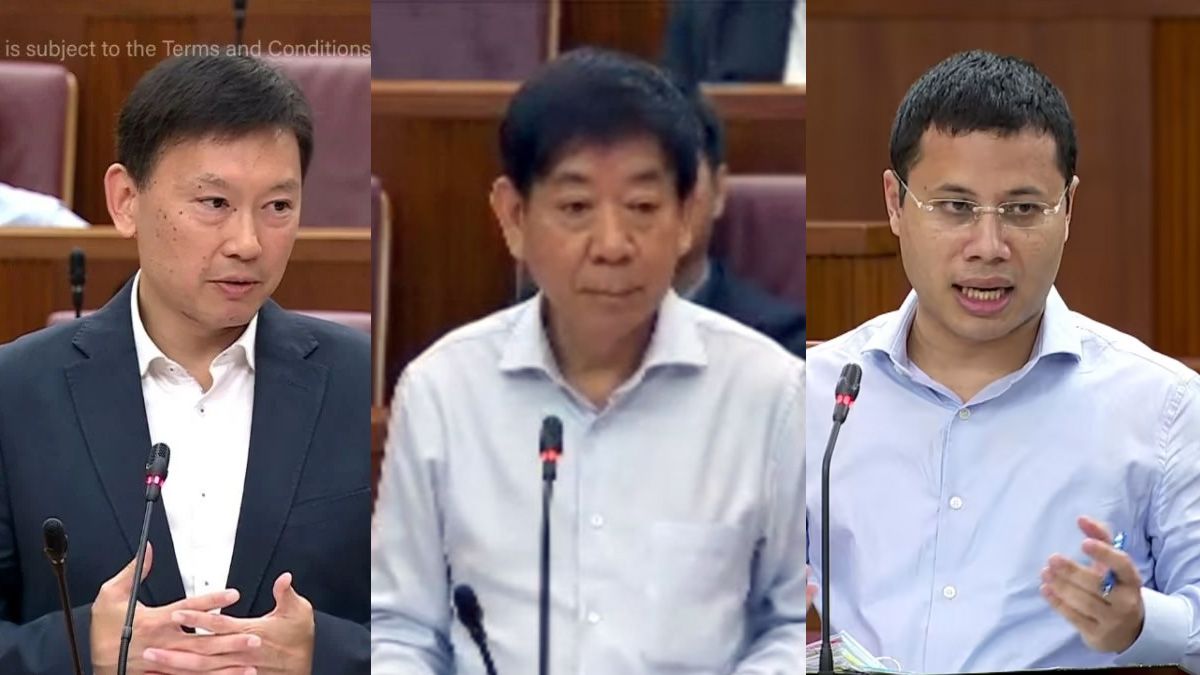
In a written parliamentary reply on 25 February 2026, National Development Minister Chee Hong Tat said HDB holds close to 900 unselected flats from previous SBF exercises.
Despite the broader softening in demand, applicants for specific projects in Bukit Merah and Kallang Whampoa — the areas Chua had repeatedly applied for — continued to face ballot queues significantly exceeding available supply for certain flat types.