Netizens dispute Ho Ching’s framing of Han Hui Hui case; question govt handling of child protection measures
Ho Ching’s remarks on the Han Hui Hui case sparked online debate, with netizens disputing claims of harm and questioning authorities’ handling of child protection measures and intervention decisions.

- Ho Ching’s comments sparked debate over child safety framing in the case
- Netizens questioned both implied harm and authorities’ intervention decisions
- Children were returned after safeguards; POFMA action taken over falsehoods

Ho Ching’s remarks on the case involving political activist Han Hui Hui have triggered widespread online debate, with netizens challenging her characterisation of events and raising concerns about the authorities’ handling of child protection measures.
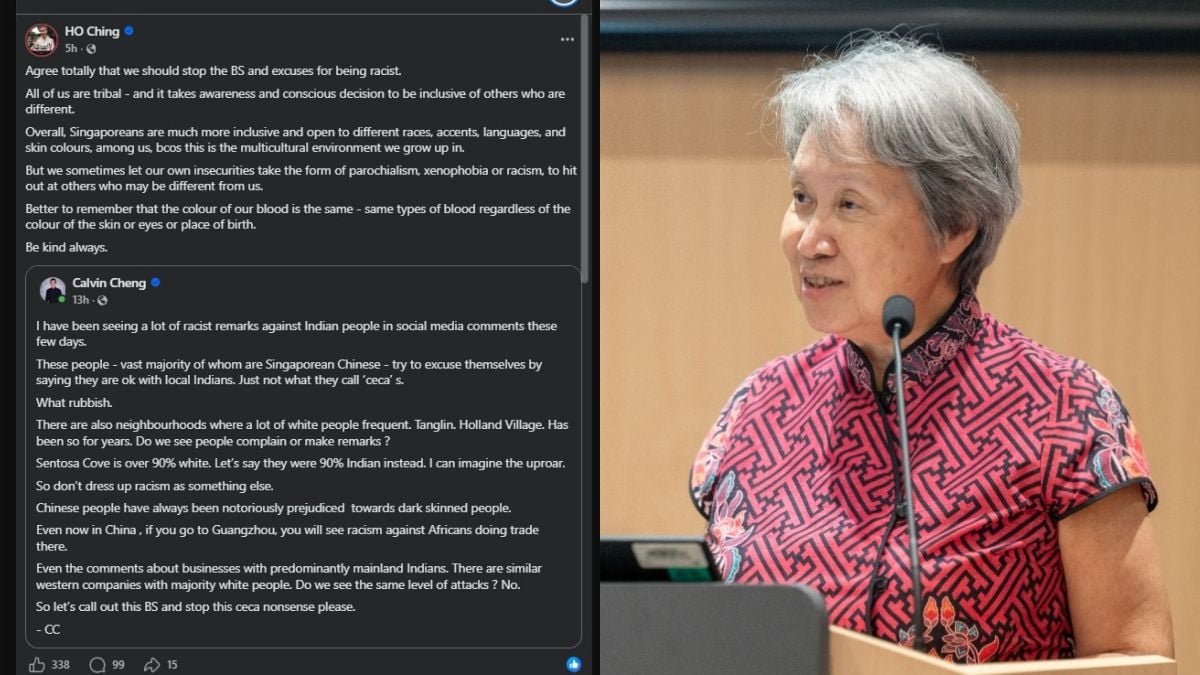
In a Facebook post on 17 March 2026, Ho expressed sadness for the three young children, describing them as “defenceless and helpless” amid ongoing adult conflict.
Ho, spouse of Senior Minister Lee Hsien Loong and former Chief Executive Officer of Temasek Holdings, said children are often the most affected when adults are in conflict, including through psychological harm even without physical injury.
Ho's concerns over child welfare framing
Ho also questioned reports of an “altercation” involving an adult and young children, noting that children aged three, five, and six would not typically be capable of engaging in such confrontations.
She emphasised that established processes exist for police and the Ministry of Social and Family Development to remove children if there is serious risk to their safety.
Ho added that early intervention is preferable to waiting for harm to occur, framing such actions as protective rather than punitive.
She further criticised adults for failing to prioritise children’s welfare, suggesting it would be “sadder still” if children were drawn into adult disputes.
Her comments concluded with hope that the children would grow up resilient despite the challenges they faced.
Online backlash and differing interpretations
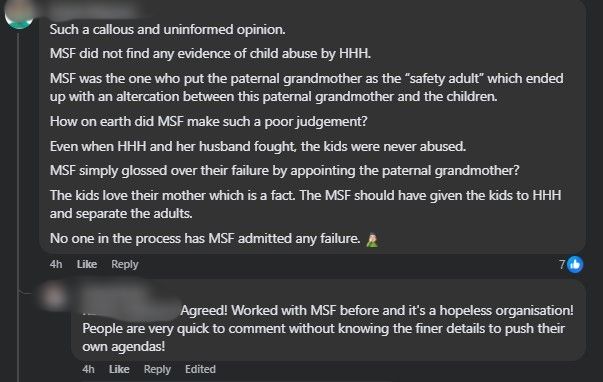
However, her remarks drew swift criticism online, with many netizens rejecting what they saw as implied assumptions about harm and responsibility.
A central point of disagreement was the perception that Ho’s comments suggested the children had been harmed or were at risk of abuse.
Several netizens argued that official statements did not confirm abuse by Han, and that the case instead centred on family conflict rather than direct harm to the children.
They contended that framing the situation around child harm risked misrepresenting the circumstances and unfairly shaping public perception.
Questions over authorities’ actions
Others directed criticism at the MSF, questioning its judgement in managing the case.
Some highlighted that the paternal grandmother had previously been designated a “safe adult” under a safety plan, yet was later involved in an alleged altercation with the children.
They argued this raised questions about the adequacy of the initial safety assessment and whether authorities bore some responsibility for the breakdown of the arrangement.
A number of commenters also challenged the decision to remove the children, describing it as excessive in the absence of proven abuse.
They suggested alternative approaches, such as separating conflicting adults, could have been considered instead of placing the children in temporary care.
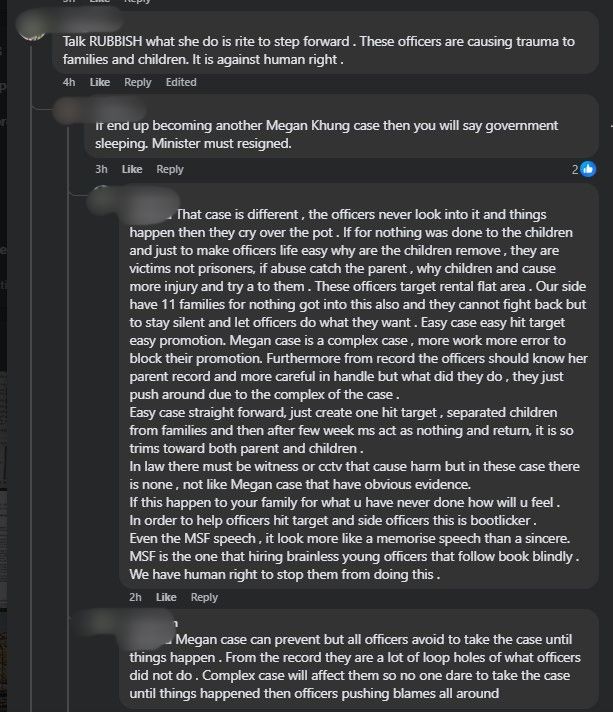
Concerns were also raised about the emotional impact of removal, with some netizens describing it as potentially traumatic for both the children and their parents.
Some netizens questioned on the broader impact of family conflict on the children, while others question whether intervention measures were proportionate.
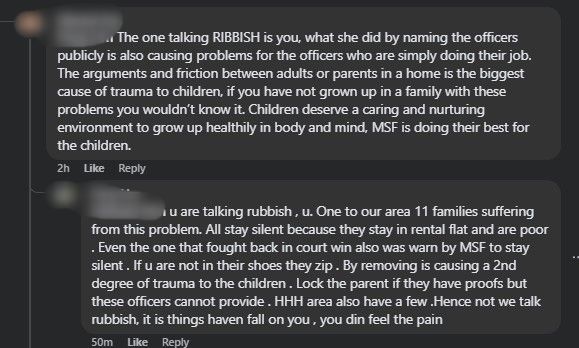
A comment suggested that, in the absence of clear signs of fear or harm, children should remain with their parent.
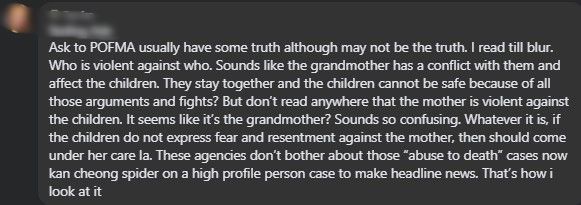
Others emphasised that the situation reflects a wider issue of how child protection decisions are communicated and perceived by the public.
While some comments defend the agencies, suggesting intervention was necessary for the children’s welfare and emphasising that the children’s well-being should remain the priority.
Background to the case and children’s removal
Han Hui Hui’s three children, aged three, five, and six, were removed from her household on 15 February 2026 following an alleged altercation involving their paternal grandmother.
Police assessed there were immediate safety concerns and removed the children under the Children and Young Persons Act 1993, referring the case to the Ministry of Social and Family Development for investigation.
The children were taken to KK Women’s and Children’s Hospital, a designated place of temporary care and protection, for medical assessment.
The removal followed months of disputes among Han, her husband, and the paternal grandmother, with multiple police reports filed since August 2025 involving allegations of violence.
A safety plan had been implemented in October 2025, designating the paternal grandmother as a “safe adult” responsible for overseeing the children’s care.
However, the 15 February incident rendered the plan unworkable, according to authorities.
Return of children and new safeguards
The children were reunited with Han Hui Hui on 16 March after the MSF completed its social investigation.
A family conference was held the same day, during which additional safeguards were agreed before the children were returned.
These measures include appointing new safe adults from within the extended family to conduct regular check-ins through visits and video calls.
Han and her husband are also required to undergo targeted professional interventions to address conflict, parenting practices, and the involvement of children in disputes.
Authorities will continue monitoring the children’s welfare through schools, after-school services, and home visitation programmes.
POFMA correction direction issued
On 17 March, the MSF instructed the POFMA Office to issue a Correction Direction over false statements made in Han’s 11 March livestream.
The direction relates to seven statements deemed inaccurate, including claims about the legality of the children’s removal and allegations regarding the conduct of authorities.
Authorities stated that all actions were carried out in accordance with the law and described removal as a measure of last resort.
They also rejected claims that access to the children was restricted due to social media activity, stating that any limitations were based on legal provisions to protect the children’s identity.