Ho Ching warns tax cuts, fuel subsidies fuel cheap oil addiction; netizens stress rising costs’ daily impact
Ho Ching warns that cutting taxes and increasing fuel subsidies risks entrenching dependence on cheap oil, urging targeted aid instead. Netizens, however, stress the strain of rising costs on households and SMEs amid the ongoing fuel crisis.

- Ho Ching warns subsidies and tax cuts encourage inefficient energy use and strain public finances
- Netizens highlight rising costs, especially for SMEs and lower-income households
- Debate centres on balancing short-term relief with long-term sustainability

Cutting taxes and increasing fuel subsidies are misguided policy responses, as they risk entrenching dependence on cheap oil among both consumers and the broader economy, Ho Ching said.
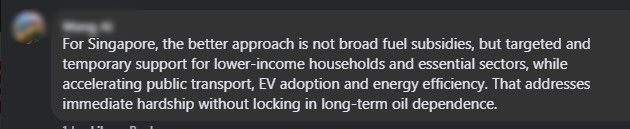
However, netizens highlighted the immediate strain of rising costs on daily life, noting that while targeted, temporary support for lower-income households and essential sectors is sensible, many—especially SMEs—are struggling to stay afloat.
In a Facebook post on 5 April 2026, the spouse to Senior Minister Lee Hsien Loong said, “Cutting taxes and increasing subsidies are both bad options for all govts. They addict people and economy to cheap oil.”
Her remarks come amid rising global fuel prices linked to ongoing geopolitical tensions, including the war in Iran, which has disrupted supply chains and heightened cost pressures worldwide.
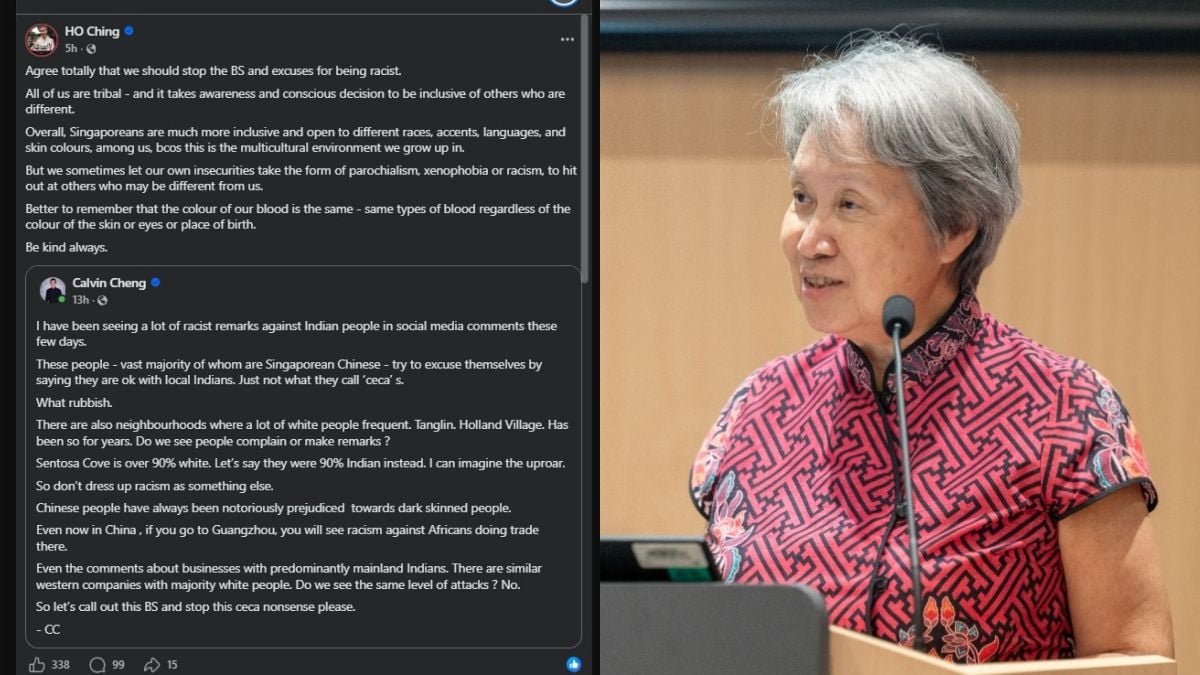
Ho, former chief executive of Temasek Holdings, was responding to a post by former Nominated Member of Parliament Calvin Cheng, who suggested allowing full price impacts to flow through the economy.
Call for targeted and temporary support
While rejecting broad-based subsidies, Ho emphasised the need for targeted intervention to support vulnerable groups and sectors.
“It is better even for govts already stuck with subsidies to let the price increases flow through as a strong signal for quick adaptation,” she wrote.
She added that governments should provide “targeted, timely and temporary direct subsidies to the lower income households and selected sectors with a phase out date”.
Ho also proposed bundling the phase-out of crisis subsidies with existing ones, freeing up resources for more focused assistance.
“Same thing for taxes – use the taxes for targeted, timely and temporary support for the least, the lost and the lowest group within our community,” she said.
She argued that broad tax cuts and fuel subsidies disproportionately benefit heavy users, encouraging wasteful consumption of carbon-intensive energy.
Push for long-term energy transition
Ho framed the current crisis as an opportunity to accelerate structural change towards sustainability.
“Let’s use this crisis to transit to a more energy efficient economy and more sustainable lifestyles for a cooler and more liveable planet,” she said.
Her comments align with broader policy discussions on reducing reliance on fossil fuels and investing in cleaner alternatives, including electric vehicles and public transport infrastructure.
Cheng had similarly argued that subsidies drain state resources while tax cuts lack precision, reinforcing calls for market-based adjustments.
Netizens highlight strain on daily life
Despite agreement on the principle of targeted aid, many netizens highlighted the immediate burden of rising costs on households and businesses.
Several users stressed that while economic theory supports price signals, real-world impacts can be severe, particularly for small and medium-sized enterprises (SMEs).
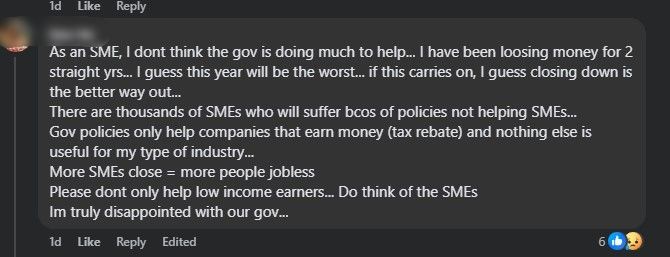
One self-identified SME owner wrote, “I dont think the gov is doing much to help... I have been loosing money for 2 straight yrs... I guess this year will be the worst... if this carries on, I guess closing down is the better way out...”
The comment added that thousands of SMEs could suffer due to insufficient support, warning that closures could lead to rising unemployment.
Debate over effectiveness of policy responses
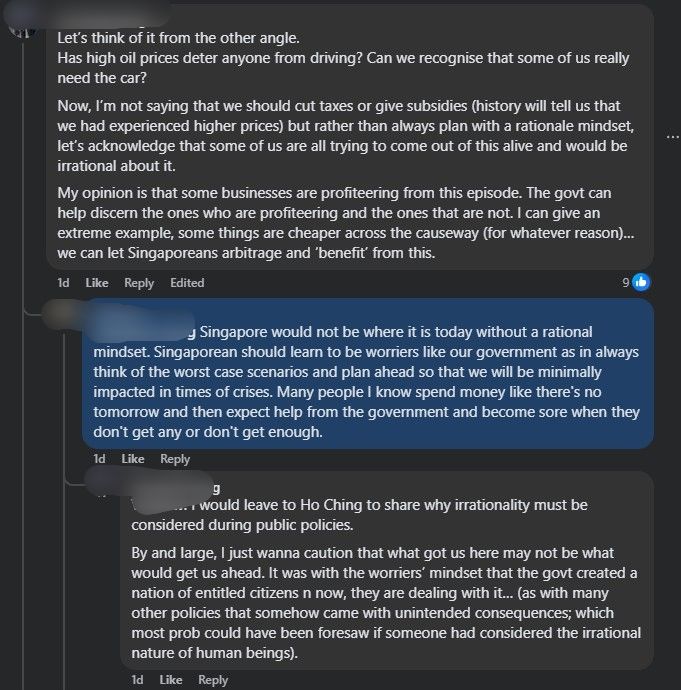
Other comments noted that high fuel prices may not significantly reduce demand, as many individuals still rely on vehicles for daily needs.
Some suggested governments should focus on preventing profiteering by businesses rather than implementing broad subsidies.
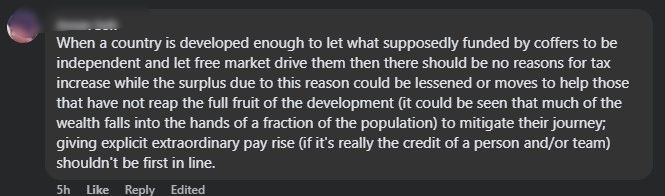
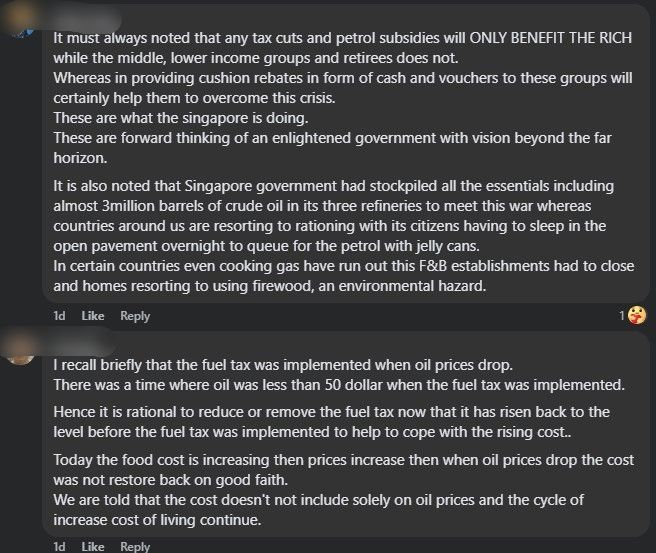
A number of netizens argued that general tax cuts or fuel subsidies tend to benefit wealthier groups more, while targeted measures such as cash rebates and vouchers better address inequality.
The discussion also reflected broader tensions between short-term relief and long-term policy direction.
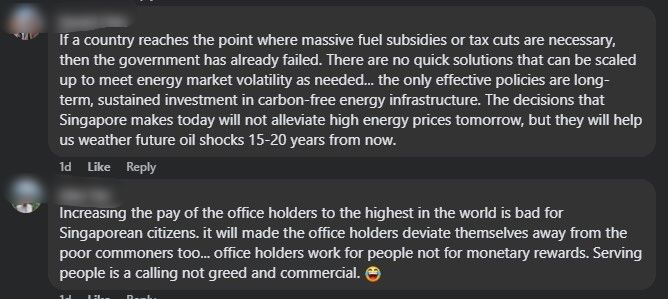
Some participants emphasised the importance of investing in carbon-free energy and improving public transport systems, rather than relying on temporary financial relief.
Others pointed to government preparedness, including stockpiling essential resources, as a mitigating factor against supply disruptions.
A smaller group raised concerns about public sector spending and called for greater accountability, including scrutiny of remuneration for office holders.