Singapore must adapt to evolving warfare as global conflicts intensify, says Lawrence Wong
Singapore must strengthen defence resilience and adapt to evolving warfare trends as global instability grows, Prime Minister Lawrence Wong said, highlighting risks from drone warfare and multi-domain threats.

- Lawrence Wong warned global instability will increase pressure on small countries like Singapore.
- Evolving warfare, especially drone use, requires better integration of technology and defence systems.
- SAF must adapt to multi-domain threats, faster response needs, and complex urban environments.

Singapore must pay closer attention to defence preparedness as global conflicts intensify and geopolitical stability weakens, Prime Minister Lawrence Wong said on 9 April 2026.
Speaking during a visit to the 6th Singapore Division/Headquarters Sense and Strike at Mandai Hill Camp, he warned that a breakdown in global order could create a dangerous vacuum.
“If global order moves in that direction, there will be a ‘vacuum’ which leads to disorder,” he said. “It means messiness. It means unpredictability.”
The remarks came in response to questions about the impact of the Iran war and broader global tensions.
Pressure on small states
Lawrence Wong highlighted that smaller nations such as Singapore are particularly vulnerable in a world where countries may increasingly resort to force or coercion.
“Small countries like Singapore will come under pressure,” he said.
He stressed that Singapore must go beyond modernising military hardware, and instead adopt a more comprehensive approach to national defence.
“It is also thinking hard about technology and thinking hard about defence supply chains and how we can be more resilient as a country,” he added.
The visit was conducted alongside Defence Minister Chan Chun Sing, with both leaders observing operational demonstrations.
Lessons from modern warfare
Recent conflicts, including those in Ukraine and Iran, have demonstrated how warfare is rapidly evolving, particularly through the use of unmanned systems such as drones.
Lawrence Wong said these developments had given Singapore “a lot of food for thought”.
He emphasised that acquiring advanced platforms alone is insufficient without effective integration.
“What was of more importance is how to integrate these new capabilities well across different domains,” he said, referring to coordination between operational units and technology teams.
Such integration must also extend across different branches of the Singapore Armed Forces to strengthen overall effectiveness and deterrence.
Preparing for future conflicts
The prime minister cautioned that further conflicts are likely in the coming years, requiring Singapore to remain prepared.
“We wish it were not so, but this is the reality of the world we live in, and we must prepare,” he said.
He pointed to the growing use of low-cost drone swarms, which present significant challenges even for militaries equipped with advanced defence systems.
“You can have the most advanced interceptors, but when your aggressor is deploying cheap swarms of drones, it’s very challenging,” he said.
He added that replacing expensive defence assets takes time, increasing vulnerability during sustained attacks.
Multi-domain operations and evolving threats
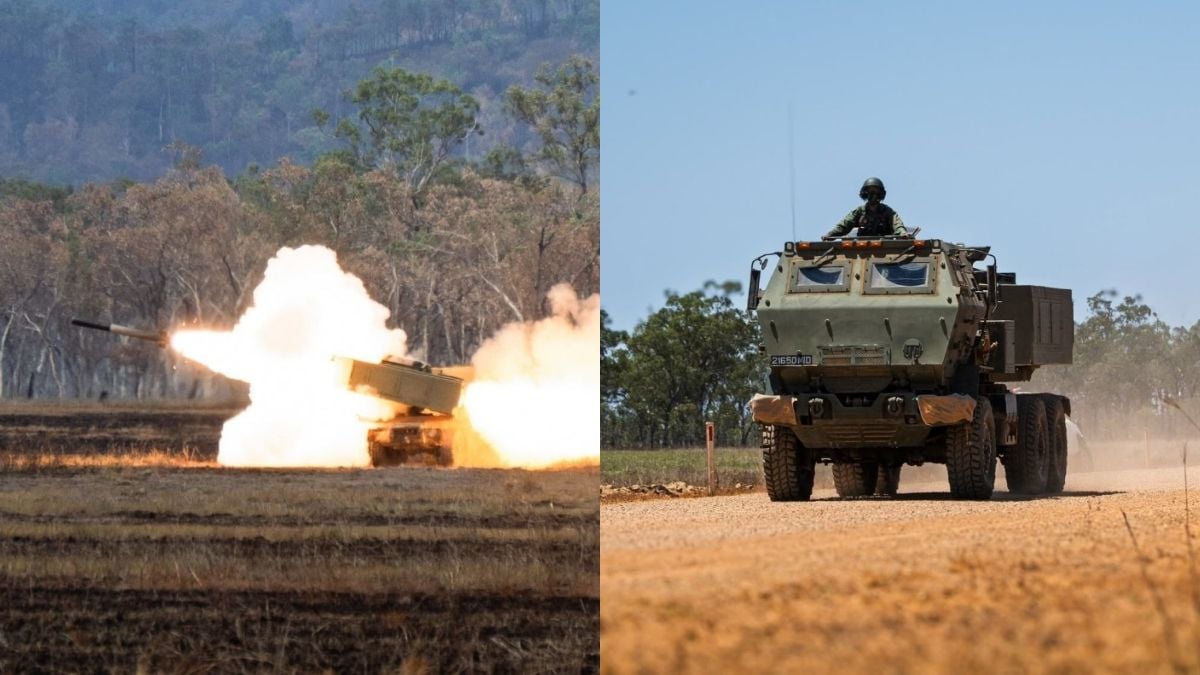
During the visit, Lawrence Wong was briefed on efforts to integrate intelligence and artillery capabilities within the Singapore Army, alongside coordination with the air force and digital units.
He also interacted with soldiers undergoing Advanced Competency Training, which focuses on new technologies and operational concepts.
Colonel Philip Khoo Kok Hong, chief of staff of the division, outlined key challenges shaping modern warfare.
He said operations are no longer confined to a single domain, but now span air, land, sea, and digital environments.
“Operations today are no longer confined to just a single domain,” he said.
Addressing operational complexity
Colonel Khoo identified four major challenges: urban complexity, data overload, faster and smarter threats, and multi-domain integration.
Urban environments present significant obstacles, with buildings and dense infrastructure creating blind spots that complicate target identification.
More sensors are required to improve situational awareness, he said.
At the same time, the growing volume of data requires robust command and control systems to filter and prioritise critical information.
To respond to fast-moving threats, he stressed the need to shorten the “kill chain” — the time between identifying a target and neutralising it.
Colonel Khoo highlighted the importance of integrating expertise across different military branches.
This includes combining capabilities from the army, air force, and digital services into a unified system.
Such coordination is essential for maintaining an effective fighting force in an increasingly complex and unpredictable security environment.
Chan Chun Sing earlier told Parliament that drones have long shaped Singapore’s defence thinking amid evolving warfare
During a parliamentary sitting on 14 January 2026, Defence Minister Chan responded to questions from the Workers' Party MP Kenneth Tiong on evolving drone threats.
“To many people, drone warfare appears new, but it is something we have been looking at for many years,” Chan told Parliament, emphasising long-term planning rather than reactive policymaking.
To illustrate this point, he cited the 2017 National Day Parade, where 300 drones formed a heart shape in the sky during the closing segment of the ceremony.
While the display impressed the general public as a technological spectacle, Chan said informed observers within the defence community already understood its implications for the future character of warfare.
“To those in this line of business, we already knew what that meant for the nature of warfare,” he said, referring to the operational potential of coordinated drone swarms.
Chan said Singapore’s position as a small island with no strategic depth requires defence solutions tailored to its unique constraints. Limited land and manpower mean the Singapore Armed Forces must carefully balance operational needs with resource limitations when developing infrastructure and capabilities.
He emphasised that Singapore’s defence posture depends heavily on strong intelligence, effective threat detection and early warning systems operating at range. These enable timely and decisive responses using a diversified mix of assets deployed across multiple layers and distances.
However, Chan acknowledged that no defence system can guarantee complete protection. Some threats may still reach Singapore, making resilience a critical component of defence planning.
To address this, critical infrastructure is hardened against attacks, while key assets can be dispersed during peacetime or crises. Reserve capacities are also built in to ensure continued operations even if some assets are damaged or destroyed.
Chan added that many defence measures remain undisclosed for security reasons. Striking a balance between transparency and secrecy, he said, is essential to maintaining operational effectiveness and credible deterrence in an increasingly complex security environment.