Anwar says Singapore's Hormuz stance is 'their affair' as daughter sharpens criticism of republic
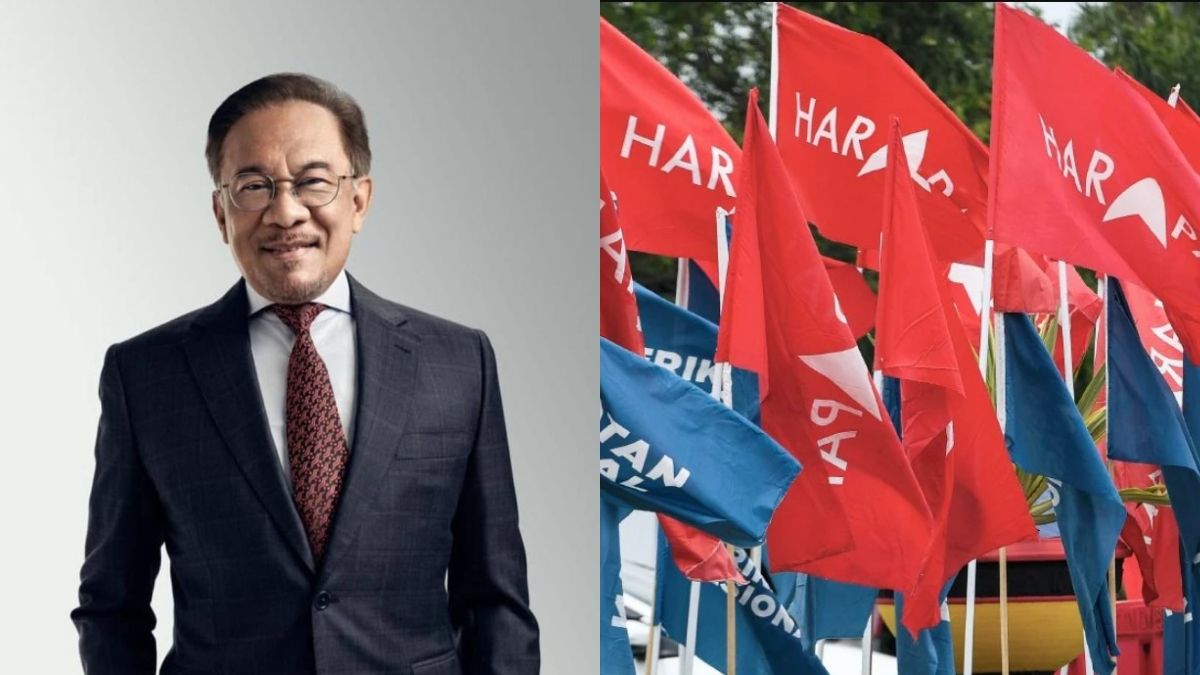
Malaysian Prime Minister Anwar Ibrahim says Singapore is entitled to its position on the Strait of Hormuz, even as his daughter and deputy PKR president Nurul Izzah Anwar issues sharper criticism of Singapore's diplomatic posture.

- Anwar Ibrahim says Singapore's refusal to negotiate with Iran over Hormuz passage is "their affair"
- Daughter Nurul Izzah accuses Balakrishnan of echoing external power preferences over ASEAN independence
- Vessels resumed Hormuz transit after Iran agreed to temporary two-week truce reopening

Malaysian Prime Minister Anwar Ibrahim has described Singapore's refusal to negotiate with Iran over safe passage through the Strait of Hormuz as Singapore's own prerogative, while reaffirming that Malaysia has adopted a clear and firm position of its own.
Speaking to reporters after performing Friday prayers at Masjid Nurussaadah in Kampung Cheras Baru, Pandan, on 10 April 2026, Anwar said the two countries were entitled to different positions without compromising neighbourly ties.
"That is Singapore's view — that is their affair. Our affair is to maintain good relations, and we have taken a fairly firm stance," he said.
Anwar contextualised Malaysia's position within its broader assessment of the conflict, describing Israeli strikes on Iran — backed by the United States — as barbaric and unjust.
"We cannot discuss Iran's response on closing the strait without also addressing the injustice — the barbaric Israeli attacks on Iran, backed by the United States. Our foreign policy position on this is clear," he said.
He was nonetheless careful to draw a distinction between Malaysia's stance on the conflict and its diplomatic relationship with Singapore.
"But our friendship with neighbouring countries must also be maintained," he added.
Nurul Izzah sharpens criticism
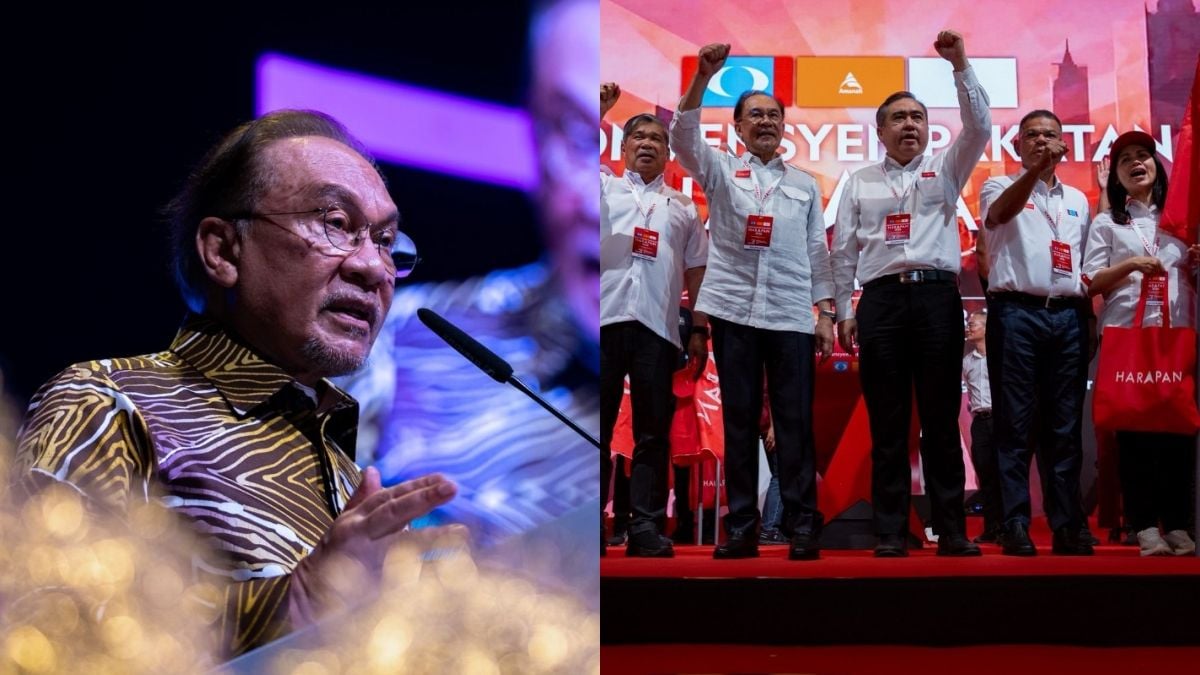
Anwar's measured comments stand in contrast to sharper remarks from his eldest daughter, Nurul Izzah Anwar, who serves as deputy president of the People's Justice Party (PKR).
In a statement issued earlier, Nurul Izzah described Singapore's position as reflecting a narrow strategic posture that prioritises alignment over regional responsibility and international law.
She argued that Malaysia's approach, rooted in continued diplomatic engagement, reflects a longstanding commitment to diplomacy as a tool of statecraft.
"Iran's controls on the straits are an attempt to seek a durable peace. Malaysia has consistently upheld the principle that diplomacy must be exercised, not abandoned," she said.
Nurul Izzah warned that Singapore's stance risks eroding the Association of Southeast Asian Nations' (ASEAN) long-held commitment to independent and balanced diplomacy.
She directed pointed criticism at Singapore Foreign Minister Vivian Balakrishnan, questioning whether his position reflected genuine neutrality.
"It is difficult to ignore the undertones in Balakrishnan's position. His posture appears less about neutrality and more about echoing the strategic preferences of external powers, whose interests do not always align with those of our region," she said.
She further said that quiet deference to what she termed great power narratives and genocidal entities was not equivalent to principled neutrality.
"We choose dialogue because history has shown that disengagement invites escalation, not stability. We choose to act because leadership demands more than cautious distance," she said.
Singapore's principled stance
Singapore articulated its position on 7 April during a parliamentary session, when Balakrishnan responded to a question from Workers' Party Member of Parliament Fadli Fawzi.
Balakrishnan said Singapore regards the right of transit passage through international straits as a right under international law, not a privilege granted by coastal states or a toll to be paid.
"It is not a toll to be paid. It is a right of all nations' ships to traverse," he said, citing Article 44 of the United Nations Convention on the Law of the Sea (UNCLOS) as the governing framework.
He added that the principle is further supported by customary international law, and that Singapore's position on straits used for international navigation has been longstanding and consistent.
Singapore's own position is reinforced by its reliance on major shipping routes, including the Strait of Malacca and the Strait of Singapore, both of which are critical to global trade.
Despite rejecting negotiations, Singapore continues to monitor the situation.
The Maritime and Port Authority of Singapore (MPA) is tracking Singapore-flagged vessels in the Persian Gulf, while agencies are coordinating with the International Maritime Organization (IMO) on potential maritime corridors.
Balakrishnan said humanitarian considerations remain central, particularly amid disruptions affecting commercial shipping and global energy supplies.
Temporary truce reopens waterway
Vessel movements through the Strait of Hormuz resumed on 9 April after Iran agreed to a temporary reopening as part of a two-week truce, according to Xinhua.
Iran has also floated the concept of a toll system to fund reconstruction following US-Israeli strikes.
The disruptions follow large-scale military operations by the United States and Israel targeting Iranian territory since 28 February 2026.
In response, Iran targeted US military bases across the region and launched waves of missiles and drones at Israel, with the combined effect of disrupting roughly 20 per cent of global oil and liquefied natural gas flows through the strait.
Malaysia was among the countries that engaged Tehran directly to secure passage for its vessels.
Anwar raised the matter with Iranian President Masoud Pezeshkian, securing clearance for Malaysia-linked tankers.
At least one tanker bound for Johor has resumed its journey, with others expected to follow.