High Court rules overtime cannot be capped, migrant worker wins S$5,700 after 2-year legal fight
A migrant worker has won a two-year legal battle after the High Court ruled employers cannot cap overtime pay through fixed allowances, reinstating his full claim of S$5,711.11.

- The High Court ruled fixed allowances cannot offset legally required overtime payments.
- The worker’s full S$5,711.11 claim was reinstated after a tribunal reduced it.
- The judgment clarifies Employment Act protections for all workers in Singapore.

SINGAPORE: A migrant worker has won a two-year legal battle after the High Court overturned a lower tribunal’s decision and ordered his former employer to pay more than S$5,700 in overtime wages.
On Tuesday (7 April 2026), Justice Philip Jeyaretnam allowed the appeal brought by Indian national Gena Hulash Ram, finding that his employer’s method of compensating overtime through a fixed monthly allowance was unlawful under Singapore’s employment laws.
The ruling addresses a key legal question on whether employers can use fixed allowances to offset overtime pay, with the court concluding that such arrangements are incompatible with statutory requirements.
Legal dispute over overtime allowance
The case centred on a S$300 monthly allowance labelled as “others” in employment documents, which the employer argued covered overtime work regardless of the number of hours performed.
Gena had been employed as a packer at a fresh produce wholesaler from December 2022 to August 2023.
His in-principle approval letter issued by the Ministry of Manpower (MOM) stated a basic monthly salary of S$1,000, alongside S$200 for housing and S$300 categorised as “others”.
This brought his total fixed monthly pay to S$1,500.
The letter also specified an overtime rate of S$7.87 per hour.
The dispute arose over whether the S$300 allowance could legally substitute for overtime payments calculated based on hours worked.
Tribunal decision reduced claim
In December 2023, Gena filed a claim at the Employment Claims Tribunal seeking S$5,711.11 in unpaid overtime wages.
The tribunal magistrate accepted that overtime had been worked and that compensation was due.
However, the magistrate permitted the employer to offset overtime payments against the S$300 allowance.
Under this approach, the worker would receive S$300 if his calculated overtime fell below that amount, and only the excess if it exceeded S$300.
The magistrate reasoned that the employer’s labelling of the allowance as “overtime” in payslips constituted a contractual agreement between the parties.
As a result, the claim was reduced to S$3,254.84.
Dissatisfied with the outcome, Gena appealed to the High Court.
High Court clarifies legal principle
Justice Jeyaretnam described the appeal as raising “a simple but important point of law” concerning the interpretation of overtime provisions under the Employment Act.
The employer maintained that the allowance was a lawful fixed payment for overtime work, regardless of the actual number of hours performed.
The court rejected this argument.
“An employer cannot introduce a cap on or fixed sum for overtime payment,” Justice Jeyaretnam said, affirming that overtime must be calculated based on actual hours worked.
He further explained that employment terms outlined in MOM documentation distinguish clearly between basic salary, fixed monthly allowances, and overtime pay.
“Fixed monthly allowances must not include any form of overtime payment,” he said.
The judgment stated that the “others” allowance could not legally “cover or subsume overtime payments that would be due to the employee for overtime hours worked”.
Administrative convenience rejected
The court also dismissed the employer’s argument that the arrangement was administratively convenient.
“Regardless of what the employer might have considered to be administratively convenient, it was not open to the employer to include the employee’s overtime pay, whether in whole or in part, in the ‘others’ allowance,” Justice Jeyaretnam said.
He warned that permitting such arrangements would effectively reduce the declared overtime rate, undermining statutory protections for workers.
The High Court reinstated the full claim of S$5,711.11 based on actual overtime hours worked and awarded S$9,000 in legal costs against the employer.
Pro bono representation highlighted
Gena was represented on a pro bono basis by lawyers Melvin Chan Kah Keen and Amelia Tan Han Ru from TSMP Law Corporation.
Justice Jeyaretnam commended their efforts, stating: “Acting pro bono for clients who would otherwise be unable to afford legal representation exemplifies the best traditions of the Bar.”
Speaking on 8 April 2026 with The Straits Times, Chan noted that the worker had since left Singapore.
He added that while the amount involved might appear modest to some, it was significant for the claimant.
“Unfortunately, some employers may actually leverage this, thinking that the worker may not bother to claim, or more likely, may not be able to engage a lawyer who finds it worthwhile to pursue the claim,” he said.
On taking the case, he added: “Simply put, if lawyers don’t help, then who will?”
TWC2 underscores nationwide implications of Employment Act ruling
The case was supported by migrant worker non-governmental organisations, including the Humanitarian Organisation for Migration Economics (HOME) and Transient Workers Count Too (TWC2), which assisted Gena from the time he first sought help in 2023.
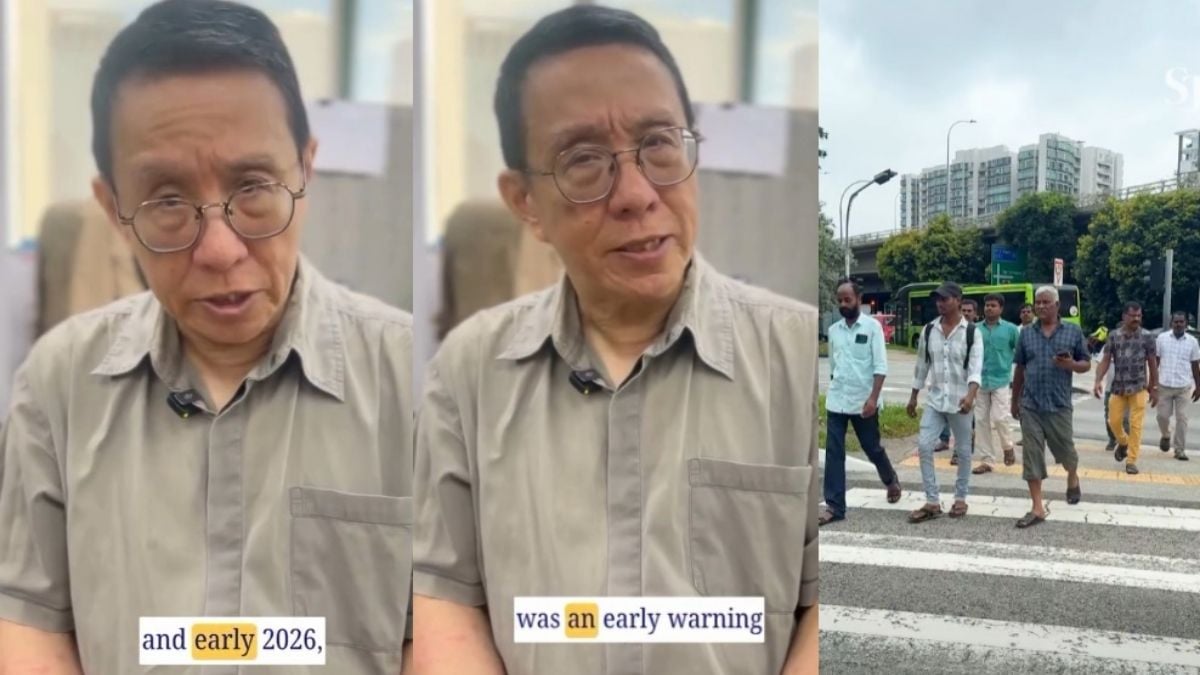
Responding to TOC queries, TWC2 executive director Ethan Guo said the ruling carries wider implications beyond the individual case.
“Any judgements passed by the High Court sets a precedent for future cases. And because this case had to do with the Employment Act, it’s essentially a matter that concerns every working adult in Singapore, not just low-wage migrant workers,” he said.
Guo expressed gratitude to pro bono counsel Chan Kah Keen and Tan for their “hard work and expertise”, adding that significant credit should also go to volunteers and staff who supported Gena from 2023.
“Gena Hulash Ram spoke Hindi and needed an interpreter. As legal representation is not allowed at the Employment Claims Tribunal, a lot of time and effort also went into helping him prepare for the hearings and documentation needed,” Guo said.
TWC2 also called for continued public support, noting that migrant workers often turn to the organisation as an accessible gateway for assistance.
The organisation said it provides resources to help workers understand and address their issues, while continuing advocacy efforts to strengthen Singapore’s employment laws for the benefit of all workers.