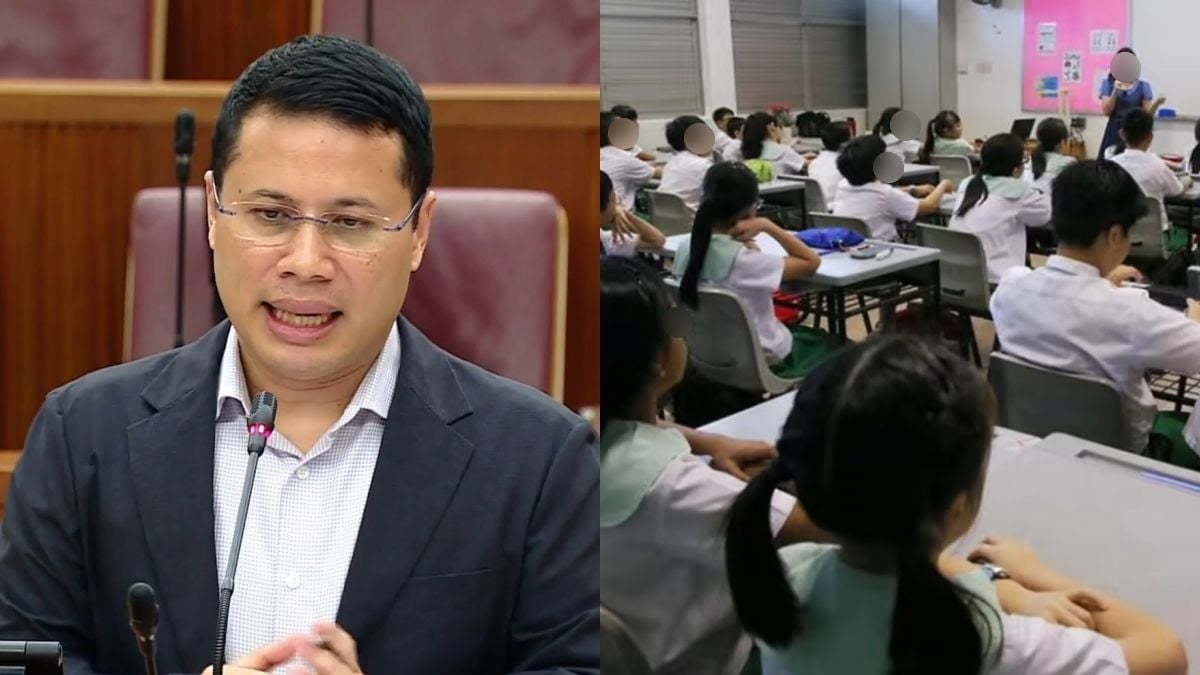
Caning used only as last resort in schools when other measures are inadequate: Desmond Lee
Singapore schools use caning only when other measures fail, with strict safeguards and oversight, Education Minister Desmond Lee told Parliament, as MPs raised concerns over bullying, mental health impacts, and consistency in disciplinary practices.
- Caning in schools is used only after other disciplinary measures prove inadequate.
- New anti-bullying guidelines will standardise policies across schools by end-2026.
- MPs raised concerns about mental health, consistency, and protections for vulnerable students.

SINGAPORE: Caning in Singapore schools is used only as a last resort and under strict safeguards, Education Minister Desmond Lee told Parliament on 5 May 2026, as MPs pressed for clarity on bullying policies and student protections.
Responding to more than 20 parliamentary questions, Lee said corporal punishment is applied only “if all other measures are inadequate”, and must follow strict protocols.
“Caning must be approved by the principal, and carried out only by authorised teachers,” he said.
The issue drew wide parliamentary scrutiny, with MPs including Alex Yeo, Dr Charlene Chen, and Louis Chua raising questions on how caning is used to address bullying.
Framework and safeguards for caning
Lee said schools assess multiple factors before administering caning, including a student’s maturity and whether the punishment would help them learn from their mistake.
He noted research linking unregulated corporal punishment in home settings to negative outcomes, but said schools operate within a structured and supervised framework.
Caning is part of a broader disciplinary system that provides “certainty of consequences”, he said.
“If it is used, it is never administered in isolation but always as part of a suite of restorative and disciplinary measures,” Lee added.
Schools also monitor students after punishment and provide counselling support.
“Schools will monitor the student’s well being and progress after caning and counsel the student to reflect and learn while supporting the student’s rehabilitation,” he said.
He added that firm consequences help reinforce boundaries and reduce bullying, contributing to a safer school environment.
Parliamentary concerns over bullying and discipline
A total of 43 written and oral questions were filed by MPs on bullying, following new anti-bullying recommendations released on 15 April 2026 after a year-long review involving 2,000 stakeholders.
MPs questioned the effectiveness of caning in preventing repeat offences and its long-term impact on mental health.
They also sought greater transparency on how disciplinary measures would be standardised and the research supporting them.
Concerns were raised about safeguards for students with special needs and how punitive approaches align with a restorative school culture.
Standardised policies and implementation
The Ministry of Education’s recommendations include standardised disciplinary guidelines across all schools, covering detention, suspension, caning, and conduct grade adjustments.
They also introduce a new reporting channel, faster communication with parents, and additional funding for manpower support.
Lee said all schools must develop their own anti-bullying policies by the end of 2026 based on these guidelines.
Cluster superintendents will support schools in implementing offence management processes and disciplinary frameworks.
The ministry is also developing an offence management system to aid investigations, documentation, and monitoring.
Teacher workload and transition
Lee acknowledged that teachers may face increased workload in the short term as new measures are rolled out.
“We expect the workload to stabilise after a few years when teachers become more familiar with the enhanced processes,” he said.
Additional funding will be provided to support schools during the transition.
Legal framework and gender differences
Addressing why caning is applied only to boys, Lee said the practice aligns with the Education (Schools) Regulations and the Criminal Procedure Code, which prohibits caning for women.
“Nonetheless, this does not mean that girls who bully others are less culpable,” he said.
Girls are subject to a tiered disciplinary approach, including detention, suspension, and conduct grade adjustments.
Parental communication and reporting systems
Lee said schools will maintain timely communication with parents while investigating incidents.
Parents are encouraged to work with schools if students disclose bullying to family or friends.
Those with concerns should engage schools directly.
From 2027, all schools will introduce an online reporting platform for students and parents, complementing existing reporting channels.
Urgent cases should still be reported directly to teachers or school leaders.
Cyberbullying and AI-generated abuse
Concerns over cyberbullying featured prominently, including cases involving artificial intelligence-generated obscene images.
Workers’ Party MP Sylvia Lim asked whether such incidents were increasing and how schools could respond when perpetrators are unknown.
She also sought details on how anti-bullying recommendations were developed, including research and consultations.
In response, Lee said such cases “still remain small”, but the ministry is monitoring them closely.
The ministry will work with families and authorities to support victims and remove harmful content.
“It’s not an easy task, because there could be proliferation around different platforms,” he said.
If perpetrators cannot be identified, authorities will be involved.
Students will also be able to report online harms, including harassment and intimate image abuse, to the Online Safety Commission when it becomes operational by end-June 2026.
Abdul Muhaimin raises concern over safeguards for vulnerable students
MP Abdul Muhaimin raised concerns about how the ministry ensures vulnerabilities are properly assessed before serious discipline such as caning is administered.
He asked how safeguards are applied to students with mental health conditions or special educational needs.
Lee said schools adopt a holistic approach in assessing each case.
This includes evaluating whether a student faces special needs, mental health challenges, difficult home environments, or peer pressure.
He said a network of teachers, special educational needs officers, and school counsellors supports this process to ensure proper oversight.
For students with special needs who have caused harm, disciplinary responses are tailored to be “educative, restorative, and focused on helping the student learn the necessary skills”.
Schools also prioritise immediate safety and provide support to victims, particularly those with mental health needs.
Lee acknowledged the challenge of ensuring consistent discipline while allowing flexibility for individual cases.
He described this as a “perennial puzzle” across schools and society.
“It’s always that balance between consistency and fairness, that principle, versus providing discretion, to ensure that discipline ultimately has education as its core goal,” he said.