Singapore sets cross-border railway laws ahead of RTS Link launch in December
Singapore has passed new laws to manage cross-border security, jurisdiction and immigration for the RTS Link with Malaysia ahead of its December launch. The framework defines incident control, legal authority and co-located border checks at Woodlands North and Bukit Chagar.
- Singapore and Malaysia will share responsibility for incidents on the RTS Link based on train location and movement.
- New laws establish co-located immigration checks at Woodlands North and Bukit Chagar stations.
- Both countries gain concurrent jurisdiction over crimes on trains in transit, with priority given to destination country.

Singapore has passed new legislation setting out how it and Malaysia will manage railway security, criminal jurisdiction and cross-border incidents when the Johor Bahru-Singapore Rapid Transit System (RTS) Link begins operations in December 2026.
The laws, passed on 5 May 2026, establish a detailed framework governing how authorities from both countries will respond to emergencies, enforce criminal laws and conduct immigration checks along the 4km rail link connecting Woodlands North and Bukit Chagar.
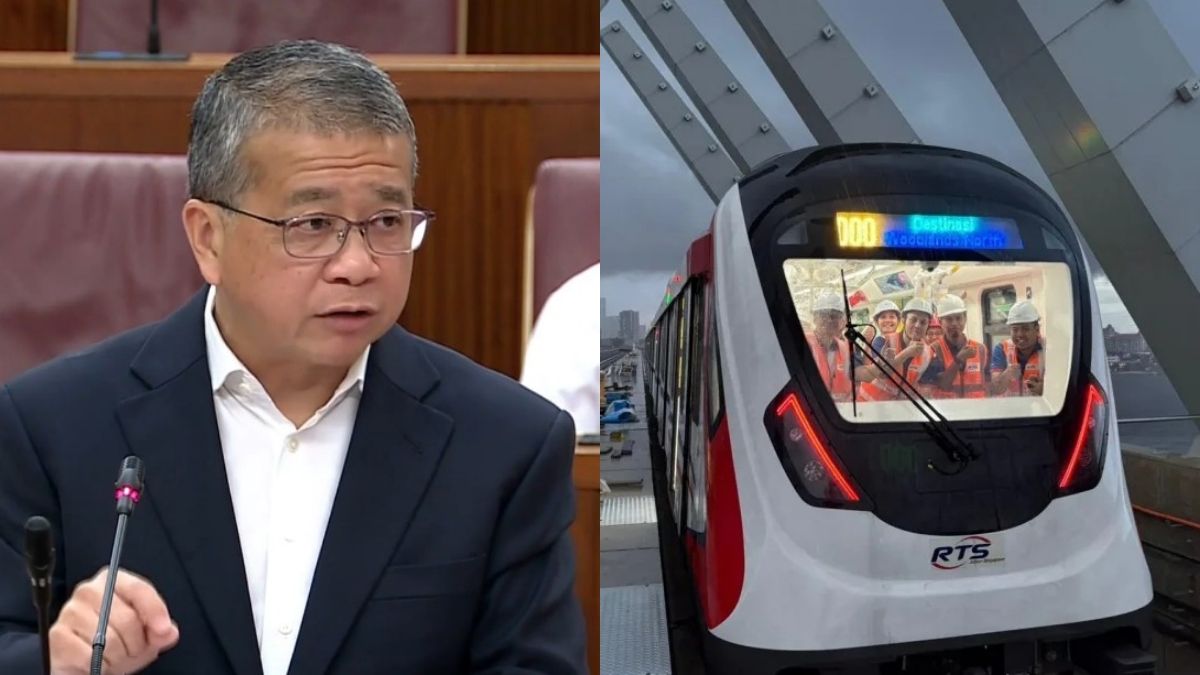
Law Minister and Second Home Affairs Minister Edwin Tong told Parliament that the framework is designed to ensure clarity in operational responsibility while enabling close bilateral cooperation.
“These arrangements ensure clarity of jurisdiction when the exact location of the offence is unclear,” Tong said. “It also allows Singapore to investigate offences when there is public interest to do so.”
Framework for managing cross-border incidents
The legislation defines how incidents occurring on trains and along the RTS Link infrastructure will be handled depending on the situation and location.
If an incident occurs on a train that is still able to continue its journey, authorities in the country where the train stops will take charge.
However, if a train stalls, the country in which the train is physically located will assume responsibility for managing the incident.
A specific protocol applies to the stretch between boundary markers Pier 47 in Malaysia and Pier 48 in Singapore. In such cases, the position of the train’s nose determines which country takes primary responsibility.
For Singapore-bound trains, Malaysia remains the incident manager until the train’s nose crosses Pier 48.
Beyond that point, Singapore assumes responsibility, even if most of the train remains within Malaysian territory.
Conversely, for Malaysia-bound trains, Singapore is responsible until the train’s nose crosses Pier 47, after which Malaysia takes over, regardless of the train’s remaining position.
If an incident occurs on the tracks without involving a train, the country whose officers arrive first between Piers 47 and 48 will take charge.
The framework also establishes that once one country assumes the role of incident manager, the other country will provide assistance upon request.
Emergency powers and operational limits
Authorities from both countries will be permitted to act across borders in emergency situations, but with clearly defined limitations.
Singapore officers, including personnel from the police and Singapore Civil Defence Force, may operate in Malaysia during emergencies to save lives or limit damage.
Malaysian officers are granted equivalent powers within Singapore.
However, such cross-border actions do not extend to law enforcement powers such as arrests.
“They cannot make arrests in the other country,” Tong said, emphasising the limits placed on foreign officers operating outside their jurisdiction.
Jurisdiction over crimes on the RTS Link
The laws also address how criminal offences committed on RTS Link trains and infrastructure will be handled.
Both Singapore and Malaysia will have concurrent criminal jurisdiction over offences committed on trains in transit and along the section between Piers 47 and 48.
Outside this stretch, jurisdiction will generally fall to the country where the offence occurs.
For offences committed on moving trains, priority will be given to the country where the train completes its journey.
This mirrors international practices seen in aviation and rail systems such as the Channel Tunnel linking the United Kingdom and France.
Singapore law will apply to offences committed on trains in transit as if they had occurred within Singapore, allowing authorities to investigate and prosecute even if the incident took place outside national borders.
Malaysia has introduced similar provisions under its own legislation.
Tong noted that the location where a report is filed does not determine jurisdiction, reinforcing the emphasis on destination-based authority.
Co-located immigration and security checks
A central feature of the RTS Link is the co-location of Customs, immigration and quarantine (CIQ) facilities at both Woodlands North and Bukit Chagar stations.
Under this system, passengers will complete both departure and arrival immigration checks before boarding the train.
At Woodlands North, travellers will first undergo security screening and departure clearance by Singapore’s Immigration and Checkpoints Authority.
They will then proceed to Malaysia’s CIQ zone within the same station, located one level below, where Malaysian officers will conduct arrival immigration clearance and selective security checks.
Once both checks are completed, passengers board the train to Bukit Chagar without needing further immigration clearance upon arrival.
Malaysian authorities may still carry out additional selective checks, inspect permits and collect duties where necessary.
The same process applies in reverse for passengers travelling from Johor Bahru to Singapore.
Legal status of officers and operational zones
The legislation establishes designated areas within Woodlands North station as Malaysia’s CIQ zone, where Malaysian border laws will apply alongside Singapore law.
Only Malaysian officers formally recognised by Singapore authorities will be permitted to operate within these zones, and such recognition can be withdrawn at any time.
Within these areas, Malaysian officers are authorised to conduct document checks, screen travellers and deny entry to inadmissible persons or goods.
Their powers are limited strictly to these functions.
The laws also grant Malaysian officers legal protection while on duty in Singapore, treating them as public servants under Singapore law.
Reciprocal arrangements apply to Singapore officers stationed at Bukit Chagar, who will enjoy similar protections under Malaysian law.
Malaysia passed corresponding legislation on 5 March 2026 to facilitate these arrangements.
The framework further ensures that data collected by Singapore officers operating in Malaysia will be treated as if it were collected domestically, subject to Singapore law. Equivalent protections apply to Malaysian officers.
Tong added that Singapore-owned documents and equipment at Bukit Chagar are protected from “seizure, confiscation or any other form of interference”.
He said the principle of reciprocity underpins the legislation, with provisions allowing Singapore to adjust how Malaysian officers are treated if Malaysia’s laws are deemed less favourable.
RTS cross-border rail crimes to follow journey-end jurisdiction, transfers allowed on request
During parliamentary debates, several members raised concerns about how jurisdictional rules would operate in practice.
Sylvia Lim, the Workers’ Party MP for Aljunied GRC, questioned whether the legislation clearly defines which country has priority in handling offences, noting that the Bill does not explicitly state this.
She also highlighted potential tensions arising from differences in criminal laws between Singapore and Malaysia, particularly in cases involving nationals from either country.
Lim asked how “public interest” would be determined when both countries have stakes in a case, warning that competing claims could arise.
In response, Tong reiterated that jurisdiction is primarily determined by the train’s destination, with flexibility for adjustments based on public interest considerations.
He said such matters would be managed through bilateral agreements and established frameworks to minimise risks of double prosecution.
Lim also sought clarification on Clause 39(2), which Tong said governs the circumstances under which Singapore may relinquish jurisdiction.
No onboard security planned for RTS Link 5-min journey
Questions were also raised about whether enforcement officers would be deployed on RTS Link trains.
Tong confirmed that there are no plans to station security personnel on board as a standard measure.
He said this decision reflects the short five-minute journey time and the presence of comprehensive CCTV systems providing real-time monitoring from both countries.
Operators may deploy roving staff when necessary, who can contact the operations control centre for assistance during the journey.
Such deployment, Tong said, would be used as a contingency rather than a default arrangement.
MP Vikram Nair had asked whether joint patrols or onboard officers would be introduced and which country would have authority to act.
Tong clarified that enforcement would depend on where offences are detected and under which jurisdiction they fall.
He added that if Singapore officers at Bukit Chagar detect attempts to bring prohibited items such as vapes or drugs, Malaysian laws would apply.
Conversely, offences detected during Singapore’s checks within its territory would be handled under Singapore law.
“Singapore’s zero-tolerance approach to drug trafficking will not change,” Tong said.