Edwin Tong says rule of law must serve Singapore's most vulnerable to have meaning
Law Minister Edwin Tong described the rule of law as a dynamic, living framework requiring continual renewal, and warned that Singapore's legal reputation counts for little if the most vulnerable cannot access it.
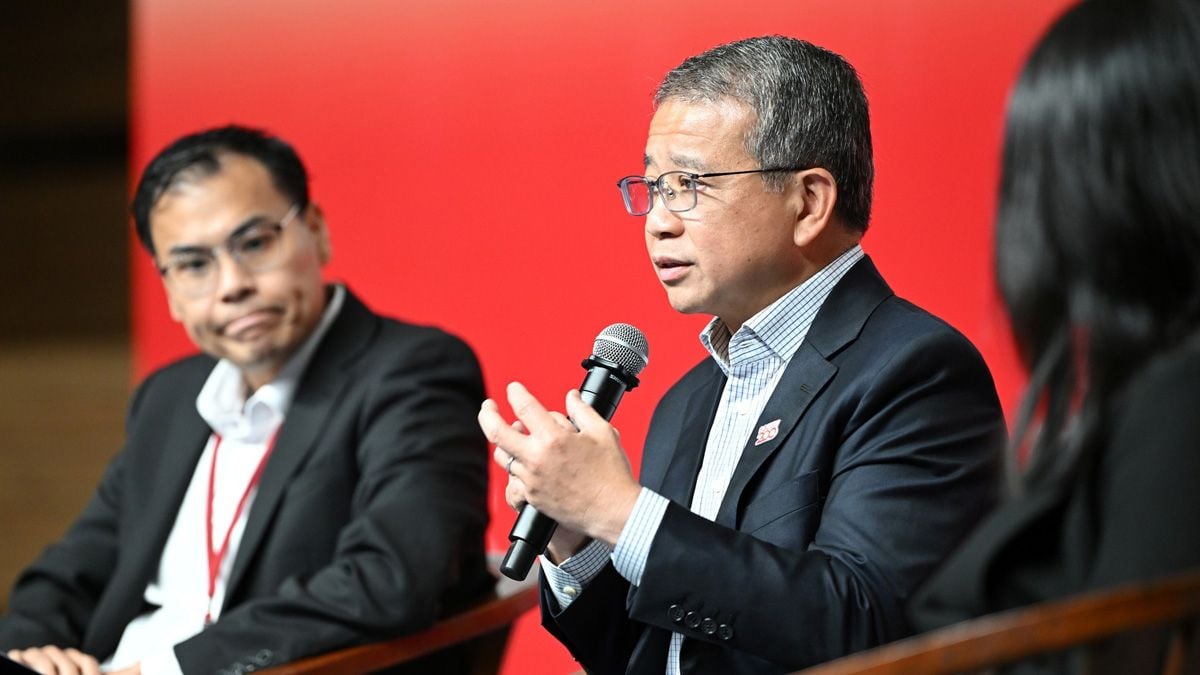

Law Minister Edwin Tong SC has described the rule of law as a dynamic, living framework that must be continually renewed to remain fit for purpose, warning that Singapore's reputation for a first-rate legal system counts for little if the most vulnerable members of society cannot access it.
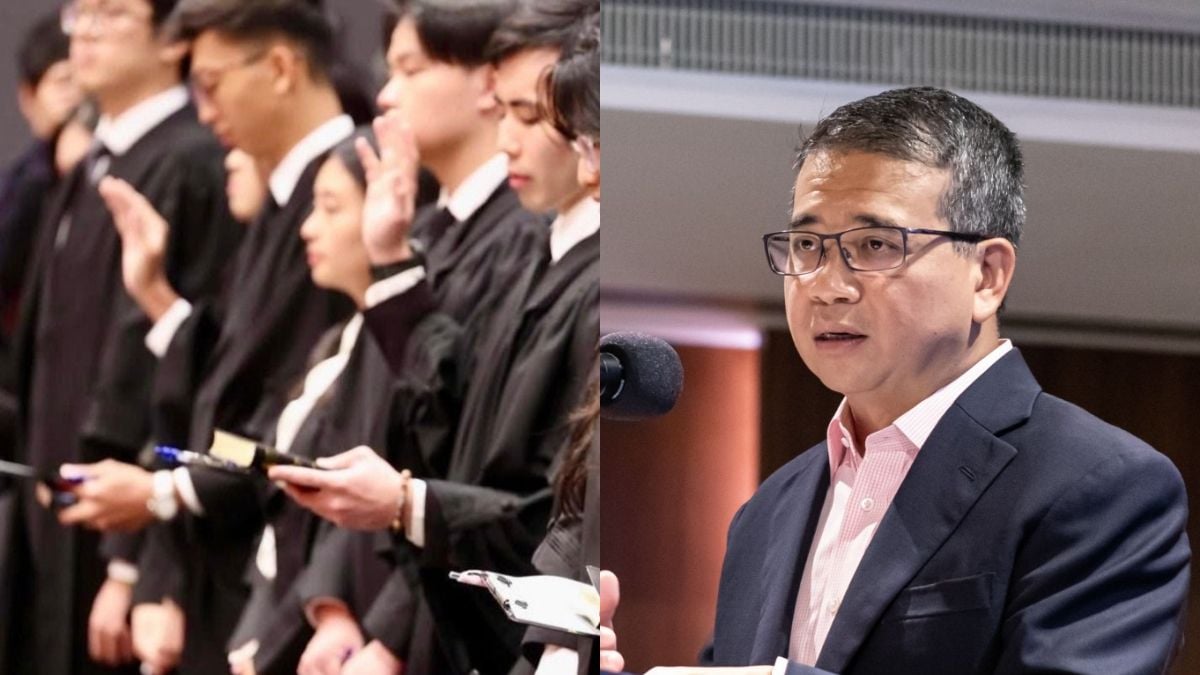
Tong made the remarks at a panel dialogue closing the SGLaw200 Youth Forum on 13 May 2026 at the Yong Pung How School of Law at Singapore Management University. The forum was jointly convened by the Ministry of Law (MinLaw) and the Institute of Policy Studies (IPS) to mark the bicentennial of Singapore's modern legal system.
The dialogue was moderated by Pro Bono SG Deputy Chief Executive Officer Cai Chengying. Tong was joined on the panel by High Court Judge Mohamed Faizal Mohamed Abdul Kadir and Deputy Attorney-General Goh Yihan SC of the Attorney-General's Chambers (AGC). Prime Minister and Minister for Finance Lawrence Wong delivered the opening address to the forum, which drew nearly 500 attendees.
Rule of law as a living framework
According to a report by Channel NewsAsia (CNA), Tong opened by framing the rule of law not as a static body of rules but as a framework requiring active renewal to address emerging challenges, including those posed by technology and the evolving needs of vulnerable communities.
He said the government, sitting at the intersection of society and law, bears a duty to reflect the social values that the population wishes to see in its legal architecture. He pointed to the law's treatment of offences against children and the elderly as an example of how legislation encodes societal priorities, with harsher penalties attached to crimes against vulnerable victims.
"The rule of law is the basis on which we believe that no one is above the law, and so no segment of society will rise ahead or fall behind because of who we are," Tong said.
Expanding access to justice
Tong outlined concrete steps taken to strengthen access to justice, citing revised legal aid thresholds, the institutionalisation of public defence, and the expansion of community law centres into residential heartland areas.
He said these measures reflect the principle that Singapore's legal institutions derive their meaning from their accessibility. A world-class judiciary and legal system, he said, would not fulfil its purpose if the people most in need of protection felt excluded from it.
Justice Faizal echoed the concern from the judiciary's perspective, highlighting practical reforms including the rewriting of court correspondence in simpler language and provisions enabling smaller claims to be filed and managed entirely online.
Youth as participants in law-making
Responding to a question on civic participation in law-making, Tong pointed to the Online Safety (Relief and Accountability) Act as a concrete illustration of how young Singaporeans can shape legislation. He noted that youth were actively consulted during the drafting process.
The exchange formed part of a broader discussion on the forum's central theme: the role of young people in shaping the future of Singapore's legal system. Tong framed youth engagement not as aspirational but as a practical reality already embedded in the legislative process.
The separation of powers
Both Justice Faizal and Goh addressed the boundary between judicial and executive roles on social policy questions.
Justice Faizal said Singapore's courts do not set social policy in the abstract. When genuine disputes with real consequences come before the courts, however, judges remain obligated to deliver answers — "carefully, fairly and according to law." He emphasised the importance of respecting the separation of powers, particularly when discussions touch on prosecutorial discretion.
Goh said AGC's function is not to determine the direction of policy but to ensure that government policy is clearly and consistently reflected in law without contradicting existing legislation. He added that AGC exercises particular care in cases involving vulnerable persons, and that the prosecution's role is not to secure convictions at all costs.
"Justice is sometimes done when we don't pursue the most serious charge, but the most appropriate charge, bearing in mind the available facts and evidence of the case," Goh said.
An audience member also raised same-sex civil marriage for the LGBTQ community. Tong reiterated that social policy must reflect the majority consensus of society.
He noted that the 2022 parliamentary repeal of Section 377A of the Penal Code, which had criminalised sex between men, was accompanied by a constitutional amendment protecting the heterosexual definition of marriage.
He added that social sentiments shift incrementally and said Singapore has always preferred to advance change in stages that keep pace with majority values.
The glass ceiling question
Towards the close of the dialogue, an audience member asked whether greater representation of the Malay-Muslim community in the senior ranks of Singapore's judiciary was a realistic aspiration.
Justice Faizal addressed the question directly, describing two contrasting approaches to perceived structural barriers.
The first involves accepting the existence of a glass ceiling and allowing that belief to define the limits of ambition — an outcome, he said, that would be self-fulfilling regardless of whether the barrier exists in practice.
The second involves pressing forward on the strength of individual ability, treating any ceiling not as a limit but as something to be broken for the benefit of those who follow.
"To the extent there is a glass ceiling, I have enough talent and individual ability to push against it — not for myself, but to shatter it so that the next person can stand on my shoulders and go even further than I can," Justice Faizal said.
He added that when asked previously whether more Malay-Muslim senior counsel might emerge in the next decade, his answer was: "I don't see why not."
SGLaw200 forum programme
Alongside the closing dialogue, the forum featured expert and youth-led breakout sessions on the relationship between the rule of law and economic progress, legal frameworks governing technology and the digital sphere, and questions of sustainability, diversity and civic engagement.
Featured panellists from the broader programme included DBS Group Chief Executive Officer Tan Su Shan, Microsoft Singapore Director of Government Affairs Melissa Yoong, National Youth Council Chief Executive Officer David Chua, and Lalamove Singapore Country Head for Corporate Affairs Yuvan Mohan.
The forum also marked the third and final stage of the MinLaw Ideation Challenge, in which student teams presented proposals on real-world legal challenges before a panel of judges.