After two months stranded, China-linked tankers transit Hormuz during Trump-Xi Beijing talks
China-linked vessels transited the Strait of Hormuz through Iran’s permit-based shipping corridor as Donald Trump met Xi Jinping in Beijing for talks expected to focus on the Iran war and restoring commercial access to the critical energy route.
- China-linked vessels transited the Strait of Hormuz through Iran’s designated shipping corridor.
- Donald Trump and Xi Jinping held talks in Beijing focused on Iran and global trade tensions.
- The Hormuz route remains heavily restricted amid the ongoing Iran conflict.

A Chinese-owned supertanker carrying Iraqi crude oil moved through the Gulf of Oman on 13 May 2027 in what could become a significant test of tightening United States blockade enforcement around the Strait of Hormuz, one of the world’s most strategically important energy chokepoints.
Shipping tracker data showed several cargo and tanker vessels linked to China navigated the strait through Iran’s designated “safe” shipping corridor over the past 24 hours, as US President Donald Trump arrived in Beijing for high-level talks with Chinese President Xi Jinping.
The discussions between both leaders are expected to focus heavily on the Iran conflict, global trade tensions and the possible reopening of the Strait of Hormuz to wider commercial shipping.
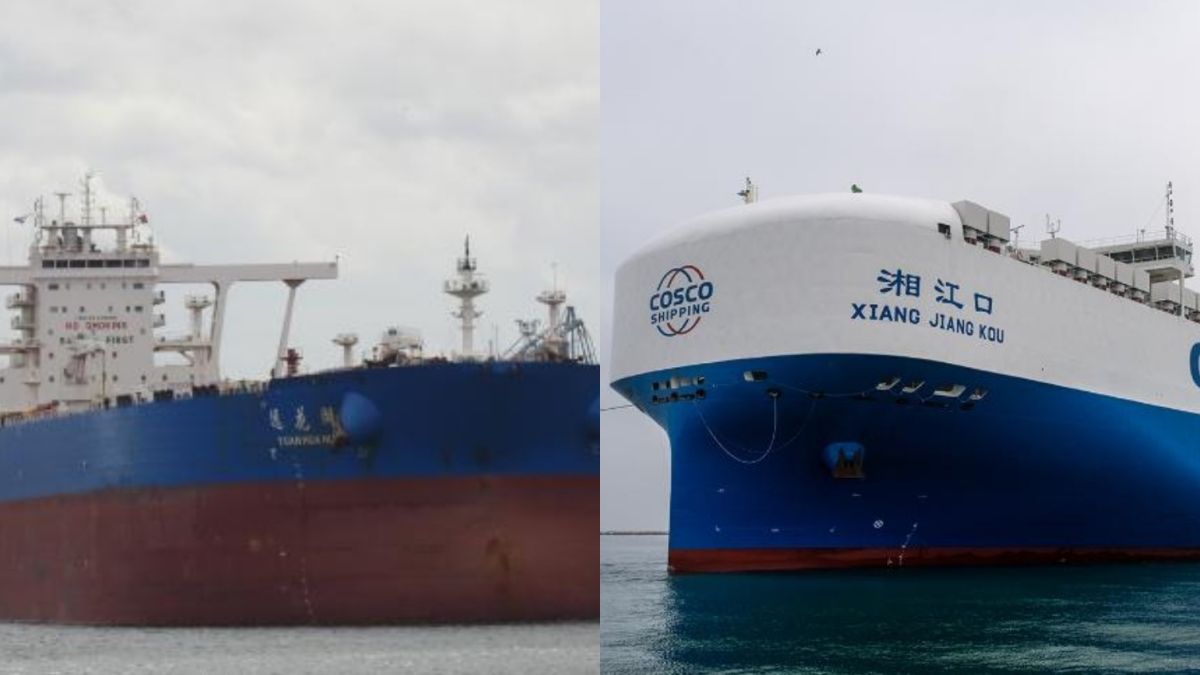
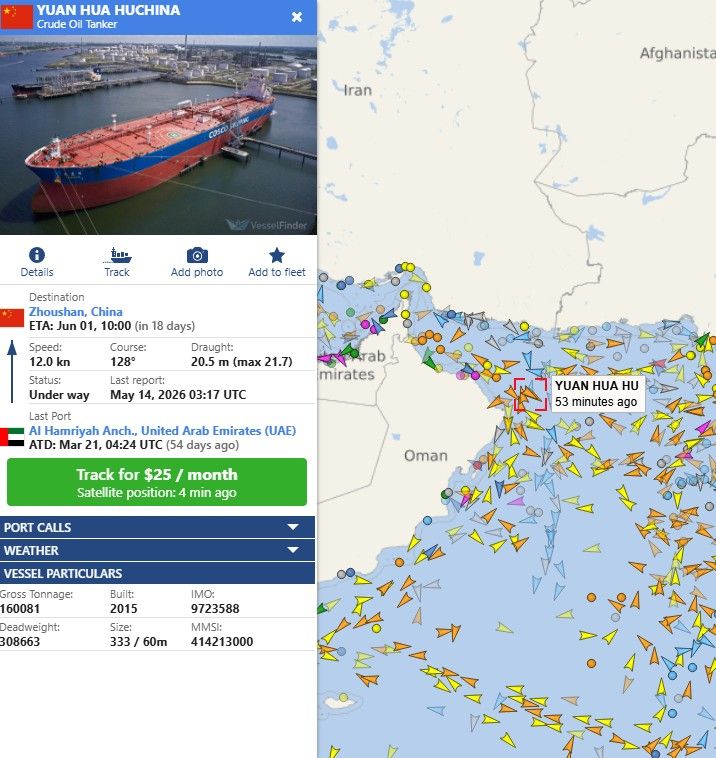
Data from vessel tracking platform Vesselfinder showed the China-flagged crude oil tanker Yuan Hua Hu sailing through the strait south of Iran’s Larak Island earlier on Wednesday.
The vessel’s Automatic Identification System (AIS), which broadcasts a ship’s position, origin and destination, listed its destination as “Chinese owner and crew”.
The Yuan Hua Hu is owned by China COSCO Shipping Corporation, a Shanghai-based shipping giant.
Iran permit-based corridor in focus
The route used by the tanker formed part of a maritime corridor Iran has described as a “safe” and “permit-based” shipping lane through the Strait of Hormuz.
The narrow waterway remains one of the world’s most critical routes for global oil and liquefied natural gas shipments.
At least four China-linked vessels reportedly used the same corridor between Tuesday and Wednesday.
The Starway, an oil and chemical tanker, travelled through the strait from Omani waters toward waters north of the United Arab Emirates.
Another tanker, Deepblue, reportedly owned by a Shanghai-based company, sailed in the opposite direction from west to east.
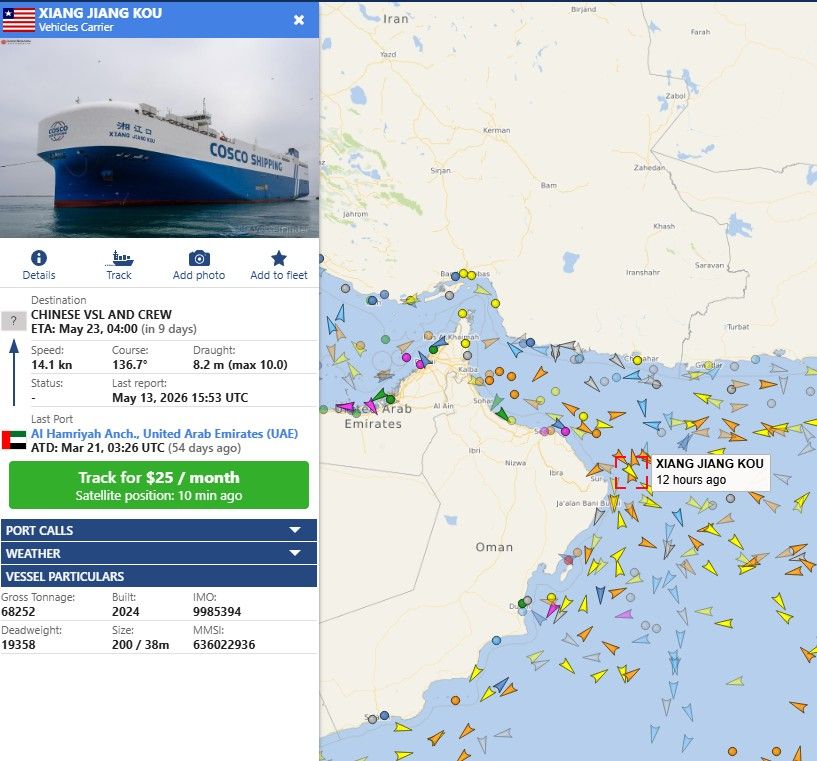
The Xian Jiang Kou, a vehicle carrier that departed Saudi Arabia on 16 March and remained in the Persian Gulf until Tuesday, also passed through the strait using Iranian shipping lanes south of Larak Island.
Its AIS destination was listed as “Chinese vsl and crew”.
The latest movements come as the Strait of Hormuz remains effectively closed to most commercial traffic following the outbreak of the Iran war.
Few vessels have used the shipping channel in recent weeks, with Iran permitting only limited passage under its controlled corridor system.
Trump and Xi hold high-level Beijing meeting
The vessel transits coincided with Trump’s state visit to China, which had reportedly been delayed by six weeks due to the US and Israeli war against Iran.
Trump is expected to seek stronger Chinese support in efforts to end the conflict and restore broader shipping access through the strait.
China maintains close economic and diplomatic ties with Tehran and is regarded as a key player in any negotiations involving the future security of the shipping route.
Xi Jinping greeted Trump at the Great Hall of the People in Beijing on Thursday morning, where both leaders shook hands and posed for photographs before bilateral talks.
During the meeting, Xi urged both countries to pursue cooperation instead of rivalry amid growing geopolitical uncertainty.
“The world is closely watching the summit,” Xi said, while warning against falling into the “Thucydides trap”, a term often used to describe potential conflict between rising and established powers.
Xi said China and the United States shared more common interests than differences and stressed that cooperation benefits both nations while confrontation damages both sides.
He also called on Washington and Beijing to become partners that “help each other prosper” and work together to provide greater global stability.
Trump responded positively, describing Xi as a “great leader” and “friend”.
He said previous disputes between both countries had been resolved quickly through direct communication and predicted bilateral ties would become “better than ever before”.
Global energy markets closely watching Hormuz
The Strait of Hormuz remains a vital artery for global energy markets, linking Persian Gulf oil producers to international buyers.
Any disruption to shipping activity through the narrow waterway has immediate implications for global crude oil prices, supply chains and maritime insurance costs.
The recent transit of China-linked vessels through Iran’s corridor is likely to draw close scrutiny from Washington as the United States increases pressure on shipping activity connected to Tehran during the ongoing conflict.