Malaysia protests Norway’s missile export ban over Naval Strike Missile deliveries
Malaysia has lodged a formal protest against Norway after Oslo revoked export licences tied to Naval Strike Missile deliveries, a move Prime Minister Anwar Ibrahim warned could undermine Malaysia’s naval readiness and disrupt the Littoral Combat Ship programme.
- Malaysia formally protested Norway’s revocation of missile export licences linked to the NSM system.
- Prime Minister Anwar Ibrahim warned the move threatens naval readiness and regional stability.
- The delayed missile deliveries add pressure to Malaysia’s troubled Littoral Combat Ship project.

PUTRAJAYA, Malaysia: Malaysia has formally protested Norway’s decision to revoke export licences linked to the Naval Strike Missile (NSM) system, with Prime Minister Anwar Ibrahim warning that the move could affect national defence readiness and regional stability.
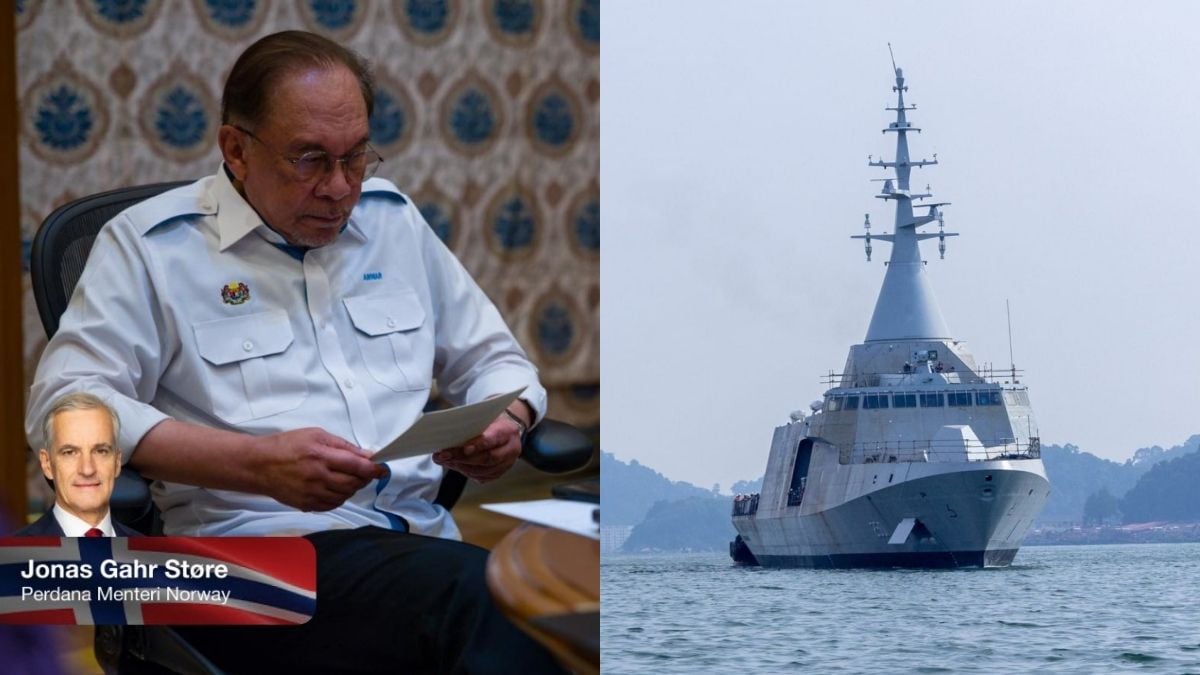
In a social media post on 14 May 2026, Anwar said he conveyed Malaysia’s “vehement objection” during a telephone conversation with Norwegian Prime Minister Jonas Gahr Støre over what he described as Norway’s “unilateral and unacceptable decision” to revoke the export licence for the missile system and associated launcher systems.
The Malaysian leader said the justification given by Norway was the protection of its national security interests.
Anwar stressed that Malaysia had fulfilled all contractual obligations since the agreement was signed in 2018.
“Malaysia has honoured every obligation under this contract since 2018: scrupulously, faithfully and without equivocation,” he said.
“Norway, it appears, has not felt compelled to extend us the same courtesy and demonstration of good faith.”
Concerns over defence readiness
Anwar said he made clear to Støre that the decision would have “grave consequences” for Malaysia’s defence operational readiness and the Littoral Combat Ship (LCS) modernisation programme.
“It will undoubtedly carry broader ramifications for the regional balance,” he said.
He also criticised the handling of the agreement, arguing that defence contracts should not be treated lightly.
“Signed contracts are solemn instruments. They are not confetti to be scattered in so capricious a manner,” Anwar said.
“If European defence suppliers reserve the right to renege with impunity, their value as strategic partners flies out the window.”
The missiles were ordered in 2018 for the Royal Malaysian Navy’s LCS fleet. The procurement agreement between the navy and Norway’s Kongsberg Defence & Aerospace AS was formalised in April that year in a deal valued at €124 million, approximately US$145 million.
The missiles were intended to equip six new Littoral Combat Ships as well as existing naval vessels KD Jebat and KD Lekiu.
Missiles blocked before shipment
Defence Minister Mohamed Khaled Nordin earlier said Malaysia was “shocked” after learning that Norway had halted the delivery of the missiles.
Speaking on 12 May, Khaled said the missile systems, initially scheduled for delivery in March 2026, were blocked after Norwegian authorities refused to approve the export licence just days before shipment.
In a separate statement issued on 7 May, Khaled confirmed that the Ministry of Defence held a procurement contract with Kongsberg Defence & Aerospace for the supply of NSM guided missiles intended for Malaysia’s Littoral Combat Ships.
“The Ministry takes note of the change in the Norwegian government’s position regarding defence export approvals, which has affected the implementation of the said contract,” Khaled said.
He added that Malaysia would engage Norway in discussions over what he described as a shift in Oslo’s position on defence export approvals.
The latest development followed reports by a Malaysian defence news portal claiming Norway had banned the missile deliveries shortly before the scheduled shipment date.
Norwegian response
Reuters reported that Kongsberg Defence & Aerospace said export licensing decisions were handled solely by Norwegian authorities.
The company said it fully complied with all applicable regulations and remained committed to its long-term partnerships and operations in the region.
Norway’s Ministry of Foreign Affairs meanwhile said it had revoked certain export licences related to specific technologies, citing stricter export control measures.
The Norwegian government has not publicly detailed which technologies were affected or whether broader geopolitical considerations contributed to the decision.
Pressure on LCS programme
The suspension of the missile deliveries adds further pressure to Malaysia’s troubled LCS project, which has faced years of delays and escalating costs.
The LCS programme was awarded in 2011 for six vessels at an initial cost of RM6 billion.
However, the project became embroiled in allegations of mismanagement and financial irregularities after years of delays left the vessels undelivered despite substantial government expenditure.
Following a government review, the project was relaunched in 2023 with the decision to reduce the planned fleet from six ships to five.
The first vessel was initially scheduled for delivery in August 2026 but was later postponed to December because of delayed equipment deliveries from manufacturers and ongoing rework issues.
The NSM systems were considered a key component of the combat capabilities planned for the new warships.