Rubio says Beijing cannot erase Tiananmen Square memories 37 years after military crackdown
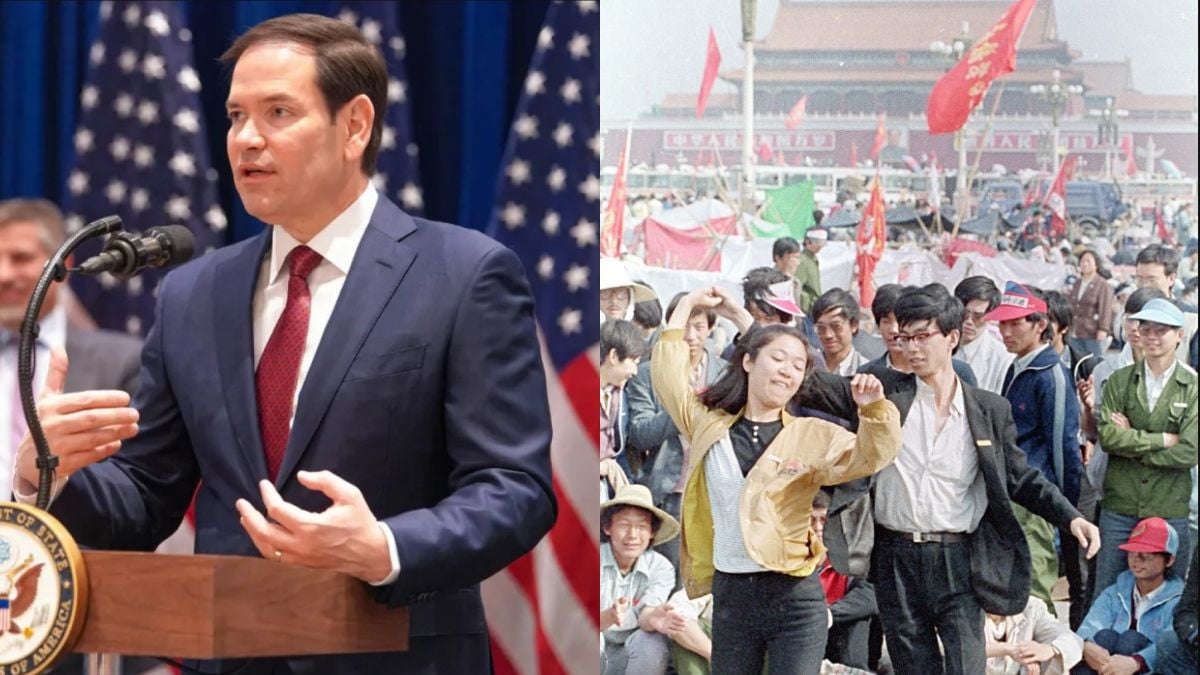
US Secretary of State Marco Rubio said Beijing’s censorship cannot erase memories of the 1989 Tiananmen Square crackdown, as Human Rights Watch accused Chinese authorities of continuing to suppress discussion of the military assault 37 years later.
- Marco Rubio said Beijing cannot erase memories of the 1989 Tiananmen Square crackdown through censorship.
- Human Rights Watch accused China of suppressing discussion of the massacre and denying accountability.
- Commemorations will take place globally despite growing restrictions in China and Hong Kong.

US Secretary of State Marco Rubio marked the 37th anniversary of the Tiananmen Square crackdown on 4 June 2026 by declaring that Beijing’s efforts to censor discussion of the event cannot erase its memory, while human rights advocates renewed calls for accountability over one of modern China’s most politically sensitive episodes.
In a statement released ahead of the anniversary, Rubio said the world continues to remember the events of June 1989 despite decades of official suppression by Chinese authorities.
“On June 4, the world marks 37 years since the Chinese Communist Party ordered its troops to attack thousands of peaceful demonstrators in and around Tiananmen Square,” Rubio said.
According to human rights groups, Chinese troops opened fire on pro-democracy demonstrators in and around Beijing’s Tiananmen Square during the military crackdown, killing hundreds, and possibly thousands, of people.
Rubio added: “No amount of censorship can erase the past. Those who sacrificed to uphold their unalienable rights of free expression and peaceful assembly will be vindicated someday.”
The remarks continued a long-standing practice in which senior US officials publicly mark the anniversary, often drawing criticism from Beijing.
Human Rights Watch renews criticism
Separately, Human Rights Watch (HRW) said Chinese authorities continue to suppress public discussion of the 1989 crackdown while expanding political and social controls across the country.
The organisation said the Chinese government has never accepted responsibility for the killings, disclosed the total number of victims, compensated affected families or prosecuted those responsible for the military operation.
“By burying the past, the Chinese government is also burying respect for fundamental rights in the future,” said HRW China researcher Yalkun Uluyol.
HRW called on Beijing to end censorship surrounding the events, permit public commemorations, compensate victims’ families and release individuals imprisoned for seeking accountability.
The organisation argued that efforts to erase public memory of the crackdown continue to have broader implications for civil liberties and freedom of expression in China.
Pressure on victims’ families
HRW highlighted what it described as increasing pressure on the Tiananmen Mothers, a group representing relatives of those killed during the crackdown.
According to the organisation, police disrupted the group’s annual New Year gathering for the first time in 2025.
Members of the group recently appealed to authorities to “restore justice and dignity to every family that lost a loved one”, reflecting continuing demands for official recognition of the victims and a full accounting of the events.
Thirty-seven years after the crackdown, the issue remains one of the most heavily censored topics in China.
Authorities continue to restrict discussion of the events online and in public spaces, while references to the anniversary are routinely removed from Chinese social media platforms.
Hong Kong commemorations face restrictions
HRW also pointed to growing restrictions in Hong Kong, where annual June 4 vigils once attracted crowds numbering in the hundreds of thousands.
For decades, the city hosted the largest public commemorations of the Tiananmen crackdown on Chinese soil.
However, recent years have seen those events effectively disappear amid sweeping political changes and the implementation of national security legislation.
Former organisers of Hong Kong’s annual commemorations, including activist Lee Cheuk-yan and barrister-activist Chow Hang-tung, are awaiting a verdict in a national security case.
The charges carry potential prison sentences of up to 10 years.
As public commemorations have become increasingly difficult in Hong Kong, overseas cities have assumed a greater role in preserving public remembrance of the anniversary.
Global remembrance continues
Despite extensive censorship in mainland China and tighter restrictions in Hong Kong, commemorative events are scheduled to take place in more than 30 cities across seven countries this year, according to HRW.
Cities including London, New York, Berlin and Taipei are expected to host events marking the anniversary.
The organisation urged foreign governments to press Beijing to acknowledge the killings, provide reparations to victims and hold those responsible accountable.
In Washington, US lawmakers are expected to mark the anniversary through speeches, hearings and press conferences on 4 June.
Tensions frame anniversary
This year’s anniversary takes place against the backdrop of continuing strategic rivalry between the United States and China.
Relations have entered a period of renewed uncertainty following President Donald Trump’s visit to Beijing in May, where he met Chinese President Xi Jinping and sought to preserve a fragile trade truce between the world’s two largest economies.
Trump has frequently praised Xi as a strong leader and has previously described him as governing China with an “iron fist”.
At the same time, the administration includes several officials known for taking a hard line on Beijing, including Rubio.
Before becoming Secretary of State, Rubio was sanctioned by China during his time in the US Senate because of his criticism of the Chinese government’s human rights record and policies towards Hong Kong, Xinjiang and other sensitive issues.
His latest statement is therefore likely to be welcomed by Chinese dissidents and pro-democracy activists, who have expressed concern that efforts to stabilise US-China relations could reduce international attention on human rights issues.
Nearly four decades after the military assault on demonstrators in and around Tiananmen Square, the anniversary remains a source of tension between Beijing and its critics, underscoring the enduring significance of an event that China continues to regard as politically taboo.