South Korea's ruling Democrats win sweeping local election victory but lose Seoul
South Korea's ruling Democratic Party won 12 of 16 major local races on 3 June 2026, flipping the conservative stronghold of Busan, but the opposition People Power Party retained the Seoul mayoralty. Ballot paper shortages at polling stations in the capital sparked protests and calls for an investigation.
- South Korea's ruling Democratic Party won 12 of 16 major mayoral and gubernatorial seats nationally.
- zOpposition incumbent Oh Se-hoon retained the Seoul mayoralty, winning a fifth term.
Ballot paper shortages at 14 Seoul polling stations prompted protests and an NEC apology.

South Korea's ruling Democratic Party (DP) secured a decisive victory in local elections held on 3 June 2026, winning 12 of 16 major mayoral and gubernatorial seats. The main opposition People Power Party (PPP) retained four, including the Seoul mayoralty, where incumbent Oh Se-hoon was re-elected to a fifth term.
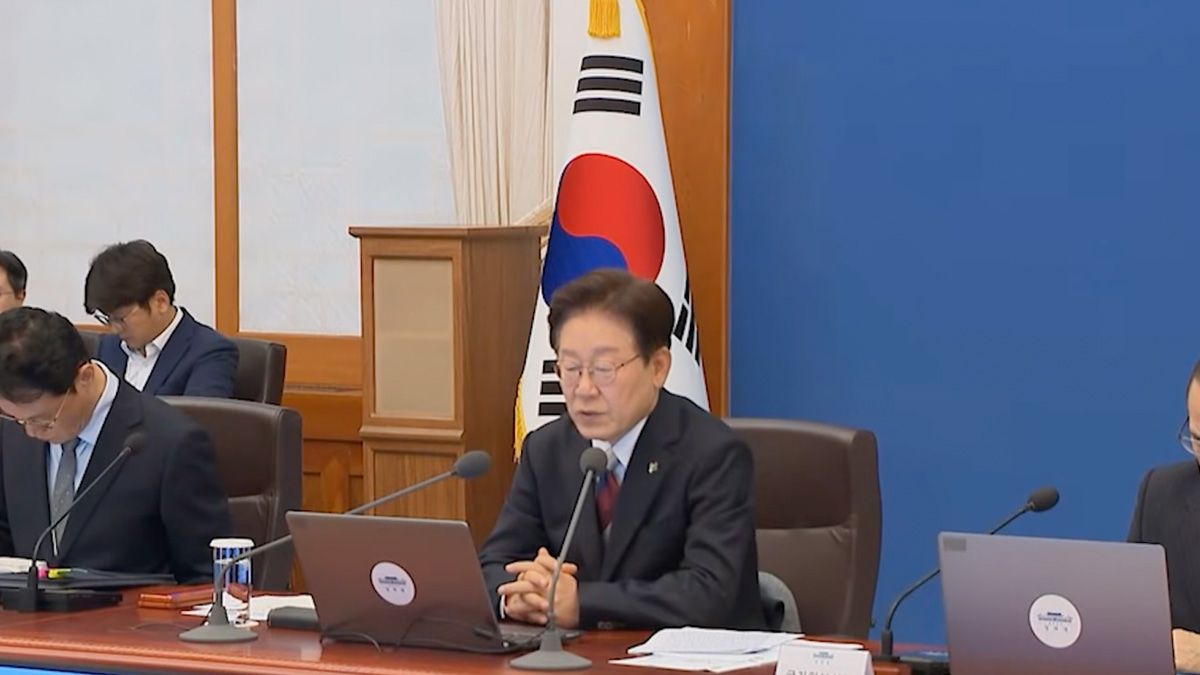
The results were announced on 4 June, exactly one year after President Lee Jae-myung's inauguration, and were widely regarded as the first nationwide test of his administration's public support.
DP flips Busan but Seoul holds for conservatives
Among the most closely watched contests was Busan, South Korea's second-largest city and a traditional conservative stronghold. DP candidate Jeon Jae-soo defeated PPP incumbent Park Heong-joon by a slim margin in a result that underscored the ruling party's expanded reach beyond its traditional base.
The loss of Seoul, however, tempered the ruling party's otherwise strong performance. Oh declared in his victory speech that Seoul voters had upheld the democratic principle of checks and balances to prevent the country from tilting entirely to one side.
DP leader Jung Chung-rae thanked voters for what he described as a great victory nationwide, while acknowledging the setback in the capital. "I deeply thank the people for giving the Democratic Party a great victory across the country. But it hurts that we failed to retake Seoul," Jung said.
Political analysts pointed to housing policy discontent as a factor in the capital's result. Shin Yul, a political science professor at Myongji University, said Seoul voters appeared to have been influenced in part by dissatisfaction with the government's housing policy, with authorities seeking to cool a hot market in the capital.
Gyeonggi Province and the capital region
In Gyeonggi Province, which borders Seoul and is home to a significant portion of the country's population, veteran DP lawmaker Choo Mi-ae won by a wide margin against PPP candidate Yang Hyang-ja. Choo's victory made her the first woman to head a provincial government in the country.
The capital region, which accounts for roughly half the national population, is widely regarded as a decisive battleground in any Korean election.
By-elections and political heavyweights
Fourteen parliamentary by-election seats were contested concurrently with the local races. The DP won nine, the PPP secured four, and one seat went to an independent.
Thirteen of the 14 parliamentary seats had previously been held by the DP. The loss of four seats was described as a minor dent to the party's dominant position in the 300-member National Assembly, where it already holds a majority.
The parliamentary races produced sharply different outcomes for two prominent political figures. Former PPP leader Han Dong-hoon, running as an independent in Busan's Buk-A district after distancing himself from the party's pro-Yoon faction, won a seat in the National Assembly. Cho Kuk, leader of the liberal Rebuilding Korea Party, narrowly lost to PPP's Yu Eui-dong in the tightly contested Pyeongtaek-B constituency, in a race that also featured DP candidate Kim Yong-nam.
Context: Yoon's ouster and the Lee administration
The elections took place against the backdrop of former President Yoon Suk Yeol's removal from office following his failed martial law declaration in December 2024. A district court sentenced Yoon to life imprisonment in February 2026 for the bid. His ouster had triggered a snap presidential election, which Lee won.
Throughout its campaign, the DP urged voters to deliver a stern judgment on what it characterised as the remnants of Yoon's insurrectionist forces.
The outcome marked a reversal from four years earlier, when the then-ruling PPP had claimed 12 of 17 major gubernatorial and mayoral seats in the 2022 local elections, held one month after Yoon took office.
Before this year's elections, the PPP controlled 12 of the 16 major local governments. That ratio has now been inverted.
DP wins majority of district and local council seats
Of the 227 district chief posts nationwide, the DP won 119, the PPP secured 95, and the remainder went to independents and a minor party. In Seoul, the DP won 17 of the city's 25 district chief posts, a significant improvement from 2022 when the party held only eight seats.
Local council elections were also held alongside the mayoral and gubernatorial contests, with some 4,000 council seats and 16 education superintendent positions also up for grabs.
Ballot paper shortages mar election
The elections were overshadowed by an unprecedented shortage of ballot papers at 14 polling stations in parts of Seoul. Voting was temporarily suspended at the affected stations, and some voters reported leaving without casting their ballots.
Voting was scheduled from 6 a.m. to 6 p.m. across 14,288 polling centres nationwide. An exception was made at one affected polling station in Songpa Ward, where voting hours were extended to 10 p.m.
The PPP called on the National Election Commission (NEC) to immediately halt vote counting and hold a revote if necessary. Conservative groups staged protests, including blocking ballots from leaving one Seoul polling station and preventing the NEC from officially confirming the Seoul mayoral results as of midday on 4 June.
President Lee expressed deep regret over the shortages, ordering relevant organisations to determine their cause, hold those responsible to account, and implement credible safeguards.
The NEC apologised and stated it would conduct a full investigation, adding that the shortages did not constitute grounds for delaying the election or ordering a rerun.