The Workers' Party has seen this playbook before — changing its leader will not change the play
The question before Workers' Party cadres on 28 June is not whether Pritam Singh made errors — he did, and he has said so. It is whether replacing him in response to 15 years of PAP political pressure rewards that pressure or resists it. The answer has consequences beyond his individual tenure.
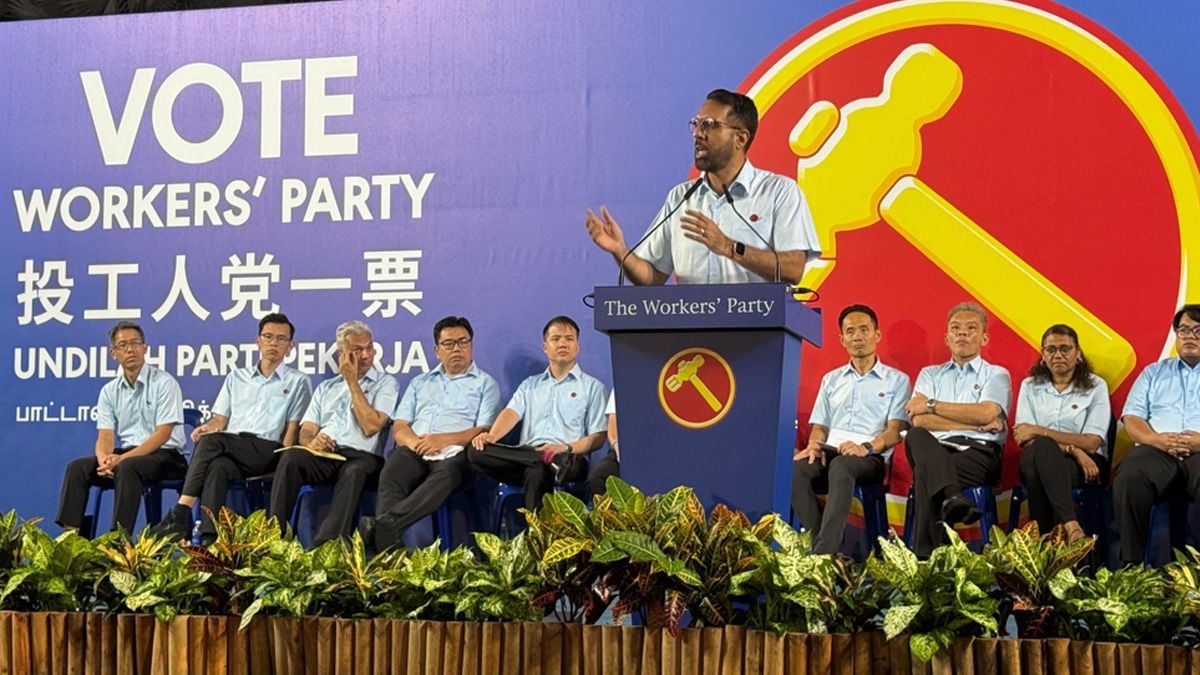

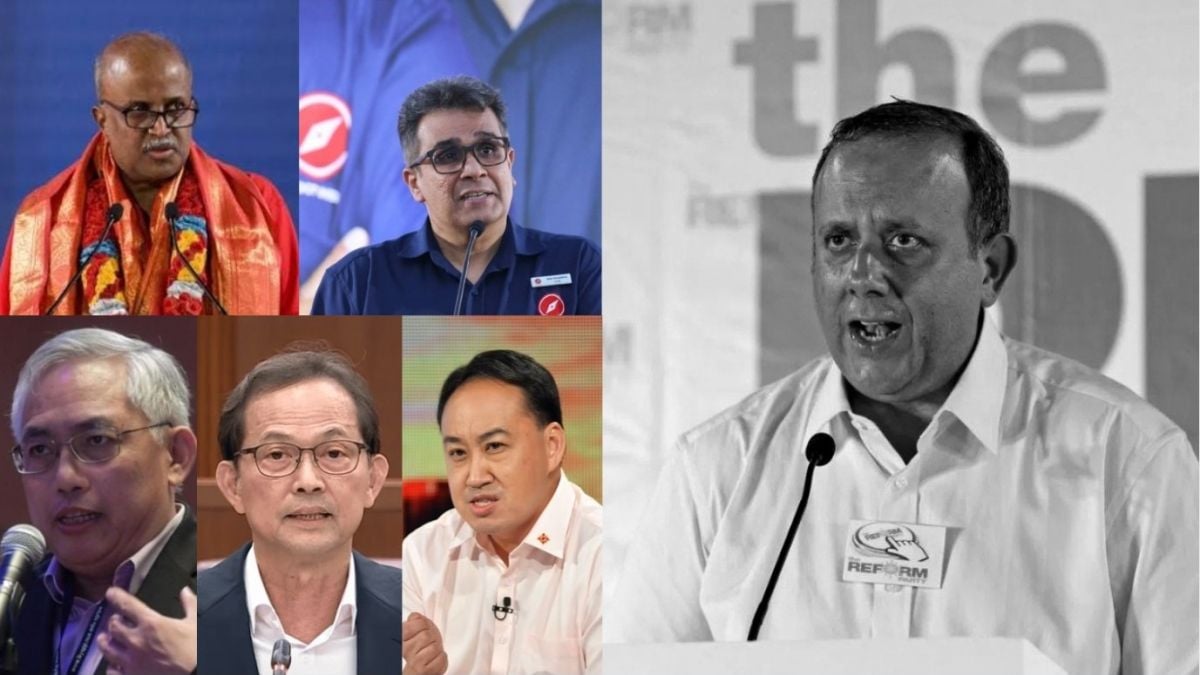
At the launch of his new book on 3 June 2026, former Workers' Party (WP) Non-Constituency Member of Parliament (NCMP) Yee Jenn Jong made an observation that deserves to be taken seriously as political analysis rather than dismissed as partisan loyalty.
"Every leader from the opposition side, as long as you make some significant breakthrough and you are a significant threat, will face that sort of big challenge," Yee said. "It happened with JBJ, it even happened to Low Thia Khiang. Whoever takes over, as long as the Workers' Party is able to mount a very serious challenge, will be under a big microscope. I don't know what will happen, but something will."
Yee was speaking days before the WP's special cadres conference on 28 June 2026, at which Secretary-General Pritam Singh faces a secret vote on his continued leadership following his criminal conviction for giving false evidence to Parliament's Committee of Privileges (COP).
Singh's appeal against his conviction was dismissed by the High Court on 4 December 2025. Justice Steven Chong upheld the trial judge's findings and confirmed the sentence of two fines totalling S$14,000. Singh subsequently paid the fine. Speaking outside the court, he said he was disappointed with the verdict but respected and accepted the judgment fully and without reservation.
"Some of you would have followed this matter for some time. I certainly took too long to respond to Raeesah's lie in Parliament. I take responsibility for that," he told reporters. "My commitment in that regard remains unchanged. My focus now is to continue serving Singaporeans and to speak up for them, alongside my Workers' Party colleagues."
That statement matters for how this opinion piece should be read. Singh accepted the judgment. He acknowledged he was too slow. This is not a piece arguing that he was wrongly convicted or that the court reasoned incorrectly within the framework it was given. The criminal proceedings are concluded and the fine has been paid.
What I want to argue is something different and more structural.
In identifying the pattern described in this piece, I am not suggesting that the courts, the Attorney-General's Chambers (AGC), or the Public Prosecutor failed to discharge their duties independently and according to law.
The People's Action Party (PAP) itself maintains publicly that Singapore's judiciary and prosecution operate free from political direction, and I accept that position for the purposes of this argument. The argument here concerns political decisions made by the PAP and its parliamentary representatives — decisions about which matters to investigate, which findings to act upon, and which referrals to initiate — not the conduct of the legal institutions that then processed those referrals independently.
That distinction is important and worth stating plainly. The PAP, as Singapore's dominant political party, does not need to direct courts or prosecutors to shape political outcomes. It needs only to use its parliamentary majority to create the conditions — the audit panels, the COP compositions, the referral decisions — in which legal processes are initiated in one direction and not another. The courts and the AGC then do their jobs according to law. The political work has already been done upstream.
With that framing established, the question before WP cadres on 28 June is not whether Singh made errors. He did, and he has said so himself. The question is whether replacing him in response to PAP political pressure serves the party's long-term interests — or whether it confirms that the strategy works.
What happened the moment Aljunied fell
After winning Aljunied GRC in 2011, the WP took over what became Aljunied-Hougang Town Council (AHTC), combining the newly won Aljunied GRC with Hougang SMC which the party already held. The town council was briefly renamed Aljunied-Hougang-Punggol East Town Council (AHPETC) following the WP's 2013 Punggol East by-election win, before reverting to AHTC after Punggol East was lost at the 2015 general election. For ease of reference, this piece uses AHTC throughout.
The PAP's political response to the WP's 2011 Aljunied breakthrough did not begin years later with a lawsuit. It began within weeks of the election result, through a mechanism that had been quietly prepared in advance.
Action Information Management Pte Ltd (AIM) was a company with two part-time staff whose three directors were all former PAP Members of Parliament. In June 2010 — less than a year before the 2011 general election — the PAP's town councils sold the Town Council Management System (TCMS) software to AIM through a sole-bid tender for S$140,000.
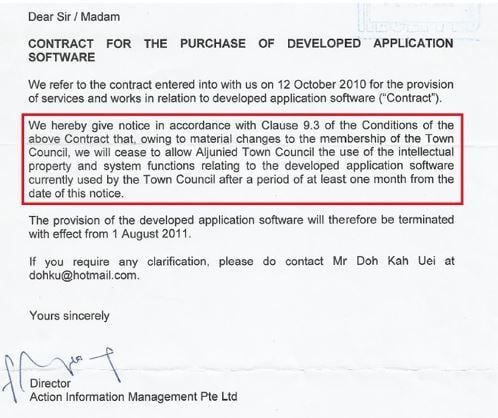
The software had originally been developed by National Computer Systems, paid for with residents' conservancy fees. AIM then leased it back to PAP town councils at S$785 a month. The contract contained a termination clause allowing AIM to cancel its agreement with any town council experiencing a "material change in composition."
The timing of the sale — to a PAP-owned company, through a sole bid, less than a year before an election — was not incidental. The termination clause was not incidental either.
In August 2011, weeks after the WP won Aljunied GRC, AIM terminated its contract with the newly WP-run Aljunied Town Council and refused to allow the WP to continue using the software.
The WP was left to scramble, forced to upscale its Hougang management system to handle a constituency many times its original size, without the administrative infrastructure that every PAP town council continued to enjoy.
WP Chairman Sylvia Lim was publicly furious. "What justification was there for the Town Councils to relinquish ownership and leave the continuity of the Town Council operations at the mercy of a third party?" she said. "Residents all over Singapore have a right to know."
PAP MP Teo Ho Pin defended the arrangement publicly, describing the termination clause as reasonable on the grounds that the contractor had priced its services on the basis of existing town council boundaries. What he did not explain was why a PAP-owned company capitalised at S$2, with three former PAP MPs as directors, had been the sole bidder for software paid for by residents' conservancy fees — and why that arrangement had been structured with a termination clause that activated precisely when a PAP town council fell to the opposition.
Despite operating under these stripped conditions from day one, AHTC faced a sustained sequence of official scrutiny that ran for the better part of a decade. AHTC's external auditors issued disclaimers of opinion on its financial statements for each year from FY2012 to FY2015, indicating insufficient information to form an audit opinion.
The Auditor-General's Office then released a special report flagging significant governance lapses. The Ministry of National Development and the Housing Board applied to the courts to appoint independent accountants to examine AHTC's books. The Court of Appeal ordered the appointment, and after both sides could not agree on a firm, directed AHTC to appoint one of the Big Four.
KPMG was appointed in March 2016 and submitted 23 monthly reports over nearly two years. In February 2018, KPMG confirmed that all 17 audit points had been resolved and that AHTC was compliant. The town council had, among other remedial measures, transferred close to S$14 million to address a shortfall in its sinking fund.
Before that process had even concluded, lawsuits were filed in July 2017 targeting Low Thia Khiang, Sylvia Lim, Singh, and other defendants, alleging S$33.7 million in misused funds and breaches of fiduciary duty. The High Court in 2019 found the town councillors liable for damages. Then the appeals were heard.
The Court of Appeal, in a five-judge panel including Chief Justice Sundaresh Menon, Justice Judith Prakash, Justice Tay Yong Kwang, Judge of the Appellate Division Woo Bih Li, and Senior Judge Andrew Phang, substantially overturned the trial judge's findings. The court ruled that the town councillors and employees did not owe fiduciary duties to AHTC or SKTC. Singh was cleared entirely. Low and Lim were found liable for negligence in AHTC's payments process, though the court found neither had acted dishonestly or in breach of fiduciary duty.
The cases eventually settled on a drop-hands basis. No damages were recovered. The town councils were ordered to pay approximately S$388,800 in costs and disbursements to the town councillors and employees for the appeals.
The sequence, taken whole, is striking in its clarity. The management software was stripped from the WP's town council within weeks of the election result, under contract terms a PAP-owned company had put in place less than a year before the vote.
The resulting administrative difficulties were subjected to years of escalating scrutiny — disclaimers of opinion, an Auditor-General's special report, and a court-ordered independent review. The audits produced findings that supported lawsuits. The lawsuits produced a High Court judgment finding liability against WP's most senior leaders. That judgment was overturned on appeal, with the Court of Appeal finding that those same leaders had acted in good faith throughout.
The PAP's political strategy extracted years of attrition — financial, reputational, and institutional — from the WP and its leadership. It did not require the courts to act improperly. It required only the PAP's political decisions upstream to create the conditions in which the legal process would run its course. By the time the Court of Appeal issued its vindicating findings, the damage had already accumulated across nearly a decade.
The gatekeeping principle: why upstream decisions matter
The AHTC saga shows the PAP's political strategy operating at the institutional level against the party. The 1997 polling station episode is not evidence of PAP strategy in itself. It is relevant because it illustrates a structural principle that is essential to understanding why upstream political decisions matter: courts and prosecutors can only act on matters that are brought before them.
Which matters reach that stage, and which do not, is often determined by decisions made earlier in the process. In the context of this article, those upstream decisions include parliamentary investigations, committee referrals, and other institutional mechanisms in which the PAP, by virtue of its parliamentary majority, exercises decisive influence.
Following the 1997 general election, opposition leaders including WP figures filed police reports alleging that senior PAP figures — including then-Prime Minister Goh Chok Tong and two Deputy Prime Ministers — had been present inside polling stations without authorisation, in apparent breach of the Parliamentary Elections Act.
The response came from then-Attorney-General Chan Sek Keong in an opinion written on 21 July 1997 and presented to the parliament nine days later. The AG concluded that no offence had been disclosed. The matter ended there. No parliamentary investigation. No criminal referral. No prosecution.
The AG's textual reasoning was careful and I am not arguing it was wrong as a matter of legal interpretation. But the practical consequence was significant: the question of whether the presence of senior PAP figures inside polling stations without authorisation constituted an offence was never brought before a court for determination. It was closed before any judicial scrutiny could be applied. We do not know what a court would have concluded because the upstream decision meant the question was never put to one.
In 2022, the PAP's parliamentary majority on the COP made the referral decision that brought Singh's matter before the courts. The courts then adjudicated it according to law and convicted him. Singh accepted the judgment without reservation.
The difference between the two outcomes was not the courts. It was the decisions made before the courts were ever involved. In 1997, complaints were closed upstream before judicial determination. In 2022, a matter involving the opposition leader was sent into judicial determination by a parliamentary body with a PAP majority.
Courts can only adjudicate what is brought before them. The decision about which matters enter that process is made upstream, in institutions where the PAP holds decisive influence. That gatekeeping function does not require any impropriety from courts or prosecutors to produce politically consequential outcomes. It requires only the consistent exercise of discretion and institutional power in one direction.
The committee that focused on the party rather than the lie
This brings us to the specific structure of Singh's conviction, the proceedings of which are now concluded with the payment of the fine.
The COP proceedings were formally convened to investigate Raeesah Khan's admitted lies in Parliament. Khan fabricated an account of accompanying a rape survivor to a police station, repeated it when directly questioned by a minister, and maintained it until she could not. She has admitted all of this on the parliamentary record.
Yet Yudhishthra Nathan, one of the prosecution's own witnesses at Singh's trial, testified that in his view the COP "was primarily interested in matters such as how party leaders treated Khan and how she was expelled from the WP" — and was focused on "Khan's state of mind during these events, particularly since party leaders had been involved in discussions as early as August, prior to her second false statement."
This was not a claim made by Singh's defence. It was the testimony of a prosecution witness, given in proceedings aimed at securing Singh's conviction.
The COP is a parliamentary body. Its composition is determined by the parliamentary majority. Its decisions about which matters to pursue, which witnesses to call, and which findings to refer to the Public Prosecutor are political decisions made by a politically constituted body in which the PAP holds a majority.
What Nathan's testimony describes — a parliamentary committee convened to investigate an opposition MP's admitted lies that redirected its focus toward that opposition party's leadership — is precisely the kind of upstream political decision that does not require any impropriety from courts or prosecutors to produce a politically consequential outcome.
The PAP's COP majority made the decision to refer Singh to the Public Prosecutor. The Public Prosecutor charged him. The court convicted him. Each institution in that chain did its job independently. The political decision that initiated the chain was made by the PAP.
The same individual, two sets of findings
It is worth pausing on a detail that connects the AHTC saga directly to Singh's conviction.
Singh was one of the defendants in the AHTC litigation. The Court of Appeal cleared him entirely, finding he had acted in good faith. Low Thia Khiang and Sylvia Lim were found liable for negligence in the payments process, though the court found neither had acted dishonestly.
That appellate finding — issued by a five-judge court including the Chief Justice — was the court's conclusion about Singh's conduct and intent as a WP leader managing public responsibilities.
Within years of that finding, Singh faced criminal proceedings in which the central question was again his intent — this time, whether he had acted with deliberate dishonest purpose in handling the Khan affair. The COP, constituted with a PAP majority, found that he had and referred the matter to the Public Prosecutor. The court convicted him. He accepted the judgment.
Two sets of proceedings. Two sets of findings about the intent of the same man as a WP leader. In the AHTC case, after full appellate review, a five-judge court found he had acted in good faith. In the COP case, initiated by a parliamentary body with a PAP majority and described by a prosecution witness as focused on WP leadership conduct, the court upheld a conviction that Singh accepted without reservation.
I am not arguing these outcomes are legally inconsistent. The facts and legal questions were different in each case. What I am observing is a structural pattern: PAP political decisions upstream, in both cases, created the conditions for damaging institutional findings against WP leadership. In AHTC, those findings did not survive appellate review and the Court of Appeal vindicated the WP leaders. In the criminal case, they did, and Singh has accepted that outcome.
The pattern Yee is describing
Yee's observation is grounded in direct experience, not abstract theory. He was part of the WP's Central Executive Committee during the years when the AHTC litigation was being initiated. He watched from inside the party as the PAP's political strategy shifted from the institutional level — targeting the party through the town council — to the individual level, targeting the party's leader through the parliamentary referral mechanism.
His conclusion — that changing the secretary-general changes nothing structurally — follows from that experience and from a reading of history that is difficult to dispute.
The late J B Jeyaretnam won Anson in a 1981 by-election, becoming the first opposition MP to enter Parliament since independence — the PAP having held every single seat from 1968 onwards. Within years the PAP had pursued him through defamation suits and he was eventually disqualified from Parliament.
Low Thia Khiang built the WP into a credible multi-seat opposition and faced sustained political and legal pressure throughout his tenure. Singh presided over the party's second GRC breakthrough and now carries a criminal conviction arising from a PAP-majority parliamentary referral. The specific instruments change. The PAP's political strategy does not.
Yee is not arguing that Singh is beyond criticism. He said plainly at the book launch that the WP made mistakes — on candidate vetting, on town council management — and named them without evasion. What he is arguing is that the question of who leads the WP should be decided by WP cadres on WP terms, not as a reactive response to PAP political pressure applied through parliamentary and institutional channels.
Why replacing Singh rewards the PAP's strategy
If the WP replaces Singh following the cadres conference, the immediate optics may appear to resolve the crisis. The party would be seen to have acted on the court's findings, demonstrated accountability, and moved forward.
This reading misses what the PAP's political strategy across fifteen years has been designed to achieve.
The AIM software termination did not prevent the WP from running its town council. The AHTC lawsuits did not ultimately recover damages. The Court of Appeal found the WP leaders had acted in good faith. What the PAP's strategy did accomplish was occupying the party's energy, resources, and leadership attention for years — forcing the WP to be perpetually reactive, defending lawsuits rather than building electoral capacity, managing legal costs rather than developing candidates, responding to allegations rather than pursuing the political agenda it had been elected to pursue.
The PAP's political pressure on Singh individually operates through the same logic. Its purpose is not simply his removal. It is to establish that the PAP's political strategy — deploying parliamentary machinery to initiate institutional processes against WP leadership — can determine internal WP leadership outcomes without the party ever exercising that judgment independently.
If the cadres vote to remove Singh in response to that strategy, the precedent is unambiguous: the approach works. Whoever leads the WP and poses a credible electoral threat can be targeted through parliamentary referral mechanisms, subjected to institutional proceedings, and ultimately removed — without that removal being the WP membership's own independent decision.
That precedent would define the terms of opposition politics in Singapore for a generation. Every future WP leader who becomes genuinely competitive would face the same calculation: not merely "can I win elections" but "can I survive the PAP's political response to winning elections, and will my own party stand behind me when that response arrives."
What the cadres are deciding on 28 June
Singh's record as secretary-general is not unblemished. The Raeesah Khan affair represents a serious failure of judgment and he has said so himself. Taking too long to respond to a parliamentary lie is not a minor matter and Singh has not asked to be treated as though it is.
But the question before cadres on 28 June is not whether Singh made errors. It is whether those errors, in the context of a conviction initiated by a PAP-majority parliamentary committee that a prosecution witness described as focused on WP leadership conduct, justify handing the PAP's political strategy the outcome it was designed to produce.
The Court of Appeal found WP leaders acted in good faith in the AHPETC case — reversing findings that had, at the trial stage, portrayed their conduct in the most damaging possible terms. Singh accepted his criminal conviction, paid the fine, and took responsibility for his delay. The WP's Central Executive Committee swiftly rejected Parliament's removal of Singh as Leader of the Opposition in January 2026, signalling clearly that it did not regard that removal as legitimate. The cadres conference on 28 June poses the same question to the broader membership.
Removing Singh because a PAP-majority parliamentary committee — described by a prosecution witness as focused on WP leadership rather than on Raeesah Khan's admitted parliamentary lies — referred the matter to the Public Prosecutor, would confirm that the PAP's political strategy achieves its intended outcome. It would not be an act of institutional accountability. It would be a capitulation to political pressure presented as principle.
The Workers' Party built its credibility over two decades by refusing to be reactive. It absorbed the AIM sabotage, defended the AHTC lawsuits to a Court of Appeal vindication, and continued showing up for the people who elected it through every phase of sustained PAP political pressure following each of its breakthroughs. That institutional character is what the party's voters and members signed up to support.
The cadres conference on 28 June is a test of whether that character holds at its hardest moment. Yee has told us how he will vote — publicly, in advance, without equivocation. In a political environment where the cost of standing behind a targeted leader is real and visible, that is its own kind of answer.