South Korean police raid election body as NEC admits distribution failure caused ballot shortages
South Korean police raided the National Election Commission and seven offices on Thursday as the acting chairman admitted a station-level distribution failure — not a printing shortage — caused ballot disruptions during the 3 June local elections, while parliament launched formal investigation procedures.
- NEC acting chairman admits distribution failure, not a printing shortage, caused the Songpa disruptions.
- Police raided seven NEC locations, naming former chairman Rho Tae-ak as a criminal suspect.
- Both ruling and opposition parties submitted parliamentary investigation requests, but differ over scope and special counsel.

South Korea's acting election chief has acknowledged that approximately 42,000 surplus ballots existed across Seoul's Songpa Ward during the 3 June local elections but were not properly distributed across the district's 146 individual polling stations — an admission that reframes the incident from a shortage of printed ballots to a failure of internal logistics.
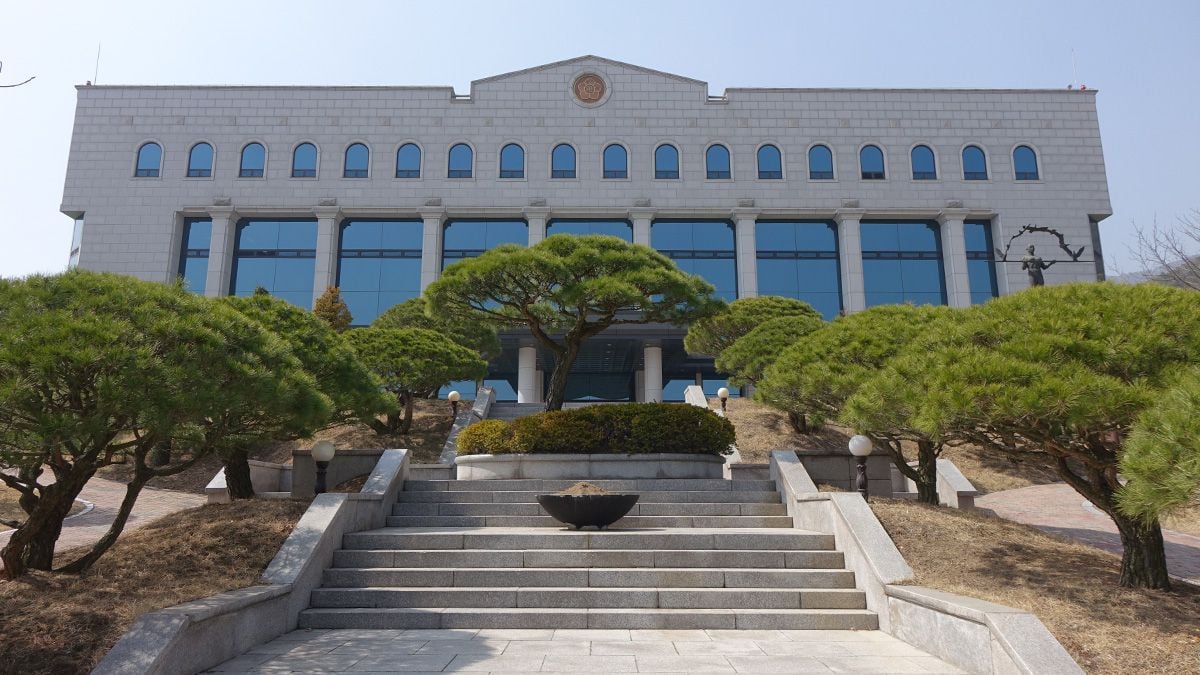
The statement, dated 11 June 2026 and signed by Wi Cheol-hwan, acting chairman of the National Election Commission (NEC), was issued as more than 100 police investigators simultaneously raided the NEC's headquarters in Gwacheon and six affiliated offices as part of a criminal investigation into the disruptions.
The National Assembly also formally initiated procedures for a cross-party parliamentary investigation on the same day, though the ruling and opposition parties remain divided over its scope.
NEC's own account: a distribution failure
In his public statement, Wi said the 50% election-day ballot printing ratio applied in Songpa Ward excluded the 23.3% of voters who had already cast ballots during the early voting period, making the effective total printing ratio 73.3% of eligible voters.
Songpa Ward has 565,368 registered voters and recorded an overall turnout of 65.8% on election day, meaning that on a district-wide basis, approximately 42,000 ballots remained unused.
"The failure to distribute ballot papers across Songpa Ward's 146 polling stations was a deeply regrettable mistake," Wi said in the statement.
Wi acknowledged that the commission had reduced the minimum ballot printing floor from 60% to 50% ahead of the June elections, a policy change documented in guidelines issued in December 2025.
He said the NEC had commissioned a policy research study from the Korea Institute of Public Administration (KIPA) in 2022, and that based on findings from an internal procedural reform task force, the 9th National Simultaneous Local Elections General Management Guidelines were approved by the NEC Secretary-General on 10 December 2025, with a supplementary Public Official Election Procedure Manual approved by the Director of Election Policy on 24 December 2025.
The revised guidelines reduced the minimum printing ratio to 50% and delegated the final ratio decision to each of the 255 district-level election commissions, taking into account local conditions.
Wi said the rationale for lowering the floor included concerns that printing ballots in quantities far exceeding actual election-day turnout had drawn past fraud allegations, and that the growing gap between early voting rates and election-day turnout made the previous 60% floor increasingly difficult to calibrate. He also cited practical difficulties in securing printing vendors within short lead times.
However, the decentralised decision-making structure produced uneven outcomes. The NEC's statement acknowledged that some district-level commissions set their printing ratio at 50%, while at least one — Ongjin County Election Commission — set its ratio at 100%.
Structure of the ballot printing system
Under the system used for local elections, 17 metropolitan and provincial election commissions are each responsible for printing three categories of ballot: those for governors and mayors, proportional representative council members, and superintendents of education.
A further 255 district-level commissions each print four categories: ballots for local constituency council members, proportional representative local council members, district council members, and heads of district, city, or county administrations.
Each commission is independently responsible for printing and distributing its own ballots to polling stations within its jurisdiction. It is this decentralised structure that the NEC's statement identifies as the context within which the distribution failure occurred.
Police raids and criminal investigation
Police conducted simultaneous searches and seizures at seven locations on Thursday, including the NEC's headquarters in Gwacheon, south of Seoul, and local offices in Songpa Ward and other affected parts of Seoul.
Yonhap reported that Investigators said the search and seizure warrants list former NEC Chairman Rho Tae-ak as a suspect. Rho stepped down following the incident.
Police said they were investigating the NEC and its local offices on suspicion of election law violations and dereliction of duty.
"Through today's search and seizure, we are focusing on securing evidence to determine the material truth of the case, including identifying the cause of the infringement to the people's political rights," police said in a statement.
Investigators said the simultaneous raids were intended to secure evidence before it could be altered or destroyed.
Parliamentary investigation launched
In a parallel development, the National Assembly formally initiated procedures for a potential parliamentary investigation on Thursday, after requests for a probe were submitted by both the ruling Democratic Party of Korea (DPK) and the main opposition People Power Party (PPP) and reported to a plenary session.
The head of the Proceedings Division of the National Assembly Secretariat confirmed that all lawmakers from each party had sponsored their respective investigation requests.
The move represents a step towards establishing a special parliamentary committee to examine allegations of mismanagement by the NEC during the voting process.
Negotiations over the committee's formation are expected to be contentious. The DPK and the PPP have submitted differing proposals regarding the scope of the inquiry and the allocation of committee seats between the parties.
The PPP has called for a special counsel investigation to run concurrently with the parliamentary probe. The DPK has resisted this position, arguing that any decision on a special counsel should await the outcome of the parliamentary inquiry.
Political reactions
DPK leader Lee Jae-myung said the ballot shortage incident was "difficult to comprehend" and that the NEC's response and explanations had been insufficient. He said he had asked parliament to conduct a fact-finding probe, establish measures to prevent a recurrence, and discuss reform plans for the commission.
PPP leader Jang Dong-hyeok told reporters that he had visited the protests in Songpa and called for a joint audit alongside the DPK. Jang noted that ballot shortages appeared to have been especially severe in areas that lean conservative, though he stopped short of demanding a re-run, saying he would "obey whatever the people's commands say."
The DPK swept the majority of major local races in the 3 June elections. The PPP retained the Seoul mayoralty, with incumbent Oh Se-hoon securing another term.
Scope of the disruption and ongoing protests
The NEC has previously acknowledged that 50 of approximately 14,300 polling stations ran out of ballots during the vote, while voting was temporarily suspended at 22 stations due to delays in supply replenishment.
In Seoul, disruptions were concentrated in Songpa Ward, where 12 locations reported delays. Voting was temporarily halted at 26 polling stations nationwide.
At one Songpa polling station, an angry crowd blocked election officials from removing ballot boxes for counting after voting had concluded.
The disruptions have since prompted seven consecutive days of protests outside a vote-counting facility in Songpa Ward, with demonstrators calling for a re-run of the elections.
Background
Wi stated in his public release that the full details of the ballot shortage are being investigated by an externally constituted fact-finding committee, and that the complete picture is expected to emerge through the criminal investigation and parliamentary inquiry.
He reiterated the commission's apology for the infringement of citizens' suffrage, stating that "the infringement of even a single person's right to vote is unacceptable," and committed the commission to follow-up measures.
No charges have been filed as of Thursday. The investigations remain ongoing.