Anti-CCP protesters allege assault and choking at KMT chairwoman's Los Angeles event
Chinese democracy activists in the United States have accused supporters at a Kuomintang event in Los Angeles of assaulting and choking protesters who challenged party chairwoman Cheng Li-wun over the party's stance towards China and democracy.
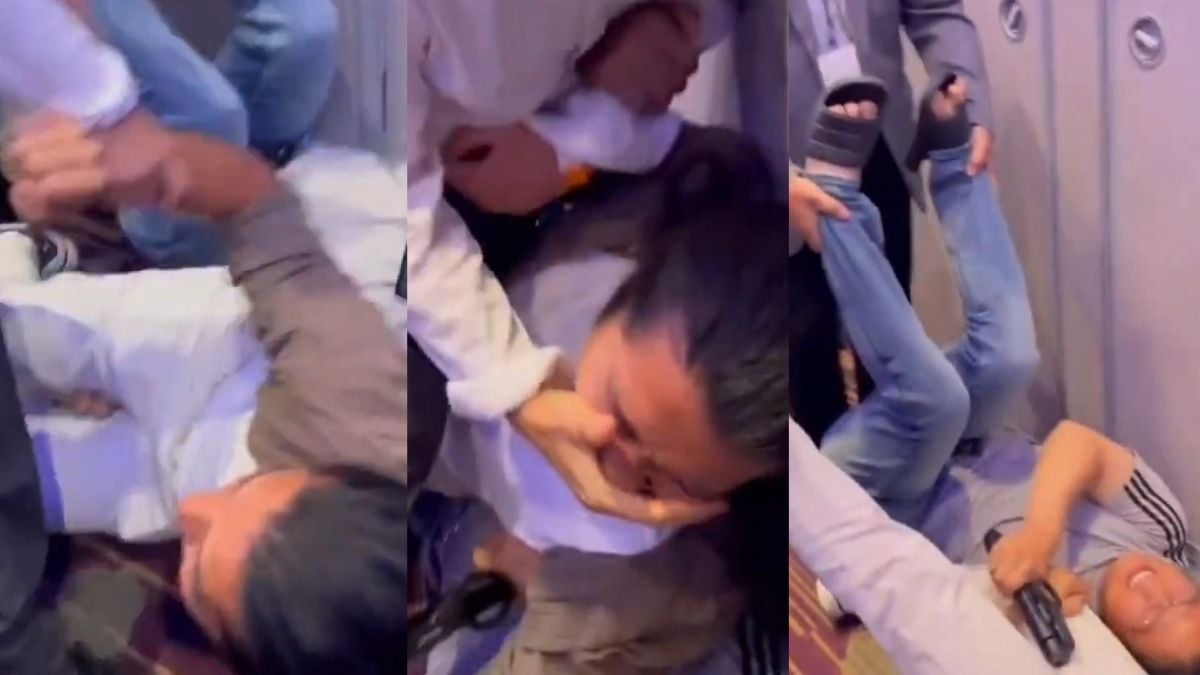
- Chinese democracy activists alleged they were assaulted during a Kuomintang event in Los Angeles on 14 June 2026.
- Protesters said attendees were dragged out, choked and prevented from recording the confrontation.
- Human Rights in China and dissident Wang Dan condemned the reported violence and called for accountability.

LOS ANGELES, UNITED STATES: A political event attended by Kuomintang (KMT) Chairwoman Cheng Li-wun (鄭麗文) in Los Angeles has sparked controversy after Chinese democracy activists alleged that several protesters were assaulted while attempting to question the Taiwanese opposition leader about democracy and the party's relationship with Beijing.
The incident occurred during Cheng's speech, titled “Peace and Prosperity Tour of the US, China and Taiwan”, which was delivered to members of the overseas Taiwanese community in the Los Angeles area.
According to accounts from activists present at the event, tensions escalated when several Chinese anti-communist attendees challenged Cheng's remarks regarding Taiwan's democratic development and the KMT's political record.
Questions over democracy and China
During her speech, Cheng reportedly argued that Taiwan's peaceful democratic transition had been possible because most KMT members genuinely believed in democratic values and did not obstruct the democratisation process.
Some audience members disputed that characterisation and accused the KMT of adopting policies that were too accommodating towards Beijing.
Witnesses said several Chinese democracy activists questioned why a party that described itself as democratic had not actively supported democratic development in China and instead appeared to be cooperating with the Chinese Communist Party (CCP).
Others accused the KMT of "selling out Taiwan" and failing to support the democratic aspirations of Chinese citizens.
The confrontation reportedly intensified during the question-and-answer session.
Activists describe physical confrontation
Yifeng Su, who attended the event, wrote on social media that audience questions had been required to undergo screening before being submitted to organisers.
According to Su, he raised his questions verbally during the final segment of the event after Cheng's speech and was subsequently escorted from the venue.
Su alleged that China Democracy Party member Le Zailin (樂在霖) was "violently knocked to the ground" by individuals he identified as KMT supporters.
He further claimed that Le was grabbed by the neck and had his mouth covered in an attempt to stop him from "calling for democracy and freedom".
Su also alleged that mobile phones were seized to prevent attendees from recording the incident and that some individuals were pressured to delete video footage.
"The KMT is acting as brutally as the CCP," Su wrote, accusing the party of hypocrisy, authoritarian behaviour and suppressing dissent while continuing to portray itself as democratic.
He added that the activists had entered the venue legally after being admitted by organisers and were wearing yellow wristbands distributed at the entrance.
Further allegations emerge
Another overseas Chinese democracy activist, Jie Lijian (界立建), provided a more detailed account of the confrontation.
According to Jie, individuals whom he alleged were associated with organised groups prevented activists from asking questions during the event.
Jie claimed that Le Zailin was repeatedly struck in the head and face before being kicked in the waist and body.
He further alleged that Le's mouth and nose were covered during the confrontation, making it difficult for him to breathe.
Jie also alleged that another activist, Dong Ming (董明), was knocked to the ground and later carried out of the venue while being assaulted.
Video footage circulating on social media appeared to show heated exchanges between attendees and individuals being physically removed from the event.
A police report was reportedly filed following the assault incident.
Wang Dan calls for dialogue
Wang Dan (王丹), a prominent Chinese political activist and one of the best-known student leaders during the 1989 Tiananmen Square pro-democracy movement, criticised the handling of the incident.
In comments posted online, Wang said anti-communist Chinese activists attending the event had been subjected to violence after raising questions during Cheng's appearance.
"They were dragged out of the venue, and Cheng Li-wun did not answer their questions," Wang wrote.
"I think their questions were very good. Cheng Li-wun should answer them and engage in dialogue with them rather than allowing her supporters to respond with violence."
Wang's remarks were widely shared among Chinese democracy activists in the United States following the incident.
Rights group condemns reported violence
Human Rights in China (HRIC), a New York-based advocacy organisation, also issued a statement criticising the treatment of protesters.
The organisation said the events described by witnesses were inconsistent with the themes of dialogue and cooperation promoted during the gathering.
According to HRIC, video footage and witness accounts indicated that some protesters who had been permitted to enter the venue were forcibly silenced after standing up to express dissenting views.
The group said protesters were allegedly dragged, restrained and pinned to the ground after attempting to question speakers.
HRIC specifically cited reports that Le Zailin was restrained by the neck while calling for democratic freedoms.
The organisation also referenced allegations that individuals attempted to seize protesters' phones and demanded deletion of recorded footage.
According to HRIC, police later arrived at the scene, reviewed video evidence and subsequently released the protesters involved.
The organisation emphasised that peaceful assembly and freedom of expression are protected under the First Amendment of the United States Constitution.
"Regardless of the political position of those being questioned, and regardless of how uncomfortable the questions may be, using physical force to silence dissenters crosses a line that democratic societies cannot accept," the statement said.
HRIC called on those involved to preserve evidence, seek medical examinations where necessary and pursue legal remedies against any individuals found responsible for acts of violence.
Broader political tensions
The incident highlights continuing tensions between sections of the overseas Chinese democracy movement and political figures viewed as advocating closer engagement with Beijing.
For many activists who fled political repression in China or support democratic reform there, debates surrounding Taiwan's future and cross-strait relations are closely connected to broader concerns about authoritarianism and democratic values.
The allegations arising from the Los Angeles event have intensified those divisions and generated renewed debate over political tolerance, freedom of expression and the treatment of dissenting voices at overseas political gatherings.