Eight killed after B-52 bomber crashes during test flight at California’s Edwards Air Force Base
Eight people were killed after a US Air Force B-52 Stratofortress crashed shortly after taking off from Edwards Air Force Base in California on a routine radar modernisation test mission. Authorities have launched an investigation as recovery efforts continue and families are being notified.
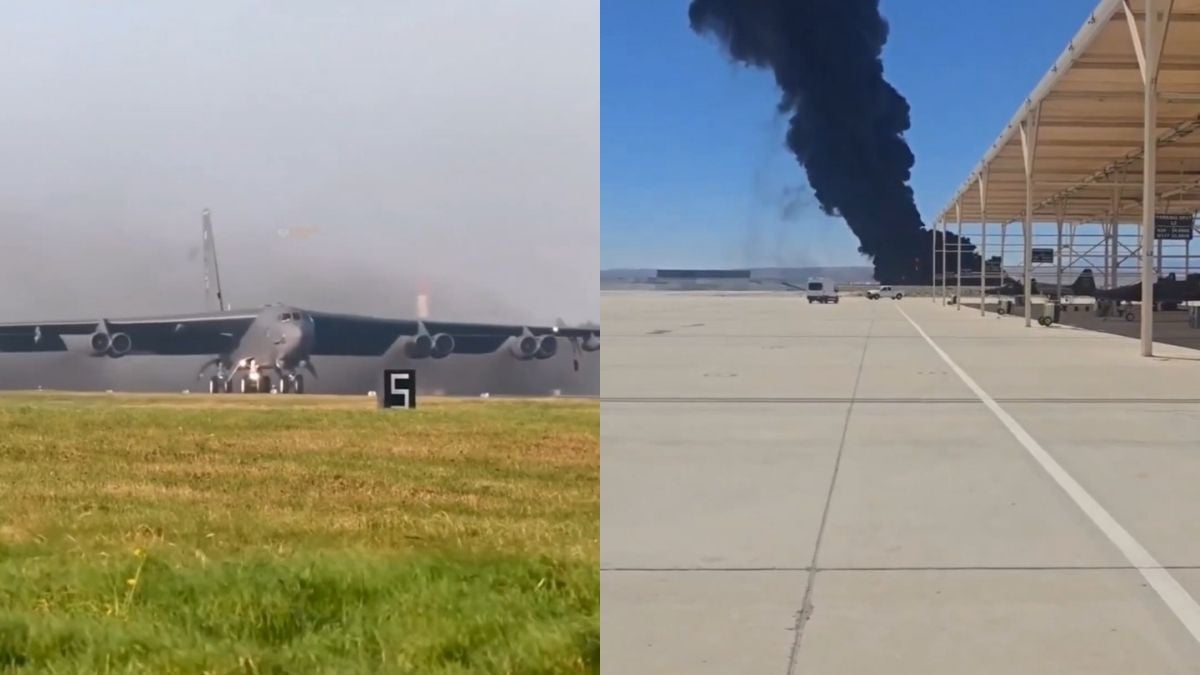
- Eight crew members died after a B-52 Stratofortress crashed shortly after take-off during a test mission.
- The aircraft was supporting a radar modernisation programme when the fatal accident occurred.
- Military investigators have begun examining the crash, with findings not expected for several months.

Eight people were killed after a US Air Force B-52 Stratofortress bomber crashed shortly after take-off from Edwards Air Force Base in California’s Mojave Desert on 15 June 2026, prompting a major recovery operation and a formal military investigation into one of the deadliest incidents involving the aircraft in recent years.
The bomber departed the remote test facility at about 11.20am local time on what officials described as a routine mission supporting the Air Force’s radar modernisation programme. It crashed moments after becoming airborne, leaving a towering column of black smoke and a large scorched area on the airfield.
“It was tragic and unsurvivable,” Colonel James Hayes told reporters during a press conference as officials confirmed that all eight people on board had died.
Recovery operation under way
Emergency personnel responded immediately to the crash scene, but authorities soon shifted from rescue efforts to recovery operations after determining there were no survivors.
Chief Master Sergeant Joshua T. Skarloken said officials were working to notify the victims’ families before releasing further details.
The crew consisted of military personnel, government civilians and government contractors participating in the flight test.
Aerial footage showed a heavily blackened section of desert terrain roughly the size of a football field, with residual smoke still rising from the impact site. Few recognisable pieces of wreckage could be seen from above, underscoring the severity of the crash.
Although Edwards Air Force Base has reopened, Colonel Hayes said operational flying activities would remain suspended through Tuesday while investigators secure evidence and conduct preliminary assessments.
Investigation expected to take months
Military investigators are expected to spend months examining the circumstances surrounding the crash. Colonel Hayes indicated that detailed findings are unlikely to be released publicly for around six months.
Experts will review maintenance records, inspect available wreckage, analyse operational data and reconstruct the aircraft’s final moments in an effort to determine the cause of the accident.
Retired US Navy commander and former P-3 pilot Richard Kolko noted that Edwards Air Force Base has extensive experience conducting complex flight testing and maintaining specialised emergency response capabilities.
He said the facility typically uses some of the military’s most experienced pilots and engineers for developmental and evaluation missions, particularly when advanced systems or modifications are being tested.
Aircraft was supporting modernisation programme
Air Force officials said the B-52 involved in the accident was conducting testing connected with an ongoing radar modernisation initiative rather than an operational combat mission.
Edwards Air Force Base has long served as the United States’ premier flight test centre, hosting evaluations of military aircraft, helicopters, unmanned systems and even space shuttle missions because of its expansive runways and specialised infrastructure.
Kolko described the installation as one of the world’s leading aviation testing facilities, saying, “If it flies, it’s tested at Edwards Air Force Base.”
Long-serving bomber remains central to US arsenal
The B-52 Stratofortress first entered service in 1955 and remains one of the oldest aircraft still operating in the US Air Force inventory. Manufactured by Boeing, the long-range heavy bomber is capable of carrying both conventional and nuclear weapons and continues to play a key role in strategic operations.
The current B-52H variant can transport up to 70,000 pounds of bombs and other munitions and has been employed in a range of military missions, including recent operations linked to the conflict involving the United States and Iran.
Although the aircraft typically carries a crew of about five, officials confirmed that eight people were aboard Monday’s flight because it involved specialised testing personnel.
Production of the B-52 ended in 1962, but the fleet has remained operational through extensive life-extension programmes, including avionics upgrades and an ongoing engine replacement initiative valued at tens of billions of dollars.
Because no new aircraft are being manufactured, replacement components and airframes are sourced from retired aircraft preserved at Davis-Monthan Air Force Base in Arizona.
Rare but significant accident
Fatal accidents involving the B-52 have become increasingly uncommon over recent decades.
Before the latest crash, the most recent deadly incident occurred in 2008, when six Air Force personnel died after a B-52 crashed into the Pacific Ocean near Guam during preparations for a ceremonial flypast.
Another B-52H crashed in Guam in 2016, although all seven crew members aboard survived.
Monday’s tragedy is likely to draw renewed scrutiny over the continued operation of one of the world’s longest-serving strategic bombers even as the Air Force pursues extensive modernisation efforts to keep the ageing fleet in service for years to come.